




Choosing the right fabric and thread gets plenty of attention when starting a sewing project, but there’s another tiny component that can have a huge effect on the finished result: your sewing machine needle.
Using the wrong needle can lead to skipped stitches, puckered seams, broken threads, damaged fabric and even broken needles. In many cases, what appears to be a problem with your sewing machine can actually be solved simply by fitting the correct needle.
From lightweight silk and stretchy jersey to denim and leather, different fabrics require different types and sizes of needle. In this guide, we’ll explain which sewing machine needle you should use for different fabrics, how to recognise when it’s time to change it, and where overlockers and coverstitch machines need special needles of their own.
Why Does the Sewing Machine Needle Matter?
Your sewing machine needle repeatedly passes through the fabric at high speed, carrying the upper thread through the material to form each stitch.
Different fabrics behave very differently. A lightweight woven cotton doesn’t have the same structure as stretch jersey, while thick denim requires considerably more penetration than delicate silk. The needle needs to suit both the type and weight of the fabric.
Using the correct needle can give you more consistent stitches, fewer skipped stitches, less fabric damage, reduced thread breakage, smoother sewing, better-looking seams and fewer broken needles. It’s a relatively inexpensive component that can make a surprisingly big difference.
Understanding Sewing Machine Needle Sizes
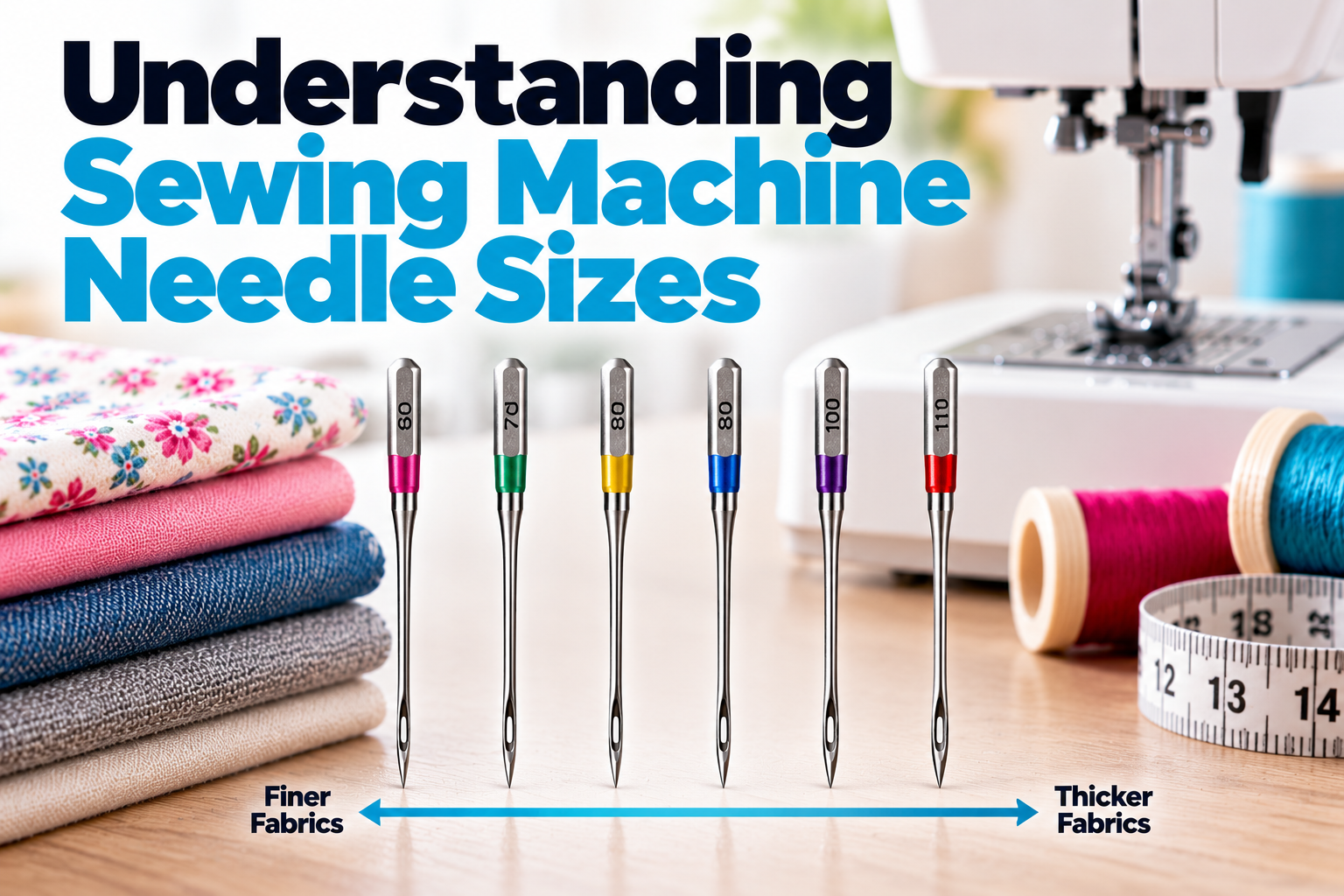
Sewing machine needles are available in different sizes, commonly shown using two numbers such as 70/10, 80/12, 90/14 or 100/16. The first number refers to the European sizing system, roughly the needle’s diameter in hundredths of a millimetre, and the second to the American system.
The basic rule is simple: a lower number means a finer needle, and a higher number means a heavier needle. For example, a 70/10 needle is suitable for relatively lightweight fabrics, while a 100/16 needle is designed for heavier materials.
Universal Needles
If you only have one packet of sewing machine needles in your sewing box, there’s a good chance they’re universal needles.
Universal needles are designed for general-purpose sewing and work well with many woven and some stable fabrics. They’re a good choice for materials such as cotton, polycotton, linen, lightweight wool, polyester and general craft fabrics.
An 80/12 universal needle is a useful starting point for many medium-weight everyday fabrics. However, universal doesn’t mean suitable for absolutely everything. As you begin experimenting with more specialised fabrics, using a purpose-designed needle can produce better results.
Needles for Lightweight Fabrics
Lightweight fabrics need a finer needle. Using a needle that’s too large can leave visible holes, pull threads or cause puckering.
For lightweight cottons and similar fabrics, consider a 70/10 or 80/12 needle, depending on the exact material. For very fine fabrics, you may need an even more specialised needle. Always test your needle, thread and stitch settings on a fabric scrap before starting the main project.
Needles for Cotton
Cotton is one of the easiest fabrics to sew and is particularly popular with beginners.
For standard dressmaking cotton, quilting cotton and general woven cotton, an 80/12 universal needle is often a good choice. For lighter cotton, try a 70/10. For heavier cotton, you may need to move up to a 90/14.
The exact choice should be based on the weight and construction of the fabric rather than simply the fact that it’s cotton.
Needles for Jersey and Stretch Fabric
Stretch fabrics require more careful needle selection. A standard sharp needle can potentially damage knitted fibres or struggle to form stitches correctly as the fabric stretches.
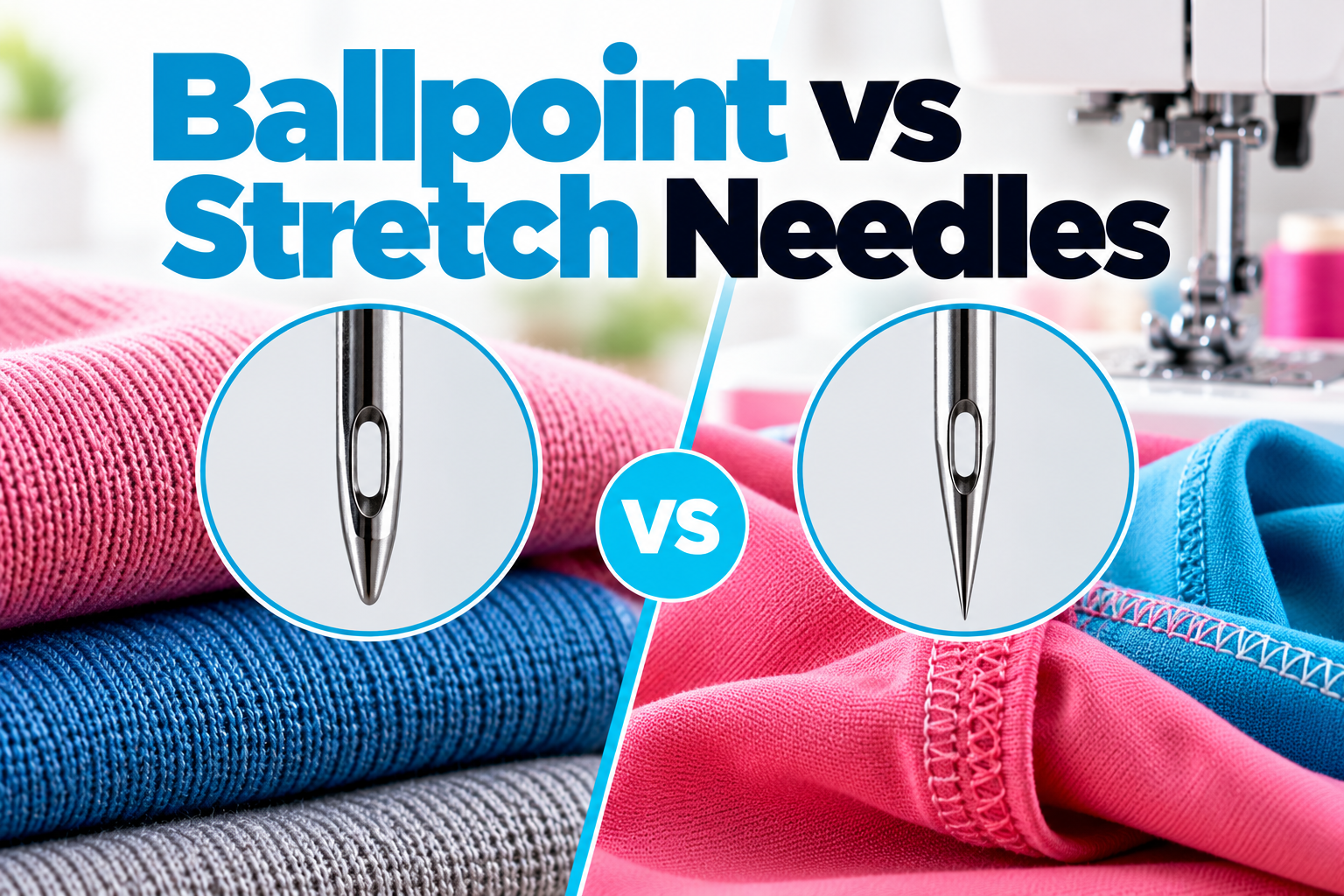
For jersey, a ballpoint or jersey needle is normally a better option. Instead of cutting directly through the fibres, the rounded needle point is designed to move between them. Jersey needles are suitable for fabrics such as T-shirt jersey, knitted fabrics, interlock, some sweatshirt fabrics and general knitwear.
For highly elastic materials, consider a dedicated stretch needle.
Ballpoint vs Stretch Needles
These two needle types are sometimes confused.
A ballpoint or jersey needle is designed primarily for knitted fabrics. A stretch needle has a deeper scarf and is designed for highly elastic fabrics where skipped stitches can become a problem, such as Lycra, Spandex, swimwear, sportswear, leggings and highly elastic jersey.
If your machine is skipping stitches on stretchy fabric, switching to a stretch needle should be one of the first things you try.
Needles for Denim
Denim can be tough, particularly when several layers meet at a seam. A dedicated jeans or denim needle has a strong shaft and specialised point designed to penetrate tightly woven materials.
Depending on the weight of the denim, you might use a 90/14 for lighter denim, a 100/16 for heavier denim, or a 110/18 for particularly heavy applications where appropriate.
Remember that even a denim needle can struggle if you’re asking a domestic sewing machine to force its way through an excessive number of thick layers. Slow down when approaching bulky seams and don’t force the fabric through the machine.
Needles for Leather
Leather requires a specialist leather needle. These needles typically have a cutting-style point designed to penetrate non-woven materials, and can be used for leather, some imitation leathers and suede.
Unlike ordinary fabric, holes created in genuine leather don’t disappear when you remove the stitches. That means accurate sewing is particularly important. Always test your needle and stitch length on an offcut before sewing the final piece.
Needles for Silk and Delicate Fabrics
Silk, microfibre and other delicate materials can easily be damaged by the wrong needle.
A Microtex or sharp needle can be a good choice for tightly woven and delicate fabrics because of its fine, sharp point. Depending on the material, a 60/8 or 70/10 may be suitable. Microtex needles can be useful for silk, microfibre, fine polyester, organza, taffeta and other tightly woven fabrics.
A fresh needle is especially important when working with expensive or delicate material.
Needles for Quilting
Dedicated quilting needles have a tapered shaft and a slightly rounded point designed to pass through multiple layers of fabric and batting without damaging them, useful when sewing through a typical quilt sandwich of quilt top, batting and backing fabric.
The correct size will depend on the materials you’re using. If you’re quilting regularly, experimenting with dedicated quilting needles can help you find the combination that works best with your machine, thread and fabric.
Needles for Heavy Fabrics
Canvas, upholstery fabrics and other heavy materials require a stronger needle. Depending on the project, a 100/16 or similar heavier needle may be appropriate.
However, don’t assume that fitting a larger needle automatically turns a normal domestic sewing machine into a heavy-duty machine. Always check what your particular sewing machine is designed to handle. Forcing very thick materials through a machine can potentially damage the needle or machine.
Embroidery Needles
If you’re using an embroidery machine, consider using dedicated embroidery needles. Machine embroidery can involve thousands of rapid stitches in a relatively small area, often combined with stabiliser. Embroidery needles are designed with this type of stitching in mind and can help accommodate specialist rayon and polyester embroidery threads.
Choose the needle size according to the fabric, stabiliser and thread you’re using.
Metallic Needles
Metallic threads look fantastic but can sometimes be difficult to work with.
A dedicated metallic needle has an enlarged, polished eye designed to help delicate metallic thread pass through more smoothly without shredding. If you’re experiencing frequent thread breakage when using metallic thread, changing the needle can often help. You may also need to adjust your sewing speed and thread tension.
Topstitch Needles
A topstitch needle can be useful when you’re using thicker decorative thread. These needles have an extra-sharp point and an enlarged eye and groove to accommodate heavier thread.
They’re particularly useful for visible stitching on jeans, bags, jackets, decorative seams and home furnishings. Topstitching is designed to be seen, so achieving clean and consistent stitches is particularly important.
Twin Needles
A twin needle allows your sewing machine to create two parallel lines of stitching simultaneously. They’re commonly used for T-shirt hems, decorative stitching, pintucks, topstitching and stretch garment finishing.
Twin needles are available in different sizes and spacings. Before using one, check that your sewing machine is compatible and follow the manufacturer’s threading instructions.
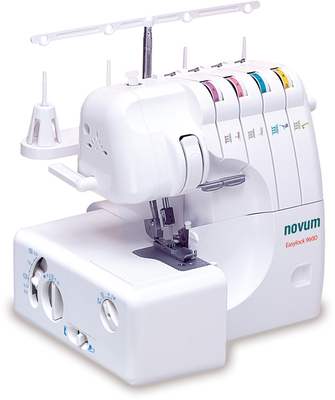
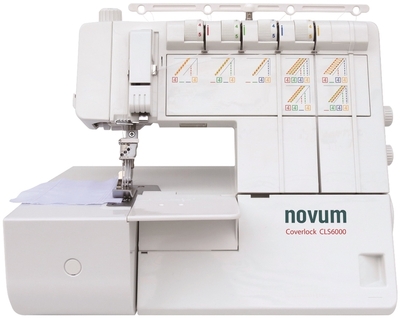
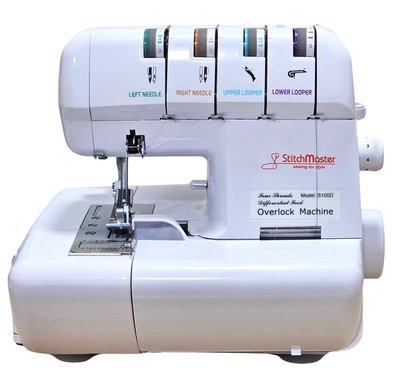
Needles for Overlockers and Coverstitch (Coverhem) Machines
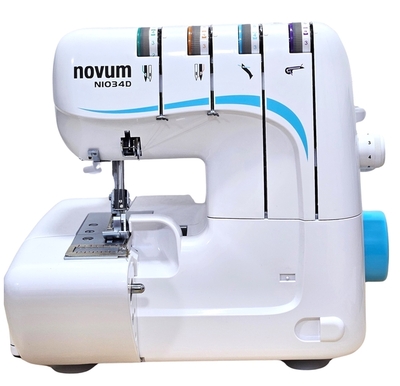
Everything above covers needles for a normal domestic sewing machine. Overlockers and coverstitch (coverhem) machines are a different story, and the needle you need depends on the specific machine.
Many newer domestic overlockers actually use the same flat-shank needle system as an ordinary sewing machine, so a Universal, Stretch, Jersey or Topstitch needle in the appropriate size will often do the job. Some overlockers, and some coverlock and coverstitch machines, use their own dedicated needle systems instead. These needles aren’t interchangeable with ordinary sewing machine needles: they’re typically built with extra grooves along the blade to help form the chainstitch cleanly and reduce skipped stitches, a reinforced blade for extra strength, and sometimes a chrome finish for durability.
Coverstitch machines commonly take two or three needles at once, plus a looper thread underneath, with ballpoint, jersey or stretch needles being the usual choice for the stretch fabrics these machines are often used on. As with a sewing machine, you still match the needle to the fabric, just across however many needles your machine takes.
Because needle systems vary so much between overlocker and coverstitch models, always check your specific machine’s manual before buying needles rather than assuming your domestic sewing machine needles will fit.
Quick Overlocker and Coverstitch Needle Guide
| Needle system | Typically used in | Notes |
| 130/705H | Standard domestic sewing machines; some newer overlockers | The usual flat-shank system; choose Universal, Stretch, Jersey or Topstitch to suit the fabric |
| ELx705 | Many overlock and coverlock machines | General-purpose, slightly rounded point |
| ELx705CF | Many overlock and coverlock machines | Reinforced blade with a chrome finish for extra durability |
| ELx705CF SUK | Overlock and coverlock machines | Medium ballpoint, suited to knits |
| ELx705 ZWI | Some Elna overlockers | Special double needle on one shank |
| BLX1 / DCX1 | Some older overlockers | Round-shank systems used on some older machines |
This is a general overview rather than a substitute for your machine’s manual. Always confirm the exact needle system your overlocker or coverstitch machine takes before buying needles.
Quick Sewing Machine Needle Guide
| Needle type | Typical sizes | Good for |
| Universal | 70/10 to 100/16 | Cotton, polycotton, linen, lightweight wool, general craft fabrics |
| Ballpoint/jersey | 70/10 to 90/14 | T-shirt jersey, knitted fabrics, interlock, sweatshirt fabric |
| Stretch | 75/11 to 90/14 | Lycra, spandex, swimwear, sportswear, leggings, highly elastic jersey |
| Denim/jeans | 90/14 to 110/18 | Light to heavy denim and similarly tightly woven fabrics |
| Leather | 70/10 to 110/18 | Leather, imitation leather, suede |
| Microtex/sharp | 60/8 to 90/14 | Silk, microfibre, fine polyester, organza, taffeta |
| Quilting | 75/11 to 90/14 | Multiple layers of quilt top, batting and backing |
| Embroidery | 75/11 to 90/14 | Rayon and polyester embroidery thread |
| Metallic | 80/12 to 90/14 | Metallic and other specialty threads |
| Topstitch | 80/12 to 100/16 | Heavier decorative thread, visible topstitching |
These are general recommendations rather than strict rules. Fabric weight, thread and your individual sewing machine can all affect the best choice.
Match Your Thread to Your Needle
The needle isn’t the only thing you need to consider. Your thread needs to pass smoothly through the needle’s eye.
If the thread is too thick for the needle, you may experience thread breakage, fraying, poor stitch formation and tension problems. If you’re using a thicker specialist thread, you may need a larger needle or a needle specifically designed for that type of thread.
How Often Should You Change Your Sewing Machine Needle?
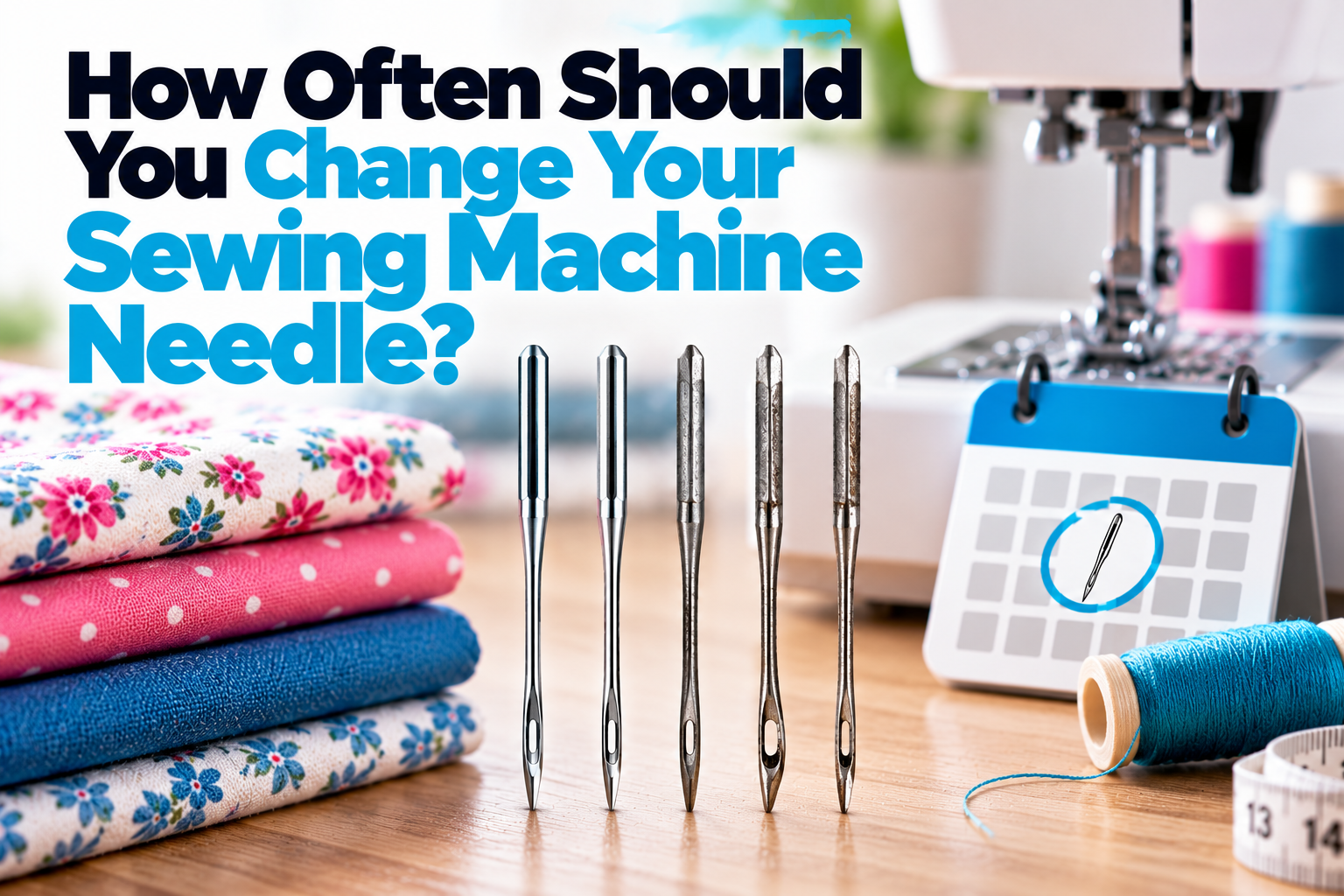
Sewing machine needles don’t last forever. Every time the needle passes through fabric, the point experiences wear, and eventually it can become blunt, bent or damaged.
You may need a new needle if you notice skipped stitches, popping or punching noises, thread breaking, uneven stitches, fabric snagging, visible needle damage, or the needle hitting the machine.
Many sewers choose to start an important new project with a fresh needle, particularly when working with expensive or delicate fabric. Needles are inexpensive compared with the cost of ruined fabric.
Don’t Forget to Insert the Needle Correctly
If you’ve changed your needle and suddenly start experiencing problems, check that it’s been installed correctly. Push the needle fully into position and make sure it’s facing the correct direction for your particular sewing machine.
Needle orientation can vary between machine types, so check your machine’s instruction manual rather than guessing.
Always Test on Scrap Fabric
One of the best sewing habits you can develop is keeping a small offcut from your project. Before sewing your final garment or project, test the needle, thread, stitch type, stitch length, tension, presser foot and sewing speed.
Ideally, create your test using the same number of fabric layers you’ll be sewing in the actual project. A combination that works perfectly through one layer may behave differently when you’re sewing through four.
Is the Needle Really Causing the Problem?
If your sewing machine suddenly starts behaving strangely, changing the needle is one of the easiest troubleshooting steps. A damaged, blunt or incorrect needle can cause all sorts of problems that initially appear to be machine faults.
Before adjusting everything else on the machine, try replacing the needle, checking it’s inserted correctly, rethreading the machine, rethreading the bobbin, and testing on scrap fabric. You may find the problem disappears immediately.
The Right Needle Makes Sewing Easier
Sewing machine needles are one of the cheapest items in your sewing box, but they’re also among the most important. You wouldn’t expect the same pair of scissors to perform every cutting job perfectly, and the same principle applies to needles.
Match the needle type to the fabric and then select a size appropriate for the fabric’s weight. Once you get into the habit of choosing your needle before starting each project, you’ll give yourself a much better chance of achieving smooth stitching, fewer problems and a more professional-looking result.
If you’re unsure which needle you need, check your sewing machine manual and consider the type and weight of fabric you’re using. And remember: if your machine starts skipping stitches or your thread keeps breaking, don’t immediately assume there’s something wrong with your sewing machine. Sometimes, all you need is a new needle.