





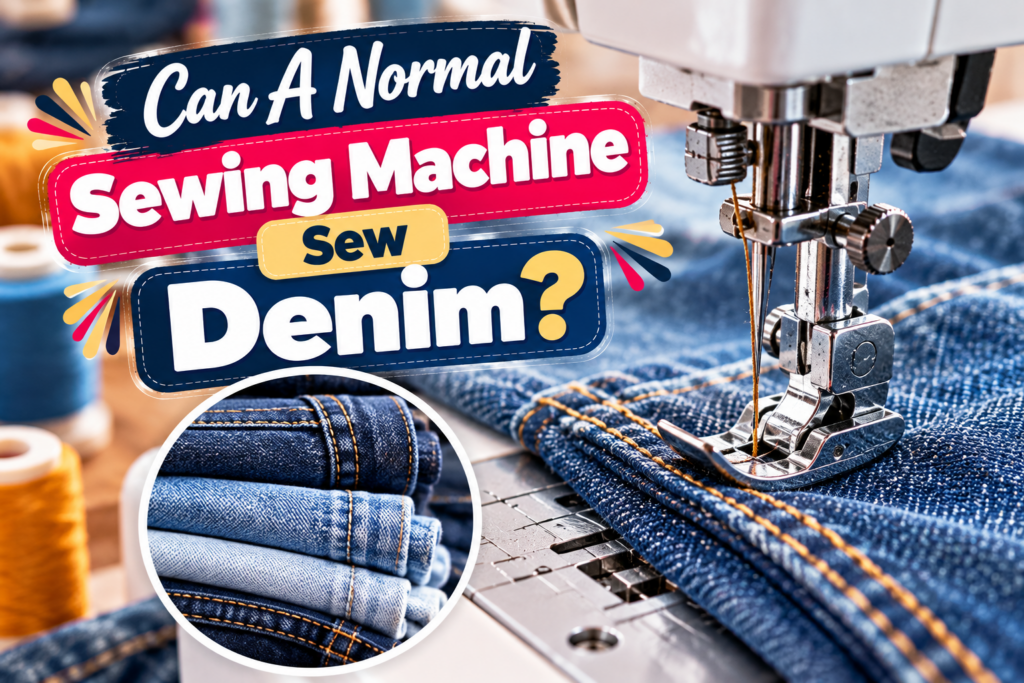
Yes. Many normal domestic sewing machines can sew denim, particularly when you’re working with lighter or medium-weight denim and only a few layers. You don’t necessarily need an industrial or heavy-duty sewing machine to shorten a pair of jeans, repair denim or make a simple denim project.
However, denim becomes much more challenging when you’re sewing through multiple layers, bulky seams or heavyweight fabric. The secret is using the correct needle, suitable thread, sensible machine settings and the right technique.
Here’s what you need to know.
Why Is Denim Difficult to Sew?
The problem isn’t always the denim itself. A normal sewing machine may happily sew through two layers of denim but struggle when it reaches a thick seam containing six or eight layers. This is why you might be sewing perfectly and suddenly experience problems when you reach a bulky jeans seam.
Common problems include broken needles, skipped stitches, thread breaking, uneven stitch length, the machine struggling to feed the fabric, the presser foot becoming angled, fabric getting stuck, and the machine making a knocking sound. Most of these problems become easier to manage once your machine is properly set up.
What Type of Denim Are You Sewing?
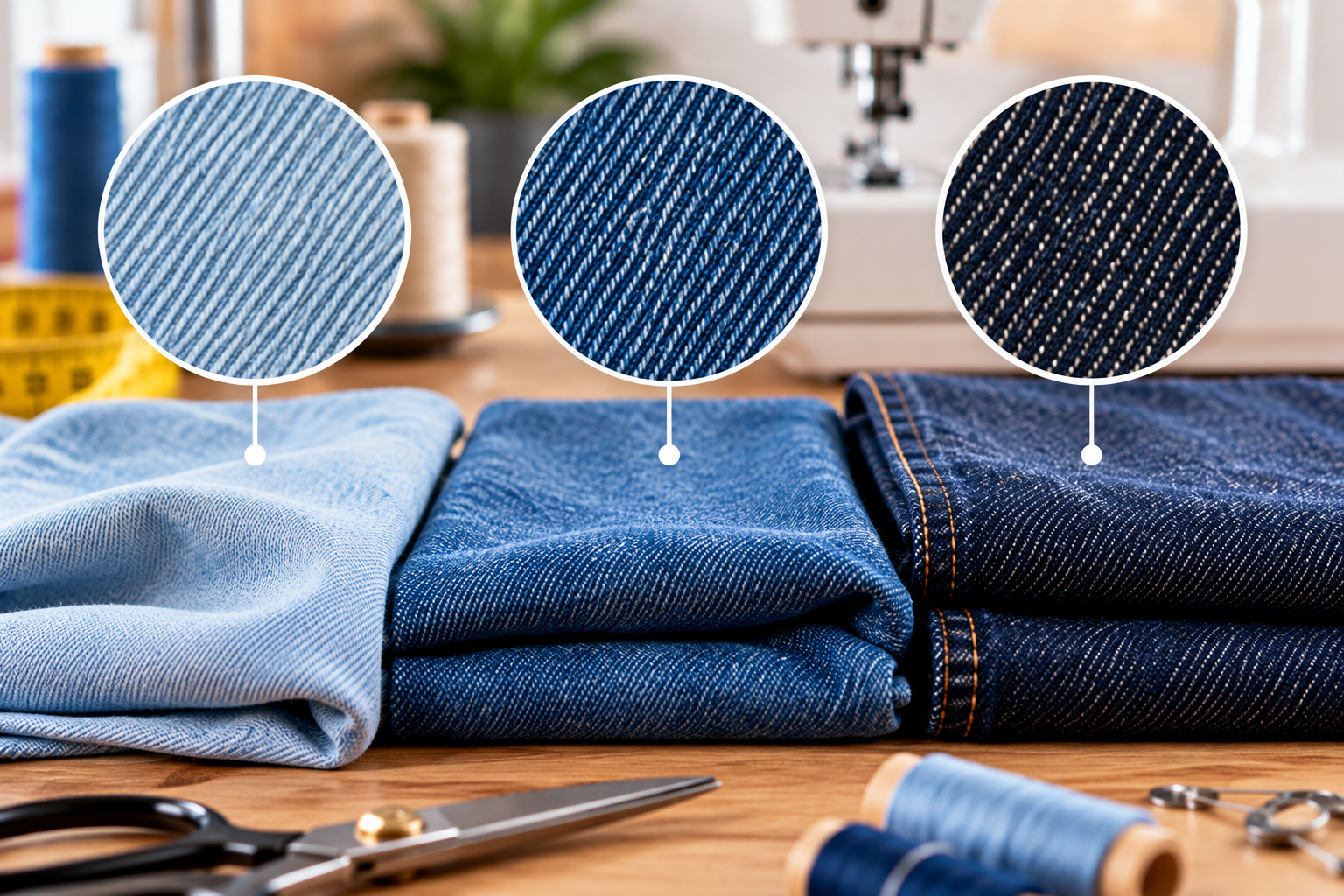
Not all denim is the same.
Lightweight denim can be relatively easy to sew on a domestic sewing machine. It’s often used for shirts, dresses, lightweight skirts and children’s clothing.
Medium-weight denim is commonly used for jeans, jackets, skirts and bags. A good domestic sewing machine can often handle medium-weight denim successfully.
Heavyweight denim becomes more demanding, particularly when multiple layers meet. If you regularly work with heavyweight denim, canvas and similarly thick materials, a heavy-duty sewing machine may be worth considering.
Use a Denim or Jeans Needle
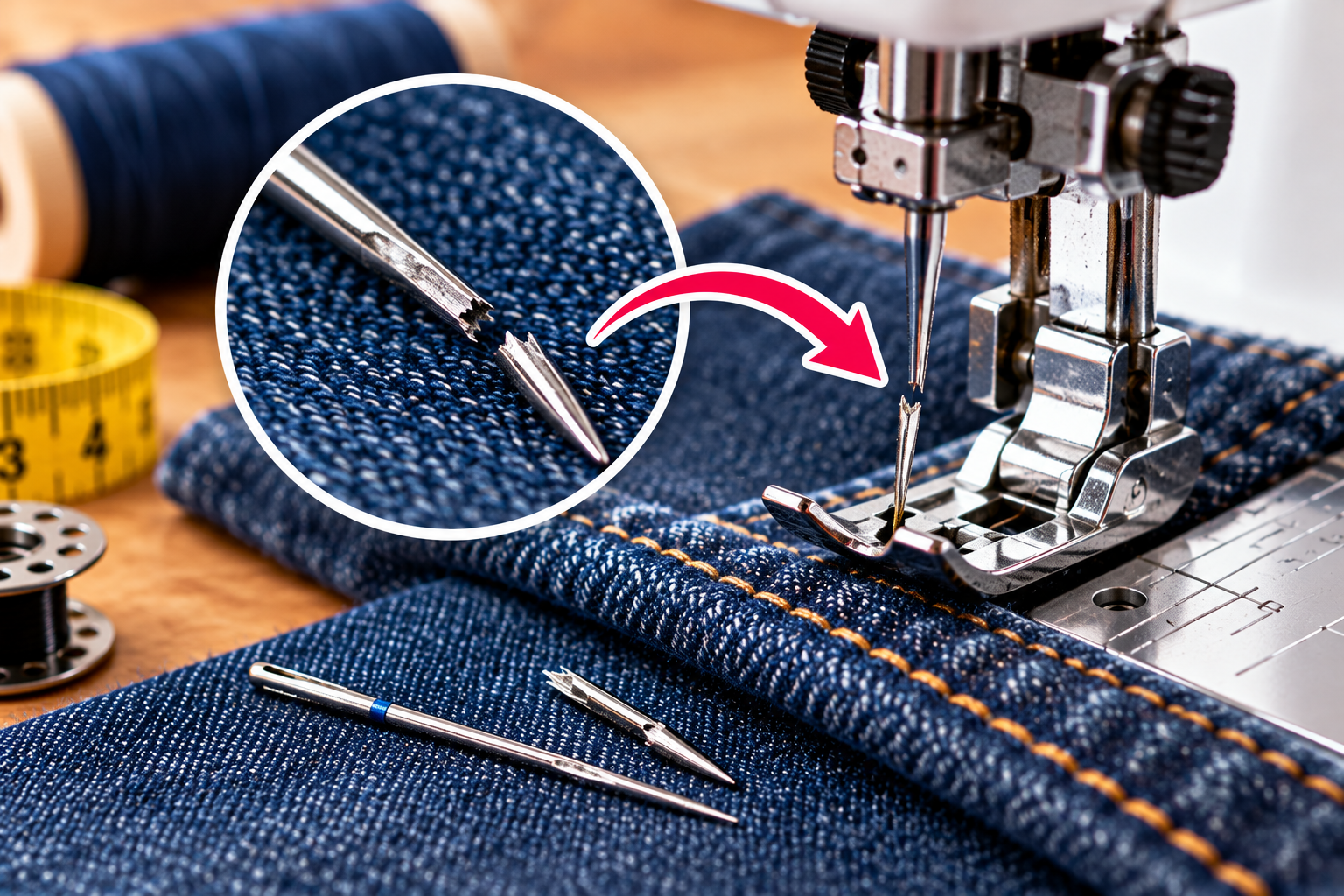
One of the most important things you can do is fit an appropriate needle. A denim/jeans needle is specifically designed for sewing tightly woven fabrics such as denim, with a medium ballpoint and a reinforced blade that penetrates the fabric with less deflection and a reduced risk of breakage and skipped stitches. Don’t simply use whatever needle happens to already be fitted to your machine. An unsuitable or worn needle can contribute to skipped stitches, needle deflection, thread breakage, broken needles and poor stitch formation.
What Size Denim Needle Should I Use?
The correct needle size depends on the weight of your denim and the thread you’re using. As a general principle, lighter denim calls for a smaller suitable denim needle, and heavier denim calls for a larger one. Common jeans needles are available in sizes such as 90/14, 100/16 and 110/18.
However, don’t automatically fit the largest needle you can find. Check your sewing machine manual and the needle manufacturer’s recommendations. The needle needs to be appropriate for the machine, fabric and thread combination.
Always Start With a Fresh Needle
Denim isn’t the fabric for trying to squeeze another project out of an old needle. Start an important denim project with a fresh needle, and replace it if you notice skipped stitches, popping sounds, poor stitch quality, bending or visible damage. A packet of needles is considerably cheaper than repairing damage caused by continuing to sew with a bent needle.
What Thread Should I Use for Denim?
For construction seams, a strong, good-quality sewing thread appropriate for the project is important. For visible topstitching, you may want a heavier jeans or topstitching thread to create the traditional appearance associated with denim garments.
Look closely at a pair of jeans. The contrasting stitching is often a significant part of the design. Popular colours include gold, tan, brown, navy, black and cream. You can also deliberately choose a completely contrasting colour.
Can I Put Thick Topstitching Thread in the Bobbin?
Don’t automatically assume that because you’re using thicker thread on top, you should use exactly the same thread in the bobbin. Your sewing machine may perform better with a suitable standard thread underneath. The correct combination depends on your machine and project, so check the recommendations for the particular topstitching thread you’re using and test before sewing the garment.
Use a Longer Stitch Length
Very short stitches can look inappropriate on heavyweight denim. For visible topstitching, a longer stitch often produces the classic jeans appearance.
Rather than giving one universal setting, we’d recommend testing several stitch lengths on an offcut. The ideal setting depends on the denim weight, thread thickness, needle and desired appearance. Create a few rows and decide which looks best.
Test Everything on Scrap Denim
This is particularly important. Don’t make the waistband of your nearly finished jeans the place where you discover your machine doesn’t like your chosen thread.
Take leftover denim and reproduce the number of layers you’ll actually be sewing. Test the needle, thread, stitch length, tension, presser foot and machine speed. If you’re going to sew through four layers in the project, test four layers. Two layers aren’t a meaningful test.
Sew Slowly
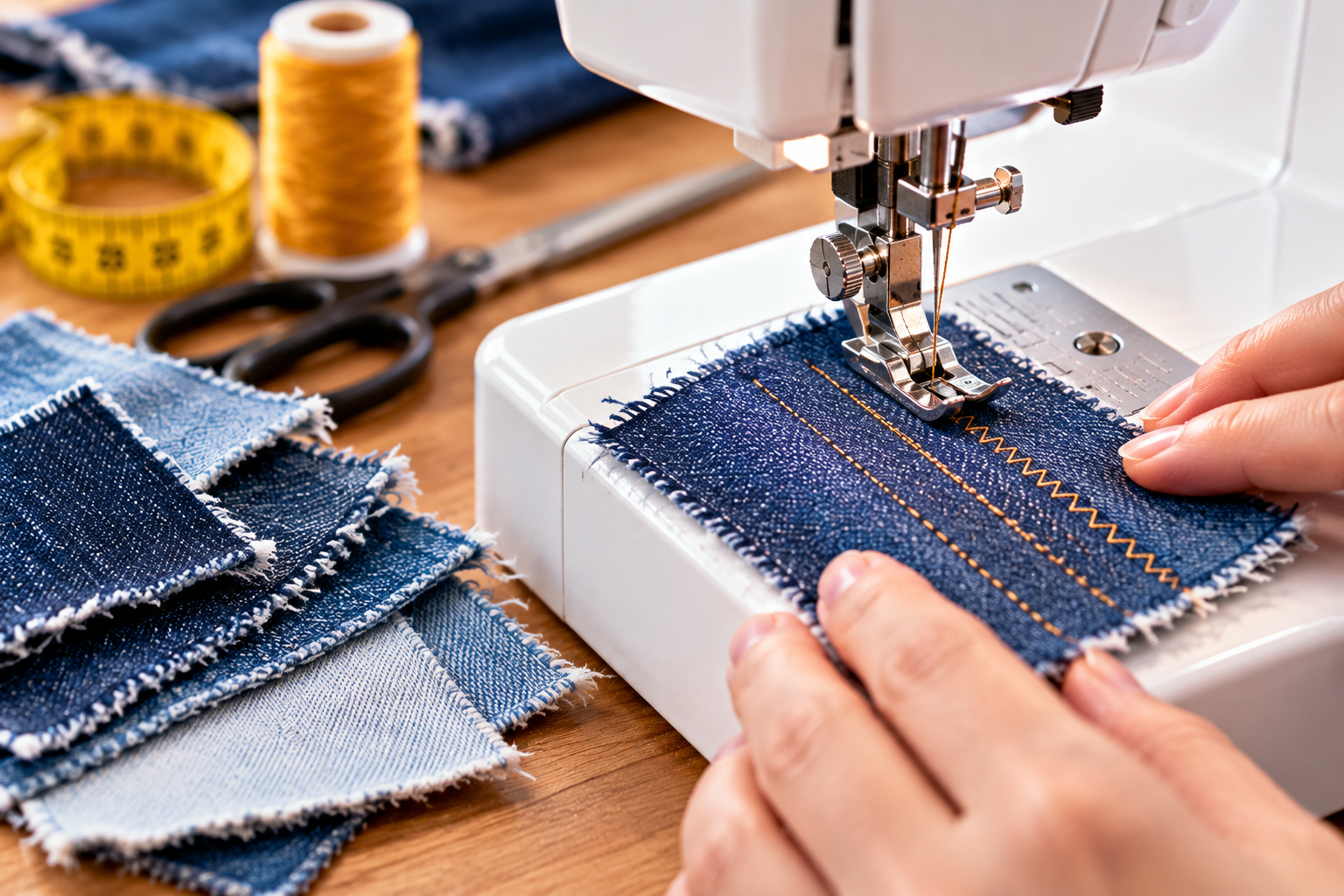
Your machine may be capable of sewing very quickly. That doesn’t mean maximum speed is appropriate when approaching a thick denim seam. Slow down around bulky sections and give the machine time to form each stitch correctly. This also gives you more control if the needle starts struggling.
Don’t Force the Fabric
If your sewing machine is struggling, don’t grab the fabric and drag it through. The feed dogs are designed to move the material. Pulling can bend the needle, damage the machine, produce uneven stitches and distort the seam. Guide the denim. Don’t fight the machine.
The Biggest Problem: Crossing Thick Seams
This is where many domestic sewing machines struggle. Imagine hemming jeans. Most of the hem might contain a manageable number of fabric layers. Then you reach the side seam, and suddenly the presser foot has to climb over a much thicker section. The foot can tilt backwards, which affects fabric feeding, and you might then experience tiny stitches, skipped stitches, fabric not moving, or needle breakage.
There are several ways to make this easier.
Use a Hump Jumper or Jean-a-ma-jig
A hump jumper, sometimes known by names such as a jean-a-ma-jig, is a simple tool designed to keep the presser foot level when crossing bulky seams. As you approach the thick section, the tool supports the back of the presser foot. Once the foot moves onto the bulky seam, it remains more level. The same principle can be used when coming down the other side.
It’s an inexpensive accessory that can make hemming jeans considerably easier.
Use the Presser Foot Levelling Button
Some presser feet have a small levelling or locking button. When the foot reaches a thick seam, the button can help temporarily keep the foot level. Check whether your machine has this feature and follow the instructions in your manual.
Flatten Bulky Seams Before Sewing
Sometimes you can reduce the bulk before it reaches the sewing machine. Depending on the project, carefully pressing the seam can help. Some experienced sewists also use appropriate tools to flatten particularly bulky denim seam allowances. Whatever technique you use, be careful not to damage the fabric or your work surface.
Turn the Handwheel When Necessary
If you’re crossing a particularly difficult section, slowing right down and carefully controlling individual stitches can help. If using the handwheel, always turn it in the direction specified by your machine manufacturer. Never force the needle through fabric if the machine clearly cannot penetrate it.
Don’t Keep Pressing the Foot Pedal if the Machine Is Stuck
This is important. If the motor is running but the needle isn’t moving properly through the fabric, stop. Don’t keep pressing harder on the foot control hoping the machine will eventually force its way through. You risk breaking the needle, damaging the machine and damaging the fabric. Remove the project carefully and identify why the machine is struggling.
Why Does My Needle Keep Breaking on Denim?
Possible causes include the wrong needle type, a needle that’s too fine, a bent needle, a needle incorrectly fitted, pulling the fabric, excessive seam thickness, the needle hitting the presser foot, or the machine being forced. Fit a fresh suitable denim needle and test again. If your machine simply can’t handle the thickness, don’t force it.
Why Is My Machine Skipping Stitches on Denim?
Skipped stitches can be caused by several factors. Start by checking the needle type, size, condition and installation, the machine threading, and the thread suitability. Rethread the machine and fit a fresh appropriate needle before making major tension adjustments.
Why Does My Thread Keep Breaking?
Again, don’t immediately blame tension. Check whether the machine is threaded correctly, the thread is catching, the needle eye suits the thread, the needle is damaged, the thread is poor quality, the spool is feeding freely, and whether the seam is excessively thick. Heavy topstitching thread combined with an unsuitable needle is a common source of frustration.
Can I Hem Jeans With a Normal Sewing Machine?
In many cases, yes. Shortening jeans is one of the most common denim jobs performed on domestic machines. You’ll normally need to consider the correct needle, appropriate thread, a longer stitch, the bulky side seams, and matching topstitching colour. The biggest challenge will usually be crossing the original side seams, and a hump jumper or levelling tool can be extremely useful here.
Can I Repair Jeans With a Normal Sewing Machine?
Yes, depending on the location and extent of the damage. You can potentially repair small tears, worn knees, split seams, holes and pocket damage. For holes, you may need a patch or suitable reinforcement behind the damaged area, and multiple rows of stitching can then secure and strengthen the repair.
Can I Make Jeans on a Normal Sewing Machine?
Yes. Plenty of home sewists make jeans using domestic sewing machines. However, it’s a more demanding project than sewing lightweight cotton, with multiple layers, topstitching, waistbands, pockets, belt loops, zips and thick seam intersections to work through. A capable machine makes the process easier, but good technique is equally important.
Can I Sew Denim Bags?
Yes, but remember that bags can become considerably thicker than garments. A denim bag might combine multiple denim layers, interfacing, lining, straps and reinforcement, and those layers can quickly exceed what some standard domestic machines comfortably handle. Test the maximum thickness before committing to the design.
What About Stretch Denim?
Stretch denim contains fibres such as elastane that allow the fabric to move, so needle choice may differ from traditional rigid denim. You need to consider both fabric thickness and fabric stretch. Depending on the particular fabric, an appropriate stretch-oriented needle may sometimes perform better than a conventional jeans needle. Test on scraps and follow needle-manufacturer guidance.
Do I Need a Walking Foot for Denim?
Not necessarily. However, a walking foot can be useful when sewing multiple layers because it helps feed the upper fabric alongside the lower layers. It can be particularly useful for denim bags, quilted denim, multiple layers and difficult fabric feeding. Check that the walking foot is compatible with your sewing machine.
Should I Increase the Thread Tension?
Don’t automatically increase tension just because you’re sewing denim. Start with your machine’s normal recommended settings, test your stitch, and only adjust tension if the test indicates it’s necessary. Many supposed tension problems are actually caused by incorrect threading, the wrong needle, a damaged needle or inappropriate thread. Always check the basics first.
Press Denim as You Sew
Pressing isn’t only for lightweight dressmaking. Good pressing can help denim seams sit flatter and make subsequent construction easier. A good-quality iron or ironing press can be particularly useful when working with larger denim projects. Just make sure your heat settings are appropriate for the fabric, particularly if the denim contains stretch fibres.
Can an Overlocker Sew Denim?
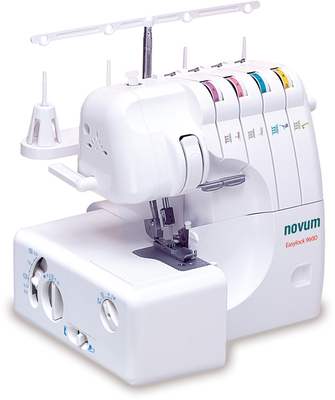
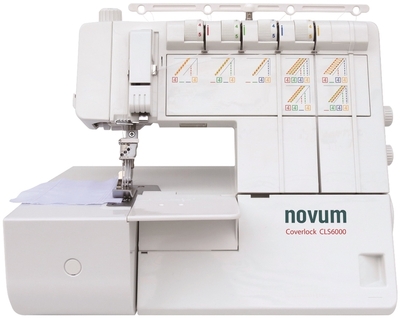
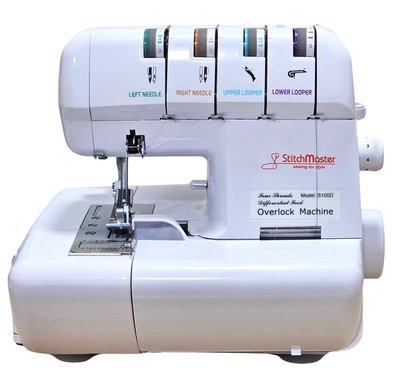
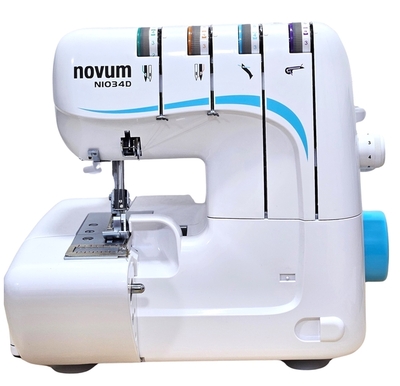
Many overlockers can finish denim edges, depending on the weight and number of layers involved. An overlocker can create a neat finish on seam allowances and help prevent fraying. However, an overlocker doesn’t replace the sewing machine for tasks such as topstitching, zips, pockets, belt loops and buttonholes. The two machines can work together.
When Do I Need a Heavy-Duty Sewing Machine?
You don’t need to buy a heavy-duty machine because you want to shorten one pair of jeans. However, consider one if you regularly sew denim, canvas, heavy furnishing fabrics, bags, multiple thick layers or workwear. A heavy-duty domestic machine may provide greater piercing power, stronger construction and better feeding for demanding projects.
Heavy-Duty Doesn’t Mean Industrial
This distinction is important. A heavy-duty domestic sewing machine is still a domestic sewing machine. An industrial sewing machine is designed differently and is typically built for sustained, specialised production work. If you’re sewing at home, a good heavy-duty domestic machine may be more practical because it can still provide the versatility required for general sewing.
What Should I Look for in a Sewing Machine for Denim?
If denim is going to be a regular part of your sewing, consider good piercing power, strong fabric feeding, adjustable presser foot pressure, longer stitch-length options, adjustable needle position, suitable presser feet, good low-speed control, extra presser-foot lift, and a strong motor and construction.
Don’t choose purely based on the words “heavy duty” printed on the machine. Look at what the machine is actually designed to handle.
Beginner Denim Sewing Checklist
Before sewing, check:
- Denim washed if required
- Fabric pressed
- Fresh denim/jeans needle fitted
- Needle size appropriate
- Suitable thread selected
- Machine correctly threaded
- Stitch length tested
- Scrap layers tested
- Bulky seams identified
- Hump jumper available if required
- Machine speed reduced around thick areas
A few minutes of preparation can prevent a lot of frustration.
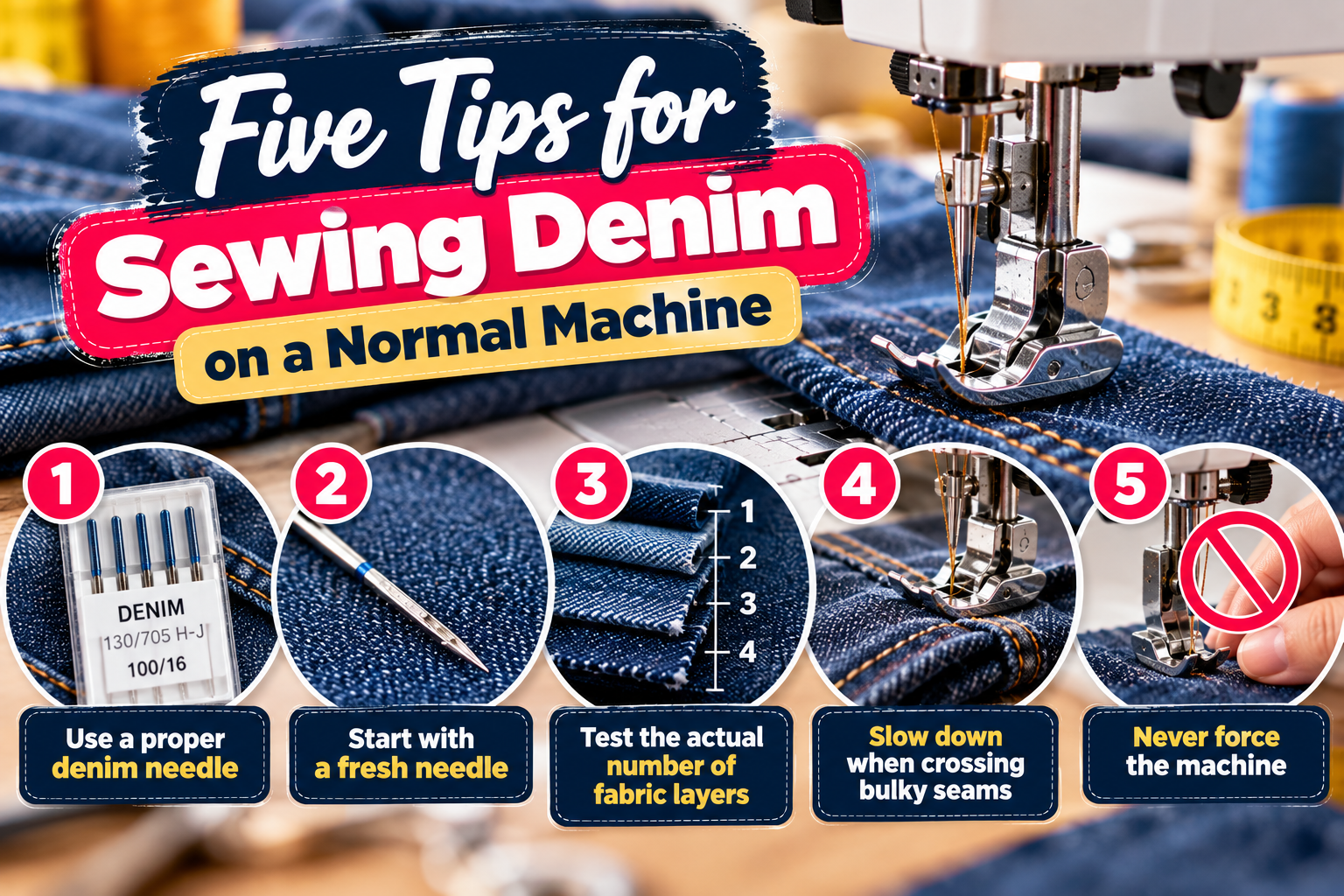
Five Tips for Sewing Denim on a Normal Machine
If you remember nothing else, remember these:
- Use a proper denim needle
- Start with a fresh needle
- Test the actual number of fabric layers
- Slow down when crossing bulky seams
- Never force the machine
These five habits will solve or prevent many common denim problems.
So, Can Your Sewing Machine Handle Denim?
Probably, within reason. A standard domestic sewing machine can often handle light and medium-weight denim perfectly well. The challenge comes when the fabric becomes extremely heavy or you’re asking the machine to penetrate many layers simultaneously.
If your machine is struggling, don’t assume you’re doing something wrong. There is a physical limit to what every sewing machine can comfortably handle.
If denim is one of the main materials you plan to sew, look beyond decorative stitch numbers. Features such as piercing power, fabric feeding, presser-foot lift, speed control and the machine’s ability to handle multiple layers can be far more important.
For occasional jeans alterations, your existing sewing machine may already be perfectly capable. Fit a fresh denim needle, choose suitable thread, test your settings and slow down around thick seams.
If you’re regularly making jeans, denim jackets, bags and other heavyweight projects, that’s when upgrading to a more capable heavy-duty machine can start to make a noticeable difference.