





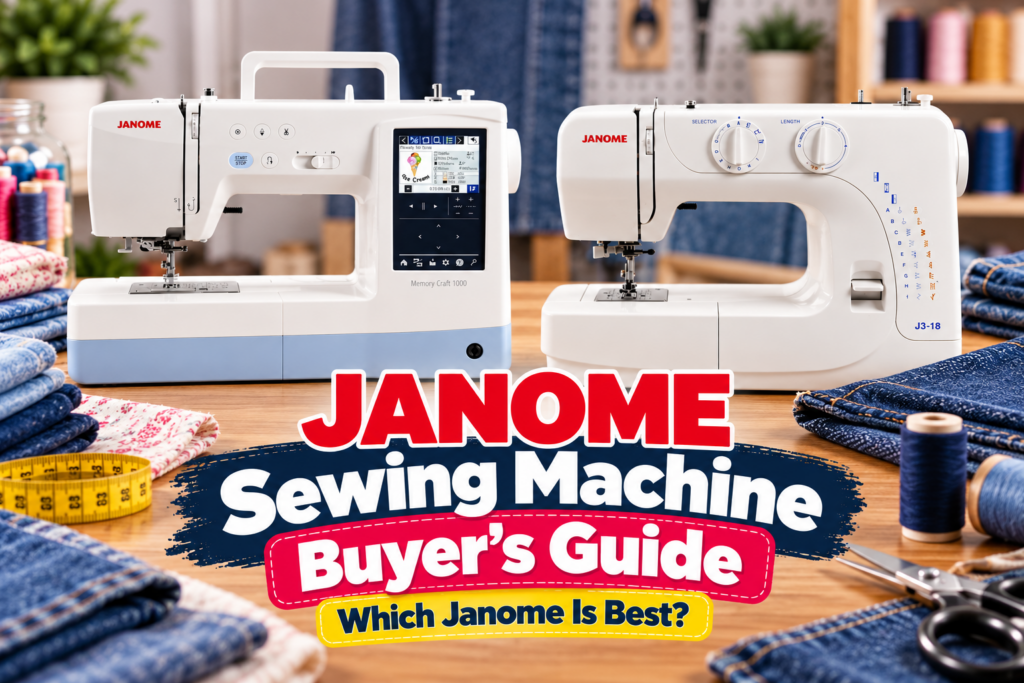
Janome is one of the best-known sewing machine manufacturers in the UK, with machines designed for complete beginners, experienced dressmakers, quilters and embroidery enthusiasts.
The range is extensive, which is great for choice but can make deciding which Janome sewing machine to buy a little confusing. Should you choose mechanical or computerised? Is a 725S enough, or should you move up to a 230DC LE, 5270QDC, Atelier or Memory Craft machine? And which features will actually make a difference to the type of sewing you do?
The most expensive Janome isn’t automatically the best machine for you. The right choice depends on what you want to sew, how often you’ll use your machine and how far you expect your skills to develop.
In this guide, we’ll explain the main options and the features we’d consider before choosing your next machine.
Why Choose a Janome Sewing Machine?
Janome has built an excellent, long-established reputation for producing smooth, reliable and easy-to-use sewing machines, trusted by sewists around the world.
The current UK range stretches from straightforward mechanical machines through to sophisticated professional sewing and quilting models such as the Memory Craft and Continental ranges.
Depending on the machine, features can include:
- Automatic needle threading
- Top-loading bobbins
- One-step buttonholes
- Adjustable stitch length and width
- Speed control
- Needle up/down
- Automatic thread cutting
- Decorative stitches
- Alphabet and stitch memory
- Large sewing workspaces
- Drop feed for free-motion work
- AcuFeed fabric feeding
- Colour screens
- Quilting functions
- Embroidery
The key is working out which of those features you’ll genuinely use.
Start With What You Want to Sew
Before comparing individual Janome machines, think about what you’ll be making. Are you mainly interested in repairs and alterations, learning to sew, dressmaking, craft projects, children’s clothes, home furnishings, quilting, embroidery, sewing heavier fabrics, or a mixture of everything?
Someone wanting a straightforward machine for alterations will have very different requirements from someone planning to make large quilts every week. Decide what you want the machine to do first, then compare models.
Mechanical vs Computerised Janome Sewing Machines
One of the first decisions is whether to choose a mechanical or computerised model.
Mechanical machines generally use physical dials and sliders for stitch selection and adjustment. They’re popular because they’re straightforward, easy to understand, reliable, usually more affordable, and excellent for everyday sewing.
Janome has several strong mechanical options. Models such as the J3-18, J3-20, J3-24, 423S and 725S are aimed at users who want easy operation without giving up useful features. The J3-18, J3-20 and J3-24 are Janome’s simplest dial-controlled machines, well suited to everyday dressmaking, repairs and lighter fabrics. The 423S and 725S sit a step up and have a bit more muscle for heavier fabrics, so they’re worth considering if you regularly sew thicker layers alongside your usual dressmaking.
Computerised machines replace many traditional controls with buttons and electronic settings. They can provide features such as LCD screens, automatic stitch settings, adjustable sewing speed, needle up/down, automatic thread cutting, additional decorative stitches, stitch memory and lettering.
Don’t assume computerised means harder to use. For many beginners, features such as automatic stitch settings and speed control actually make sewing easier.
Janome 725S – Best Mechanical Machine for Beginners
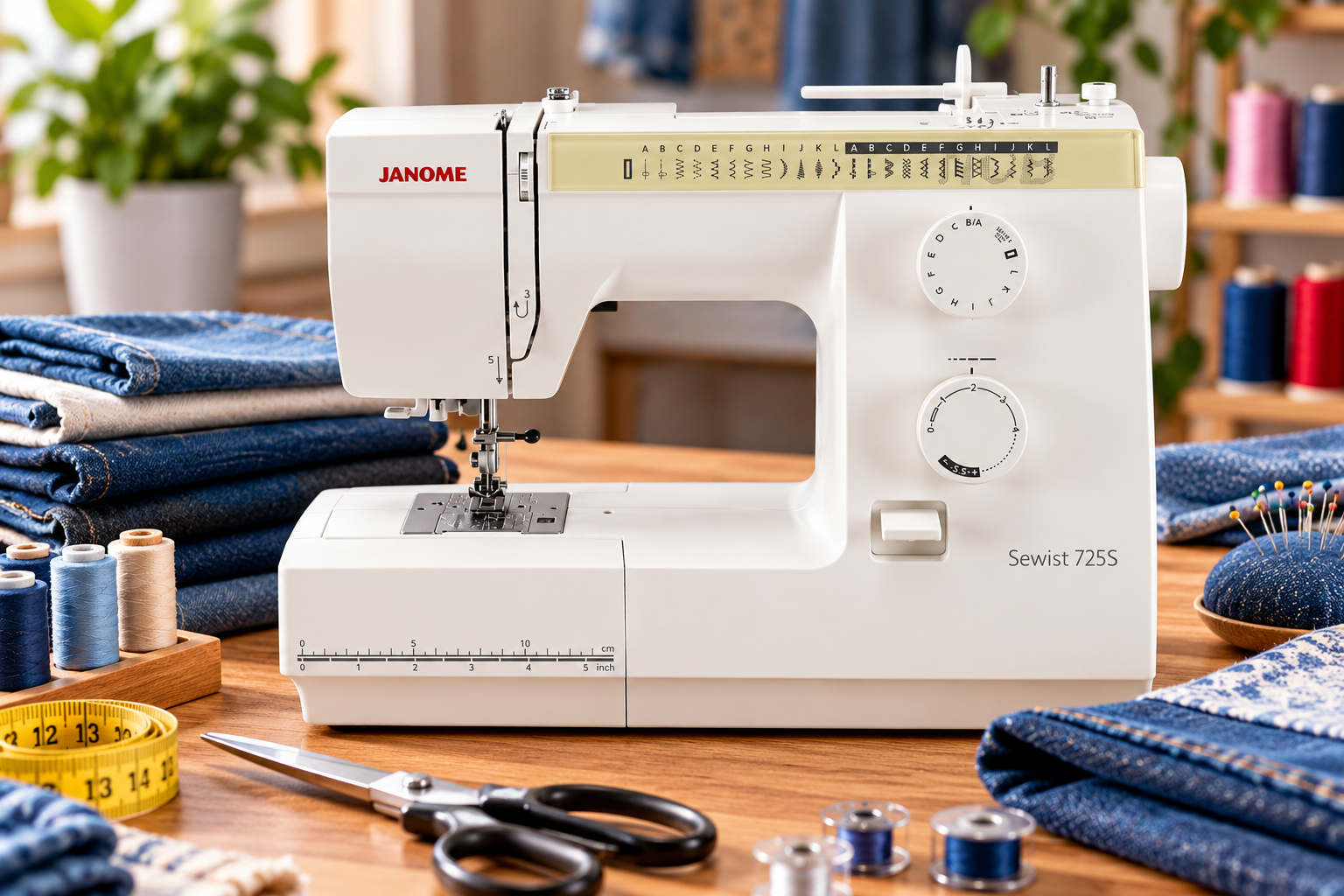
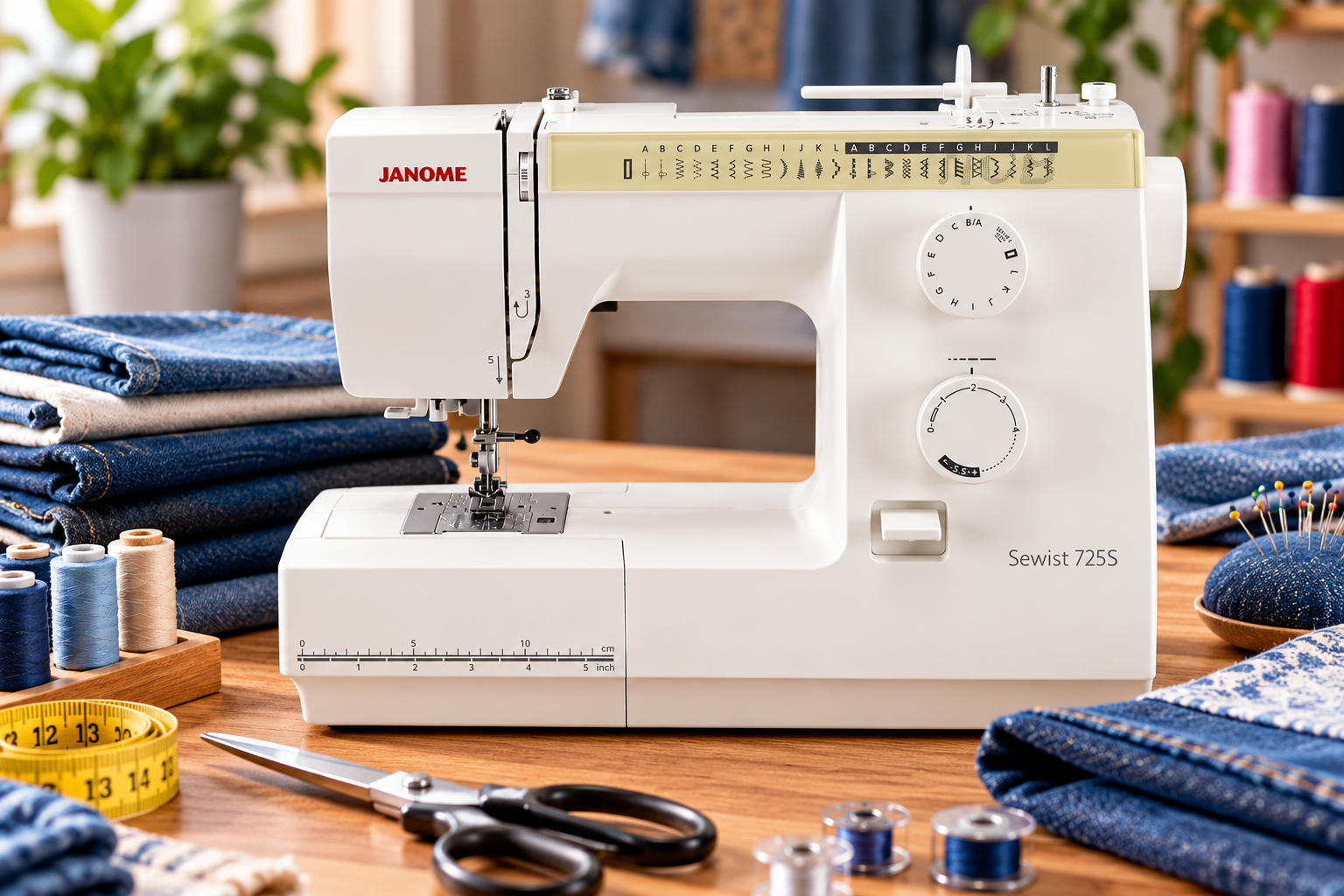
The Janome 725S is one of the machines we’d look at closely for someone who wants a quality mechanical model. It’s a modern mechanical machine that’s ideal for beginners learning stitch settings while still providing the utility stitches needed for more advanced sewing.
It includes a top-loading bobbin, built-in needle threader, one-step buttonhole, LED lighting, a hard cover and easy mechanical controls.
We’d consider it if you want a mechanical sewing machine, prefer dials rather than screens, are learning dressmaking, want a machine you won’t immediately outgrow, and value simple, traditional operation. It’s an excellent example of a machine that keeps things uncomplicated without feeling too basic.
Janome 423S – Great Traditional All-Rounder
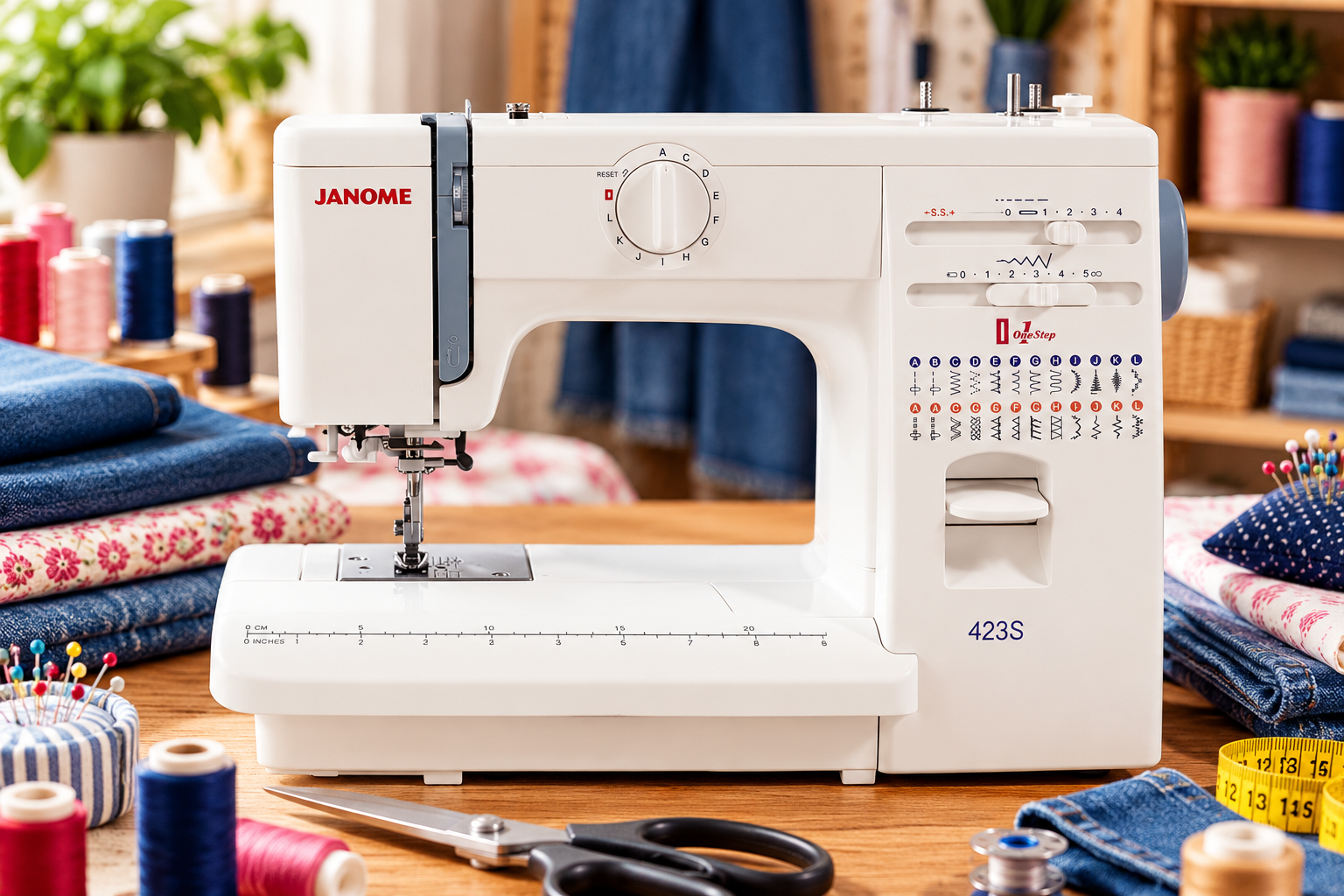
The Janome 423S is another popular mechanical choice. It uses a dial for stitch selection and slide controls for stitch length and width, and suits both beginners and more experienced sewists.
It also includes an automatic needle threader, one-step buttonhole, adjustable stitch length and width, and straightforward mechanical controls.
Consider it if you want something traditional, prefer manual control, sew clothing and home furnishings, don’t need computerised features, and want a machine suitable beyond the beginner stage. For someone who simply enjoys straightforward sewing, there’s nothing wrong with sticking with a good mechanical machine.
Janome 230DC LE – Best First Computerised Janome
If you’d prefer computerised controls, the Janome 230DC LE is a natural step up. It suits both beginners and more experienced users, with computerised stitch selection, automatic needle threading and a top-loading bobbin.
This type of machine gives you the convenience of computerised sewing without moving straight into a large premium model.
We’d look at it if you want your first computerised machine, enjoy dressmaking, want easier stitch selection, plan to sew regularly, and want something you can grow into. For many home sewists, this is where computerised machines start providing a noticeable increase in convenience.
If you’d like the same computerised convenience with more built-in variety, the Janome 360DC LE is worth a look too. It shares the same type of controls and workspace as the 230DC LE, but doubles the stitch count to 60, including seven one-step buttonhole styles, so there’s more scope for decorative and buttonhole work as your skills develop.
Janome 5060 QDC – A Favourite for Patchwork and Quilting
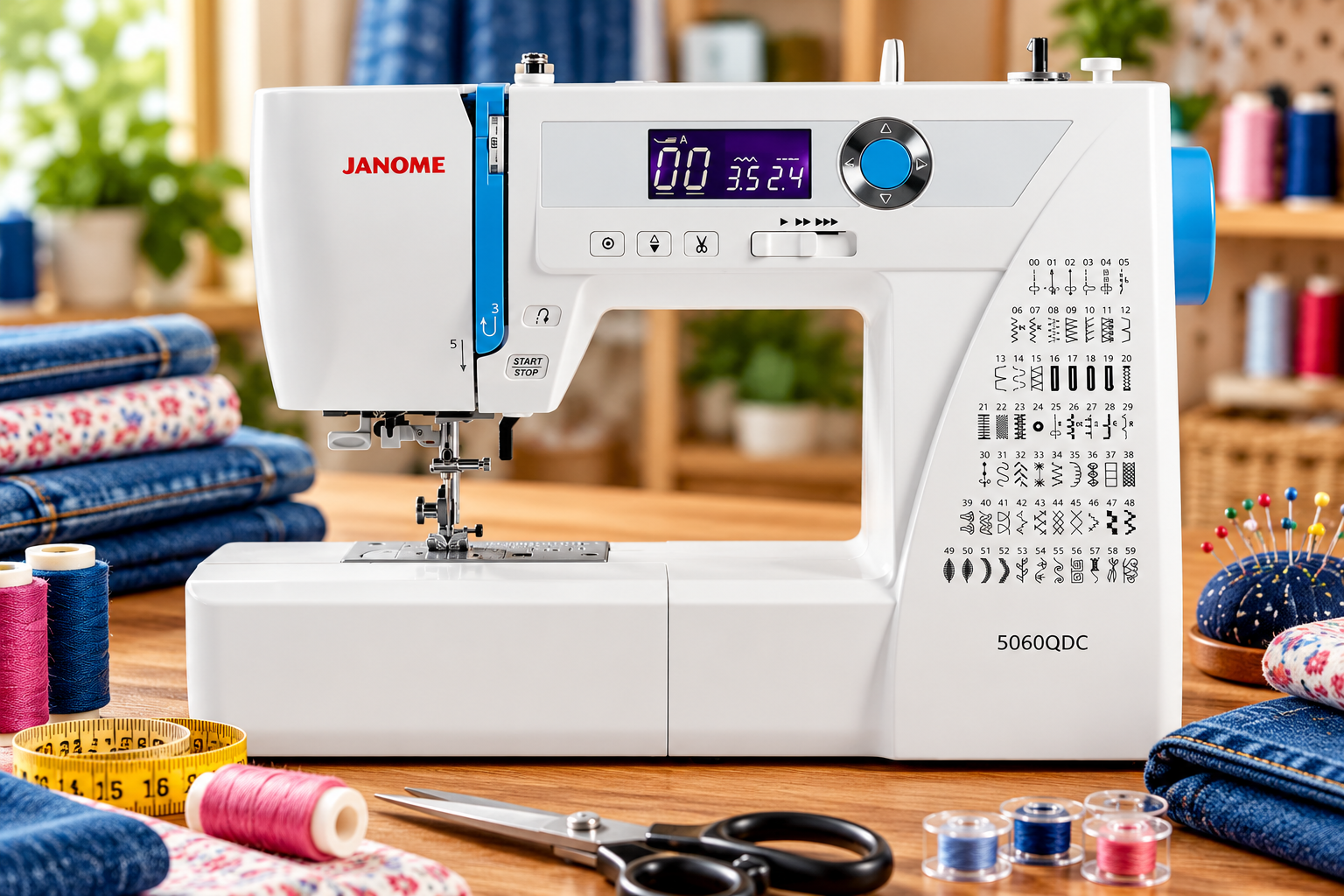
The Janome 5060 QDC is another computerised option worth considering, and it’s consistently one of our most popular choices with patchwork and quilting customers. It’s a fully computerised machine with 60 built-in stitches, six one-step buttonhole styles, automatic needle threading and thread cutting, needle up/down, and a lock-stitch function.
It comes with a quilting pack as standard, including a quarter-inch seam foot, a walking foot and a cloth guide, which makes it a convenient all-rounder for dressmaking, repairs, upcycling and quilting alike. It isn’t designed for heavy-duty work such as upholstery or canvas, so for those projects the HD2200 or HD9 Professional below are a better fit.
Janome 5270QDC – Excellent for Sewing and Quilting
If you’re moving beyond beginner sewing and want more features, the Janome 5270QDC is worth considering. It sits in Janome’s computerised range and is designed to offer greater creative flexibility for both general sewing and quilting.
This type of machine makes sense if you’re beginning to use features such as automatic thread cutting, speed control, needle positioning, quilting accessories, decorative stitches and more sophisticated sewing functions.
We’d consider it if you sew frequently, make clothing, quilt, want advanced automatic features, and want a machine that can handle varied projects. It’s particularly well suited to someone who’s moved beyond basic sewing and wants something more capable without entering the professional end of the Janome range.
Janome Atelier Series – For Serious Home Sewists
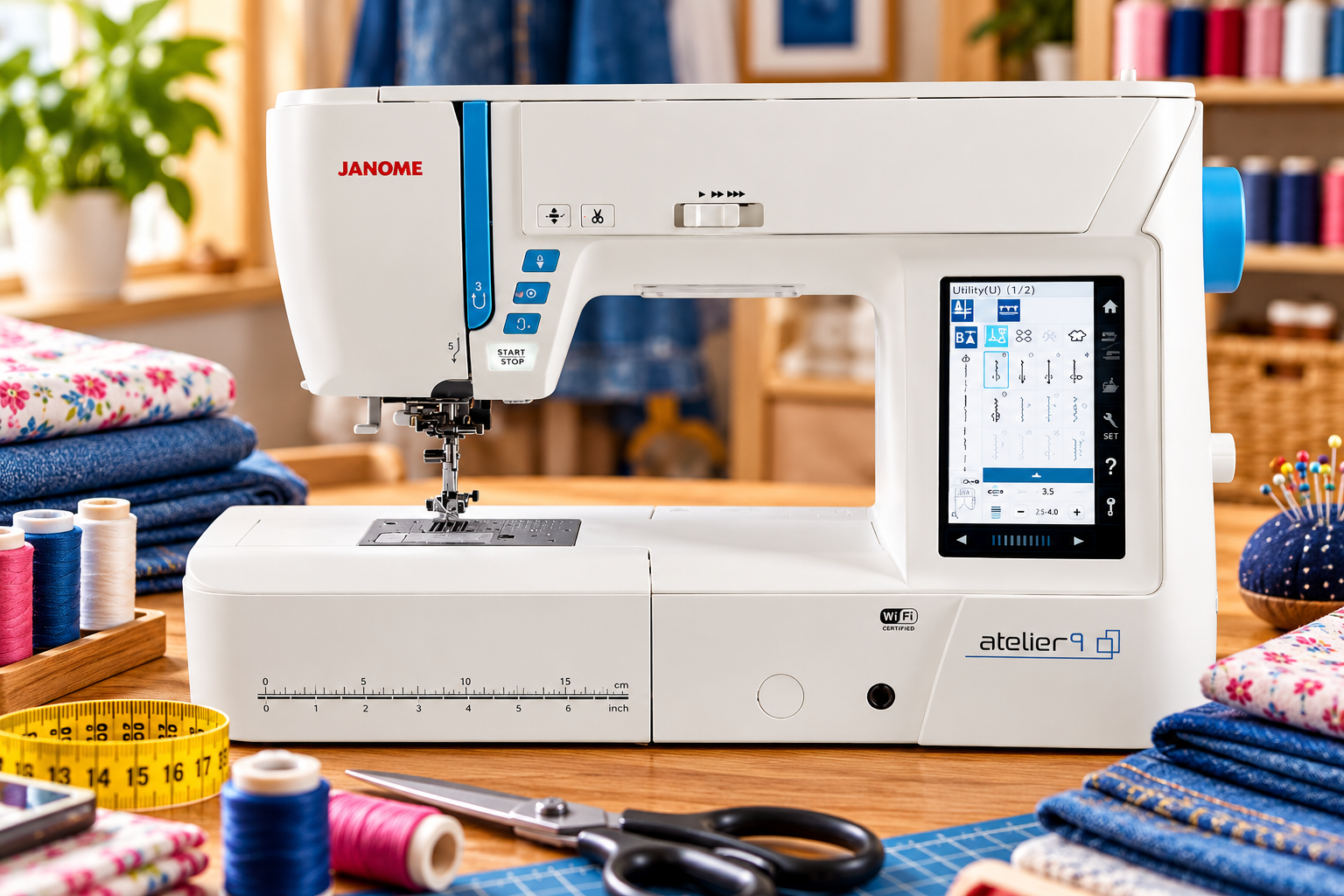
The Janome Atelier range is aimed at people who want more space and more advanced features. The Atelier 3 Anniversary Edition, for example, is a fully computerised machine designed for dressmaking, quilting, crafting and home furnishings, with 120 built-in stitches including alphabet characters, 3 lettering fonts and 7 one-step buttonhole styles.
Higher up the range, the Atelier 9 combines sewing and embroidery in one machine, with 300 built-in sewing stitches, 250 embroidery designs, 10 embroidery lettering fonts, a colour touchscreen and Wi-Fi connectivity.
Look at Atelier machines if you sew several times a week, quilt regularly, want additional workspace, use advanced stitches, and want premium convenience features. This is the point where you’re buying for a serious hobby rather than simply occasional sewing.
Janome Memory Craft – Premium Sewing and Quilting
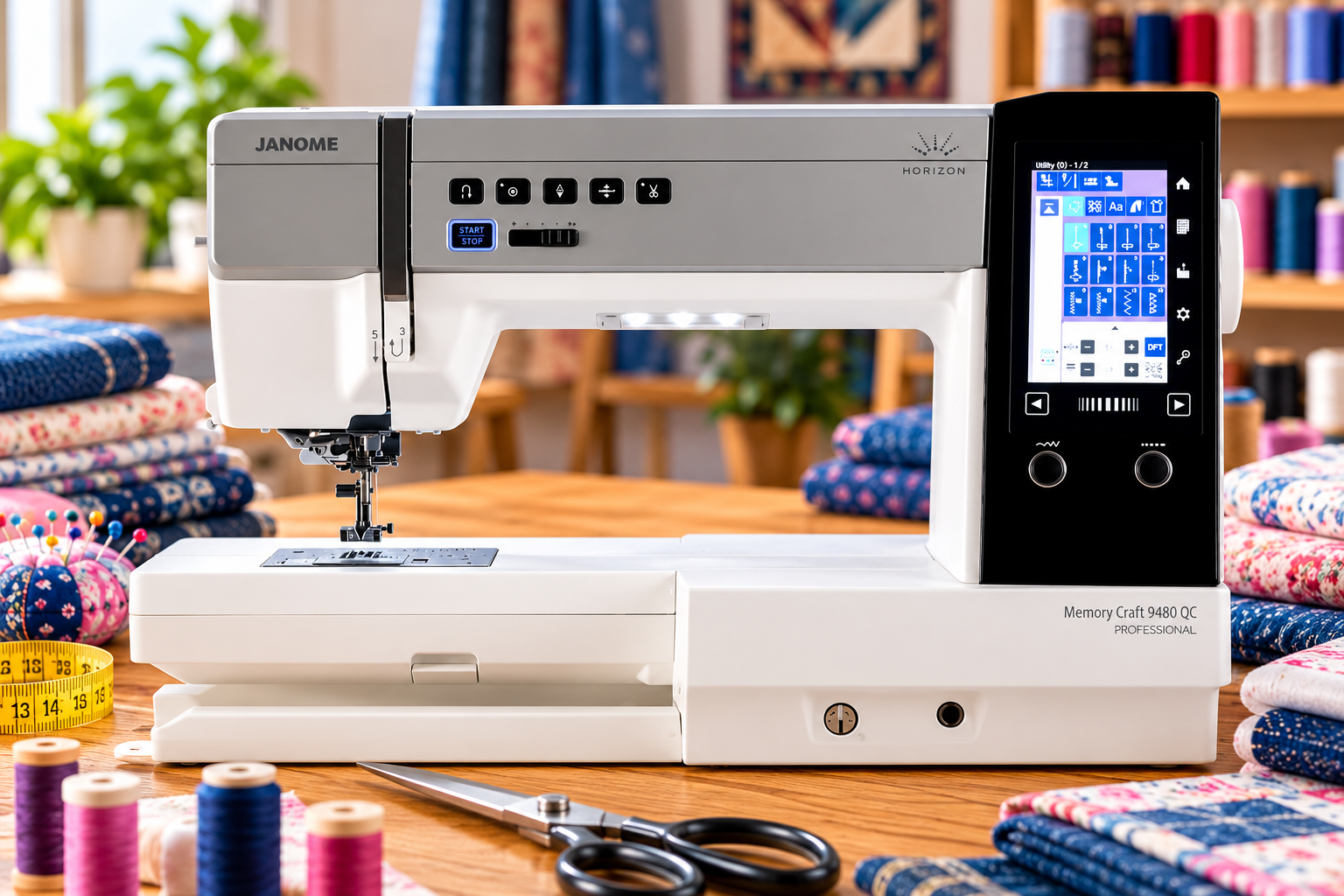
Janome’s Memory Craft machines sit towards the premium end of the range. They’re aimed at experienced sewists and quilters who want larger workspaces, advanced feeding systems, greater precision, high sewing speeds, professional-style controls and sophisticated quilting features.
The Memory Craft 9480 QC Professional, for example, offers a 280mm workspace, a 620 x 420mm extension table, 9mm stitch width, a colour touchscreen, AcuFeed Flex Plus and Janome’s Accurate Stitch Regulator system.
The current Professional Series also includes machines such as the Memory Craft 6700P, Memory Craft 8200QCP SE, Memory Craft 9480 QC Professional, Continental M8, and HD9 Professional models. These are machines for people who already know they’re serious about sewing or quilting.
Janome HD2200 and HD9 Professional – The Workhorses
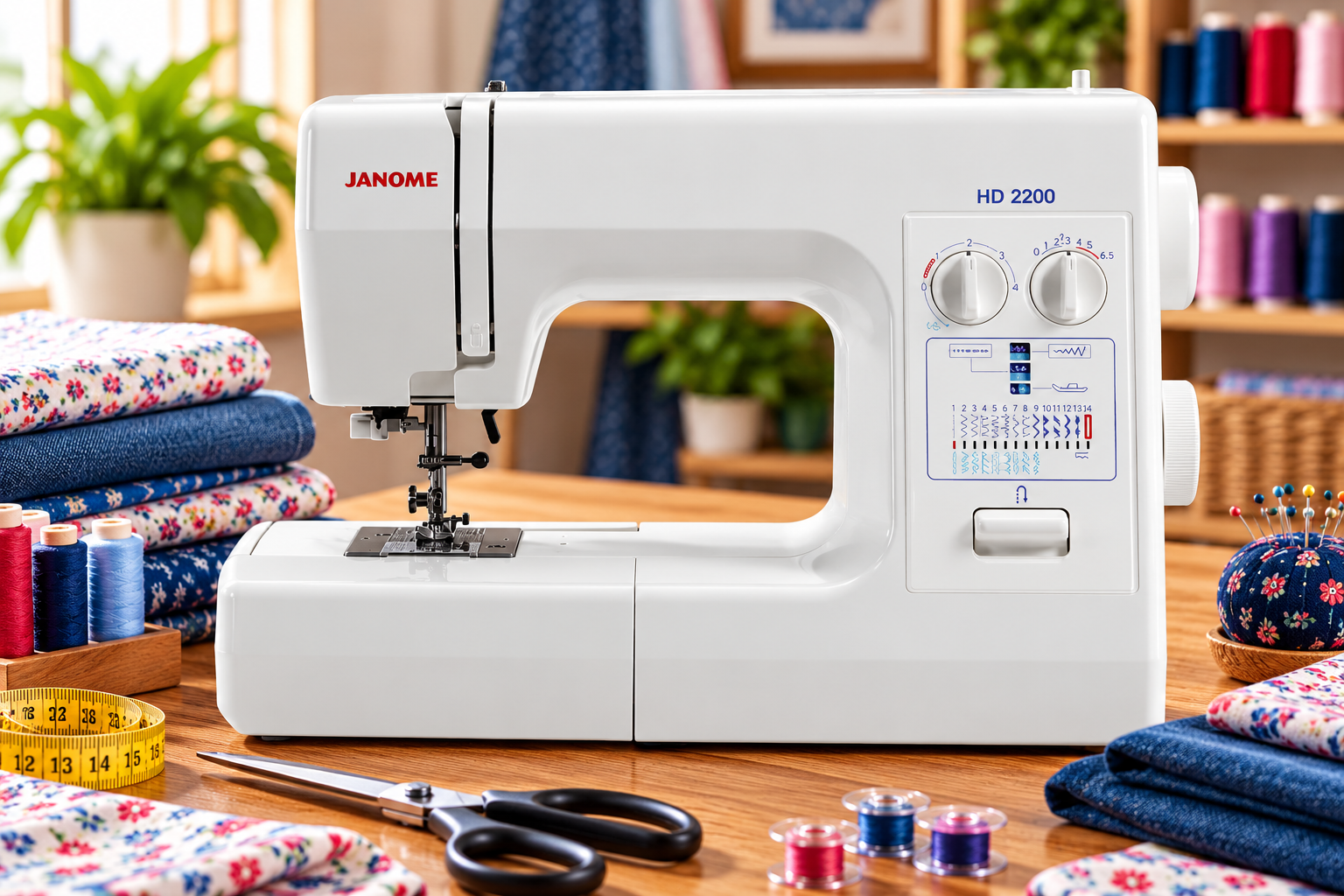
If your sewing regularly involves thick or multiple layers of fabric, the HD2200 and HD9 Professional are the two Janome machines built specifically for that job.
The HD2200 has a metal chassis and a powerful motor designed to cope with thicker fabrics and multiple layers, including denim, canvas and garment leather, as well as curtains, bags, upholstery and soft furnishings. It also includes a 7-piece Superior Feed System and adjustable presser foot pressure to help manage bulkier layers, while remaining straightforward enough for a confident beginner to use.
The HD9 Professional goes further still. It’s a dedicated straight-stitch machine, built as a semi-industrial workhorse with extra needle penetration power, a side-loading industrial rotary hook and a high-powered motor that runs up to 1,600 stitches per minute. It’s aimed at heavy fabric and multi-layer work such as bag making, upholstery, marine fabric, bridal wear and high-volume quilting, rather than everyday dressmaking.
Between the two, the HD2200 suits anyone who occasionally needs extra power for heavier projects alongside regular sewing, while the HD9 Professional is for sewists who work with heavy or dense fabric often enough to justify a dedicated machine for it.
Best Janome Sewing Machine for Beginners
If you’re completely new to sewing, we’d keep things straightforward.
For a mechanical beginner machine, look at the J3-18, J3-20, J3-24, 423S or 725S. The 725S is particularly attractive if you want a modern mechanical machine with enough features to grow with you, while the 423S and 725S give you a bit more capability for heavier fabrics than the simpler J3 range.
If you want computerised convenience from the beginning, the 230DC LE is a strong option, suitable for beginners while still allowing room for your skills to develop.
Best Janome Sewing Machine for Dressmaking
Dressmakers should prioritise good fabric feeding, adjustable stitch length and width, one-step buttonholes, needle up/down, speed control, a free arm, automatic thread cutting and good lighting.
For beginners, we’d consider the 725S, 423S or 230DC LE. If you’re making clothing regularly, moving to machines such as the 5270QDC or Atelier range gives you additional convenience and creative functionality.
Don’t assume you need hundreds of stitches to make clothes. A good straight stitch, reliable fabric feeding and easy control are far more important.
Best Janome Sewing Machine for Quilting
Janome has a particularly strong reputation among quilters.
For smaller projects and patchwork, a general-purpose computerised machine may provide everything you need. As your projects become larger, however, workspace becomes increasingly important. The Memory Craft 8200QCP SE provides 280mm of arm space to the right of the needle and uses Janome’s AcuFeed system for more precise fabric handling. At the premium end, the Memory Craft 9480 QC Professional adds stitch regulation and other specialist quilting functions.
For quilting, we’d prioritise a large workspace, extension table, needle up/down, speed control, automatic thread cutter, walking foot or advanced feeding, drop feed, quarter-inch foot, good LED lighting, knee lift, and stitch regulation on advanced machines.
If quilting is your main hobby, workspace and feeding are more important than having hundreds of decorative stitches.
Best Janome Machine for Larger Projects
If you’re making bed quilts, curtains, large home furnishings, large bags or other bulky projects, look for a machine with more space to the right of the needle.
The Memory Craft 8200QCP SE’s 280mm workspace is an example of the kind of space that can make managing large projects considerably easier. You can certainly make a quilt on a smaller machine, but manoeuvring a large amount of fabric through a compact sewing area quickly becomes frustrating.
Janome Professional Series
If you’re an advanced sewist or want something closer to professional performance, Janome’s Professional Series is worth investigating. The current range includes dedicated straight-stitch machines alongside high-end sewing and quilting machines.
This category is aimed more towards people who sew very frequently, need increased workspace, want higher sewing speeds, quilt seriously, require specialist feeding, and want professional-style controls.
For occasional home sewing, these machines may be unnecessary. For someone spending many hours each week at their machine, the additional capability can make a significant difference.
What About Janome Sewing and Embroidery Machines?
Janome also produces machines that combine normal sewing with embroidery. The Memory Craft 1000, for example, is a two-in-one machine where the embroidery carriage can be opened for embroidery and closed for conventional sewing. It uses a 140mm x 140mm embroidery hoop, offers 300 built-in sewing stitches and 241 embroidery designs, and sews at up to 860 stitches per minute.
The Atelier 9, covered above, is another combination machine positioned further up the range, adding a larger embroidery area and Wi-Fi connectivity.
Combination models make sense if you genuinely want to create embroidered clothing, personalised gifts, monograms, children’s clothing, home furnishings or decorative quilts.
If embroidery doesn’t interest you, concentrate your budget on a better dedicated sewing machine instead.
What About Janome Embroidery-Only Machines?
You don’t necessarily need to replace your existing sewing machine to get into embroidery. Janome also produces embroidery-only machines.
The Memory Craft 550E LE, for example, provides embroidery speeds up to 860 stitches per minute and includes 180 built-in embroidery designs and six fonts, over a 200mm x 360mm embroidery area.
An embroidery-only machine can be a good choice if you already own a sewing machine you love and simply want to add embroidery as a separate capability.
Which Janome Features Are Worth Paying For?
Some features will make a much bigger difference than others.
Automatic needle threader. Small but incredibly useful. If you sew regularly, you’ll use it constantly.
Top-loading bobbin. Makes loading and monitoring your bobbin straightforward.
Speed control. Particularly useful for beginners and detailed sewing. You can limit the machine’s maximum speed and concentrate on accurate fabric control.
Needle up/down. Excellent for corners, curves, quilting, appliqué and precise garment construction.
Automatic thread cutter. Not essential, but once you’ve become accustomed to one, it’s difficult to give up.
AcuFeed. Janome’s AcuFeed systems are designed to help feed multiple layers more evenly. This becomes particularly useful for quilting and projects involving difficult or multiple fabric layers. Both the Memory Craft 8200QCP SE and the premium Memory Craft 9480 QC Professional feature AcuFeed technology.
Large workspace. If you quilt, don’t underestimate this feature. Extra space can be more valuable than dozens of additional stitches.
How Many Stitches Do You Really Need?
Probably fewer than you expect.
For everyday sewing, your most frequently used stitches are likely to include straight stitch, zigzag, stretch stitches, overcasting, blind hem and buttonhole. Decorative stitches are useful if you enjoy creative sewing, but don’t choose a machine purely because one model has many more stitches than another.
For most buyers, we’d prioritise stitch quality, fabric feeding, ease of use, workspace and useful automatic features before stitch count.
Should You Buy Mechanical or Computerised?
Choose mechanical if you prefer simple controls, mostly do straightforward sewing, want to keep the cost down, and like traditional machines.
Choose computerised if you sew regularly, want speed control, want needle up/down, like automatic features, quilt, want decorative stitches, and want more room to develop.
Neither is automatically better. Janome makes excellent examples of both.
Which Janome Sewing Machine Should You Buy?
Here’s our simple guide.
If you’re a complete beginner, look at the J3-20 or another straightforward Janome mechanical machine. If you want a better mechanical machine as a beginner, consider the 725S. If you’d rather start with computerised sewing, look closely at the 230DC LE.
As a regular home sewist, consider a machine such as the 5270QDC or 5060 QDC. As an experienced dressmaker or quilter, look towards the Atelier range. As a serious quilter, consider the Memory Craft 8200QCP SE, Memory Craft 9480 QC Professional or other Professional Series machines.
If you regularly sew heavy or multiple layers of fabric, look at the HD2200 or HD9 Professional. If you want sewing and embroidery combined, look at a combination model such as the Memory Craft 1000 or Atelier 9.
Don’t Forget Accessories
When comparing machines, look at what’s included in the box. Accessories may include standard presser feet, a zipper foot, buttonhole foot, blind hem foot, overcasting foot, bobbins, needles, a hard or soft cover, an extension table, and quilting feet.
Then think about accessories you might want later, such as a walking foot, quarter-inch foot, free-motion quilting foot, specialist dressmaking feet, an extension table, or additional bobbins.
Janome categorises accessories by machine compatibility, so always check that a particular foot or attachment suits your machine before purchasing.
Try Before You Buy
Specifications tell you what a sewing machine can do. They don’t tell you how it feels.
If possible, visit a specialist sewing machine retailer and try several Janome models. Pay attention to how smoothly it sews, how the controls feel, noise levels, visibility around the needle, how easy it is to thread, how easily you can change stitches, and whether the machine feels comfortable.
Janome maintains a network of official UK retailers and directs customers to local retailers for sales and warranty support. Sometimes two machines look very similar on paper but feel completely different once you sit down and use them.
Janome Sewing Machine Buyer’s Checklist
Before buying, ask yourself:
- What will I mainly sew?
- What’s my budget?
- Do I want mechanical or computerised controls?
- Do I need speed control?
- Do I want needle up/down?
- Would I use an automatic thread cutter?
- Do I need decorative stitches?
- Will I be quilting?
- How much workspace do I need?
- Would AcuFeed be useful?
- Will I use embroidery?
- Which accessories are included?
- Can I easily buy additional accessories?
- Will this machine still suit me as my skills develop?
Frequently Asked Questions
Are Janome sewing machines good for beginners?
Yes. Janome produces several machines specifically suitable for beginners. Models such as the 725S provide straightforward mechanical controls, while the 230DC LE offers an easy introduction to computerised sewing.
Which Janome sewing machine is best for beginners?
For a mechanical machine, we’d look closely at the 725S. If you’d prefer computerised features, the 230DC LE is designed to suit beginners while still giving you room to develop.
Is Janome good for dressmaking?
Yes. Janome offers machines ranging from straightforward mechanical models through to advanced computerised machines with speed control, automatic thread cutting and sophisticated fabric feeding.
Is Janome good for quilting?
Janome has an extensive quilting range. Machines such as the Memory Craft 8200QCP SE provide a 280mm workspace and AcuFeed, while the Memory Craft 9480 QC Professional adds advanced features including Janome’s Accurate Stitch Regulator.
Should I buy a mechanical or computerised Janome?
A mechanical machine is ideal if you prefer simplicity. A computerised model is worth considering if you sew regularly and want conveniences such as speed control, needle positioning and automatic functions.
Can Janome machines sew denim?
Many domestic Janome machines can sew denim when fitted with the correct needle and used within the machine’s capabilities. For particularly thick or frequent heavy-duty work, choose an appropriate heavier-duty model rather than assuming every domestic machine will handle unlimited layers.
Final Thoughts
The best Janome sewing machine is the one that fits the way you sew.
If you’re learning and prefer traditional controls, a machine such as the 725S gives you a straightforward introduction without feeling disposable. If you want computerised convenience, the 230DC LE offers an accessible way into electronic sewing.
For regular sewing and quilting, moving further into Janome’s computerised range gives you additional automatic features and creative flexibility. And for serious quilters or highly experienced sewists, the Atelier, Memory Craft and Professional Series offer significantly more workspace, advanced fabric feeding and specialist functionality.
The important thing is not to automatically buy the machine with the longest specification list. Think about what you actually make. If you’re sewing dresses, concentrate on fabric control and useful garment-making features. If you’re quilting, prioritise workspace and feeding. If you’re a complete beginner, choose a machine that makes learning easy.
And if you’re investing in a machine you expect to use for many years, think about where your sewing skills are likely to take you next. Choose the Janome that suits your sewing today while giving you enough room to enjoy whatever you decide to make tomorrow.