





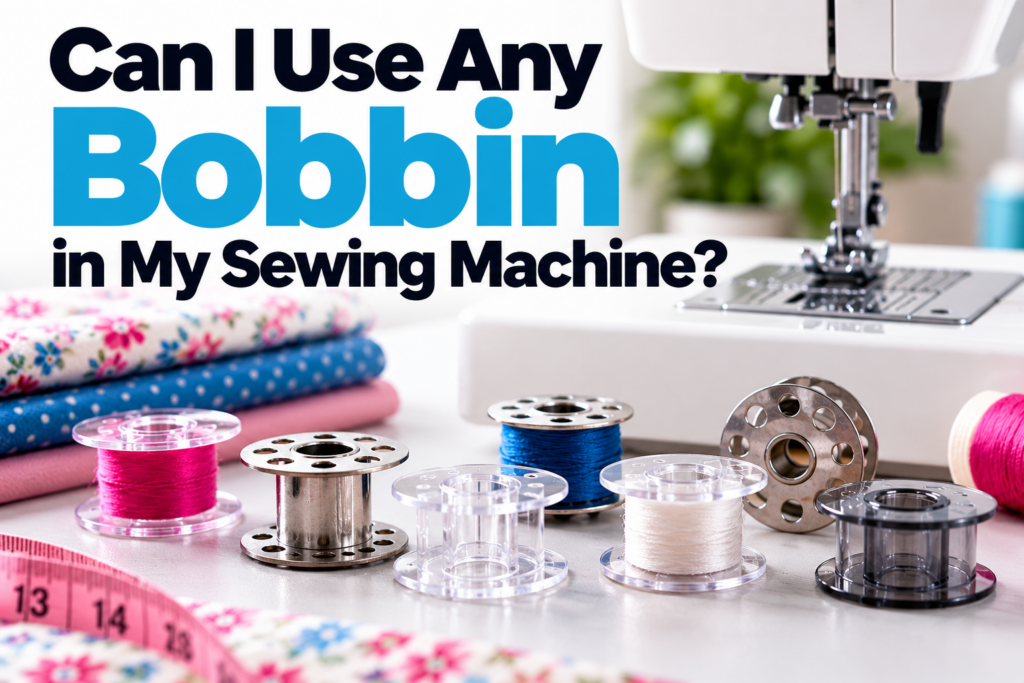
No. Sewing machine bobbins are not universal, even though many of them look very similar.
Using the wrong bobbin can cause poor stitching, thread jams and tension problems, so it’s important to use the correct type for your particular sewing machine.
Why Are Bobbins Different?
Bobbins can vary in diameter, height, shape, material, centre hole and overall design. Even a small difference can affect how the bobbin sits and rotates inside the machine.
Most current domestic machines use one of a small number of common styles, such as Class 15, L-style or Class M bobbins, and Class 15 covers many current Brother, Janome, Juki, Baby Lock and Singer models. Some manufacturers, including Bernina, use their own bobbin styles that shouldn’t be used in other machines. Several of these styles look almost identical in diameter but differ in height or flange shape, which is exactly why they aren’t interchangeable in practice.
Plastic or Metal Bobbins?
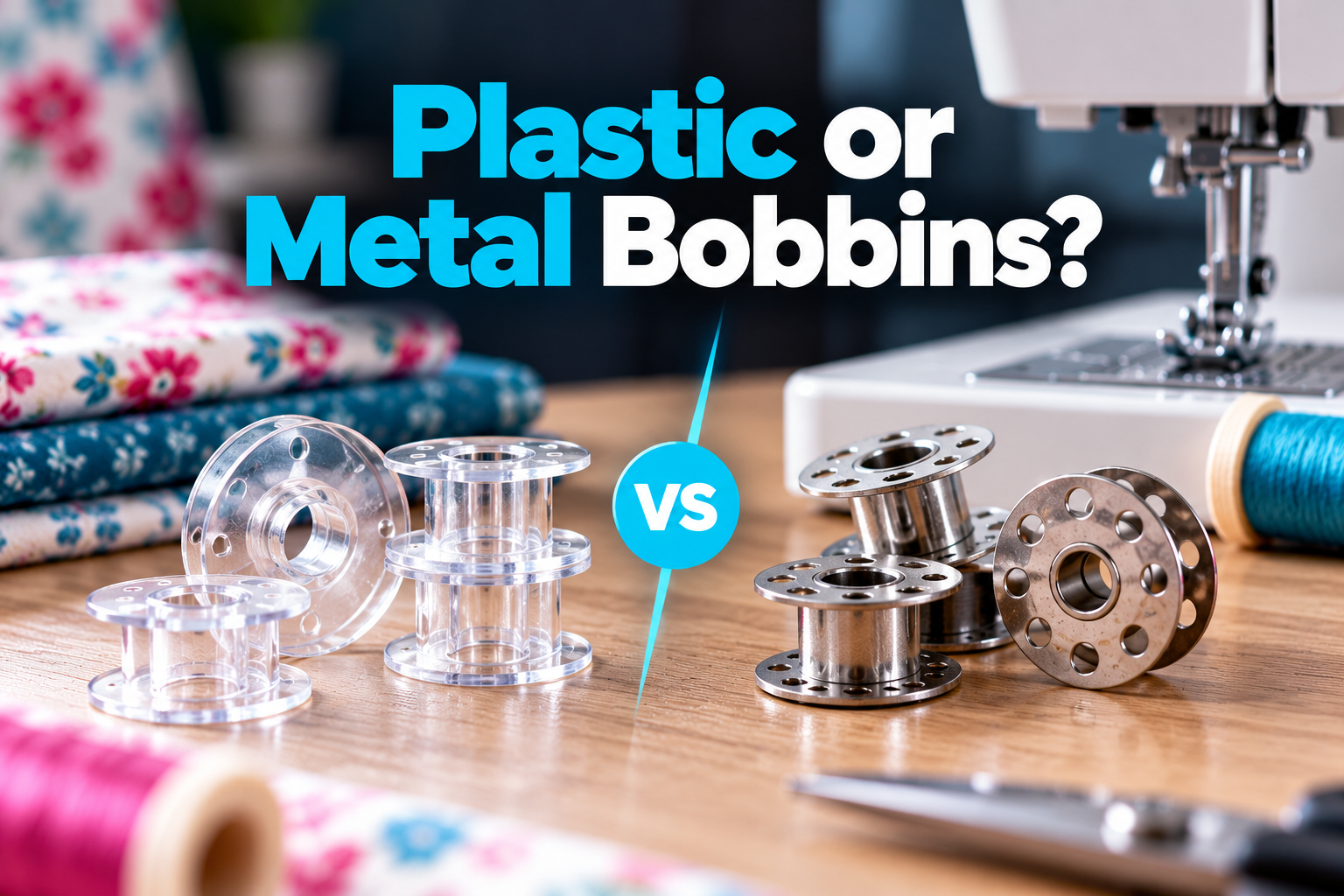
Use the type recommended by your sewing-machine manufacturer.
Don’t automatically replace a plastic bobbin with a metal one simply because it fits. The machine may have been specifically designed to work with a particular bobbin type, and the bobbin’s weight can affect bobbin thread tension, so swapping material can throw off your stitching even when the bobbin fits physically.
As a general rule, plastic bobbins suit the great majority of modern domestic machines, since they create less friction and spin more smoothly in the bobbin case. Metal bobbins tend to be specified for multi-needle, longarm and high-speed straight-stitch machines. That’s a general pattern rather than a rule for your specific machine, so always check what your manufacturer recommends.
What Happens If I Use the Wrong Bobbin?
An incorrect bobbin can potentially cause uneven stitches, thread bunching, bobbin thread problems, jamming, poor tension and unusual noises.
If you’ve recently changed bobbins and your machine suddenly starts misbehaving, check that you’re using the correct type.
How Do I Know Which Bobbin I Need?
The safest option is to check your sewing-machine manual. Search using the exact make and model of your machine rather than simply buying bobbins described as “universal”. If you’re unsure, ask a sewing-machine specialist before purchasing.
Can I Reuse Bobbins?
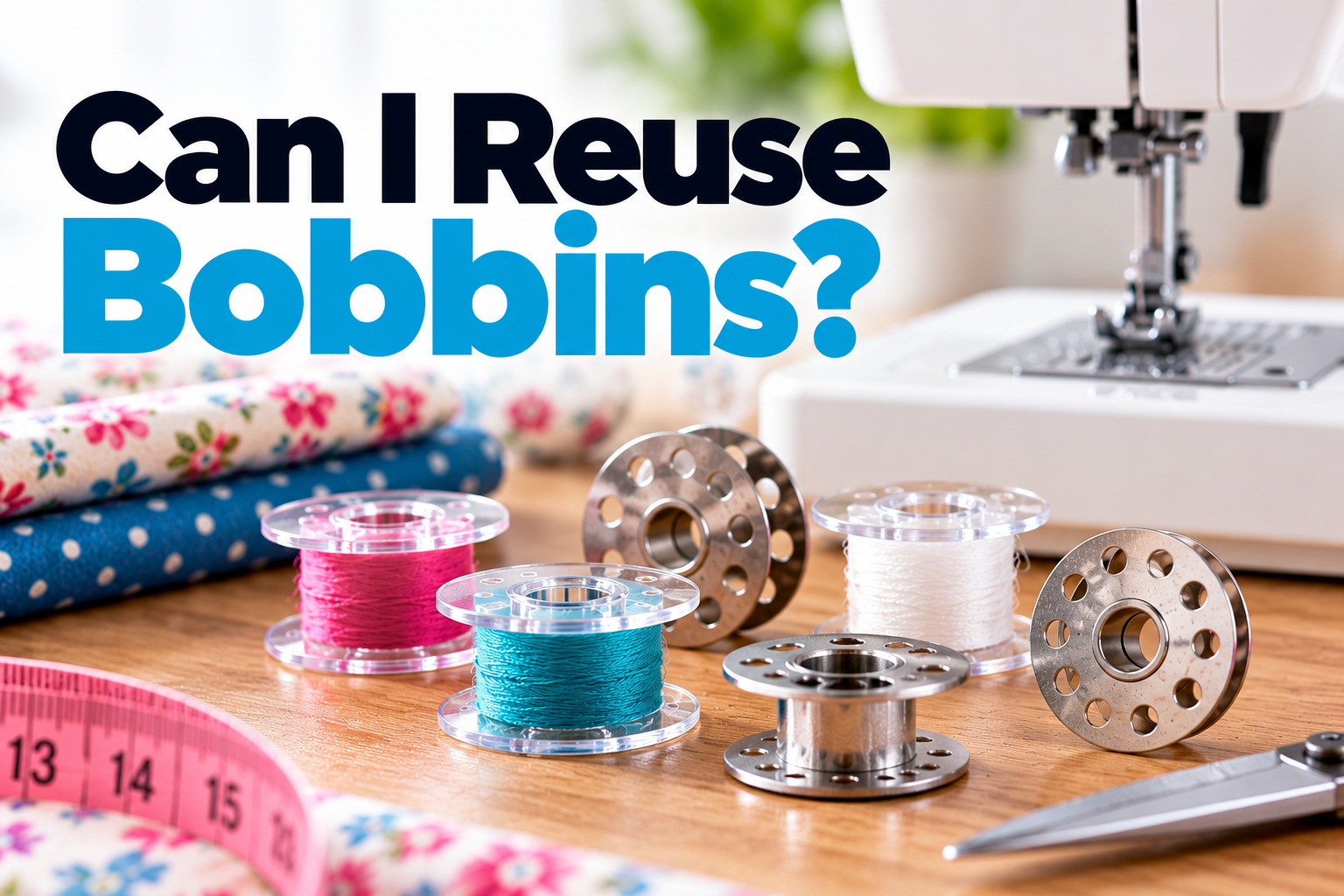
Absolutely. Bobbins can be rewound many times as long as they’re in good condition. It’s worth winding each bobbin with just one thread colour from start to finish, rather than mixing colours on the same bobbin, to avoid tangling.
Replace a bobbin if it’s cracked, bent, chipped, warped or otherwise damaged. Even a single small burr can cause sewing problems, and a damaged bobbin can affect how smoothly the thread feeds.
Should I Buy Spare Bobbins?
Yes. Spare bobbins are inexpensive and extremely useful. Having several means you can keep your most frequently used thread colours ready rather than constantly unwinding and rewinding the same bobbin.
Bobbins for Your Machine
Sewing-machine accessories are available for a wide range of machines and brands, but bobbins are one area where it genuinely pays to check compatibility rather than buy by appearance.
Two bobbins can look almost identical but still behave differently inside your sewing machine. Check your machine model before ordering, and you’ll avoid many unnecessary stitching problems.
If you need any help with your choice of Bobbins please call our experienced team at GUR Sewing Machines