





If you’re a Harry Potter fan and a sewing enthusiast, there’s one part of Warner Bros. Studio Tour London that might catch your eye for a completely different reason – the sewing machine in the Costume Department display.
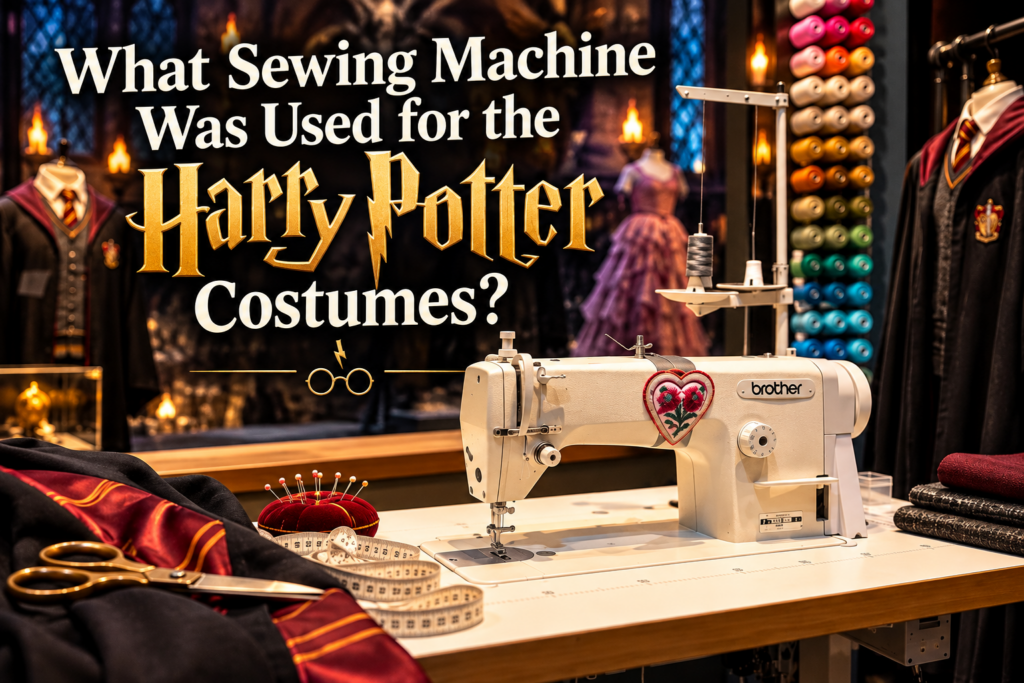
Among the costumes, sketches, rails of clothing and reels of thread sits a classic Brother industrial sewing machine — a reminder that behind all the magic, spells and special effects was an enormous amount of very real craftsmanship.
The Harry Potter films were produced at Leavesden for more than a decade, and many of the original sets, props and costumes were retained and can now be seen at the Studio Tour. Warner Bros. Studio Tour London
So, what is the sewing machine in the display, and what can it tell us about how costumes for productions on the scale of Harry Potter are made?
The Brother Industrial Sewing Machine at Warner Bros. Studio Tour
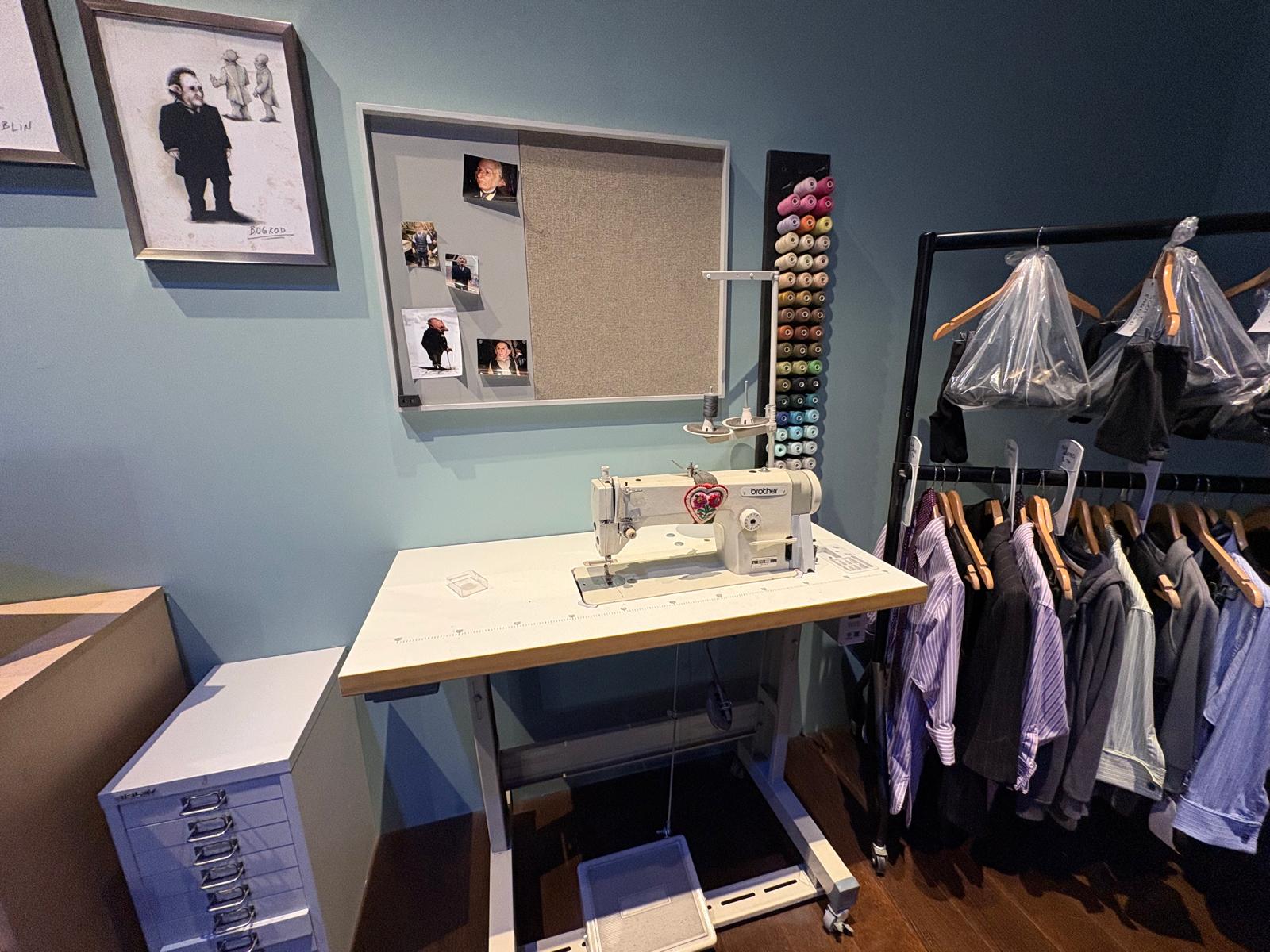
The machine pictured above was photographed in the costume display at Warner Bros. Studio Tour London – The Making of Harry Potter.
It is clearly a Brother industrial sewing machine. From its design and configuration, it appears consistent with Brother’s older DB2 family of industrial straight-stitch/lockstitch machines, although we can’t confirm the exact model from the photograph alone.
That’s an important distinction. We wouldn’t claim that this specific machine — or a particular DB2 model — definitely stitched a particular Harry Potter costume unless Warner Bros. or production documentation confirms it.
What the display does show beautifully, however, is the type of professional sewing equipment associated with a working costume department.
Brother has a long history in industrial sewing. The company began manufacturing industrial lockstitch sewing machines as far back as 1936.
Why Would a Film Costume Department Use an Industrial Sewing Machine?
There’s a huge difference between making a dress at home and producing costumes for a major film.
Costumes may need to be produced in multiples, altered quickly, repaired between takes and sometimes deliberately distressed before they ever appear in front of the camera.
An industrial straight-stitch machine is ideal for this type of environment because it is designed around one fundamental job: producing consistent straight stitching efficiently and reliably.
Rather than offering hundreds of decorative stitches, embroidery patterns and automated features, traditional industrial lockstitch machines concentrate on doing their core task extremely well.
And on a film production, reliability matters.
Just How Many Harry Potter Costumes Were Made?
The scale of the Harry Potter Costume Department was extraordinary.
Warner Bros. has previously stated that more than 25,000 unique items of clothing were created during the ten years of filming.
Even an individual sequence could create an enormous workload.
For the Yule Ball in Harry Potter and the Goblet of Fire, costume designer Jany Temime designed more than 300 costumes, with over 100 additional costume staff brought in to help create them.
Hermione’s famous Yule Ball dress alone took around three months to create and incorporated yards of pink silk and approximately 12 metres of chiffon.
When you know those numbers, the sewing machine sitting quietly in the Studio Tour suddenly becomes much more interesting.
Sewing Was Only Part of the Process
Creating a film costume isn’t simply a matter of running fabric through a sewing machine.
The process begins much earlier.
Costume designers work from the script and character descriptions before developing ideas through sketches, mood boards, colour palettes, fabrics and textures. Costumes then need to be constructed, fitted and finished appropriately for the character and scene.
Sometimes the job doesn’t finish when the garment looks perfect, either.
Costume teams might deliberately age and distress newly made clothing so that it looks worn, dirty, damaged or battle-scarred. Warner Bros. has described techniques including paint, mud and wire brushes being used to transform new garments into convincing screen costumes.
It’s a fascinating combination of dressmaking, tailoring, textile work and artistic finishing.
From Hogwarts Robes to Quidditch Uniforms
Another interesting aspect of the films is how the costumes developed as the series progressed.
Take the Quidditch uniforms.
In the first two films, the players wore relatively heavy robes. Later films moved towards lighter, sportier uniforms, eventually adding elements including player names and numbers, helmets and protective knee and elbow pads.
This is a great example of costume construction doing more than simply making an actor look good.
The garment helps tell the story.
Fabric, fit, colour, texture and even stitching can all contribute to how we perceive a character or the world they inhabit.
Industrial vs Domestic Sewing Machines
Does seeing an industrial Brother machine in a professional costume environment mean you need an industrial machine to make costumes yourself?
Absolutely not.
Industrial machines are fantastic when you need a specialist machine capable of performing the same operation repeatedly, but modern domestic sewing machines are much more versatile.
A good home sewing machine can offer straight stitch, zigzag, stretch stitches, buttonholes, decorative stitches and numerous automated functions all from one machine.
For someone making costumes, clothing or cosplay at home, that versatility can actually be a major advantage.
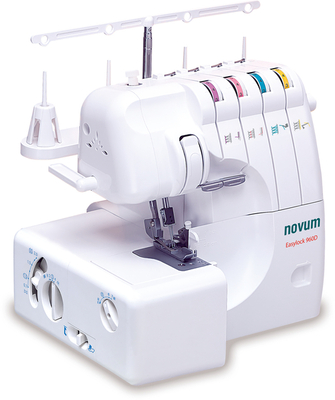
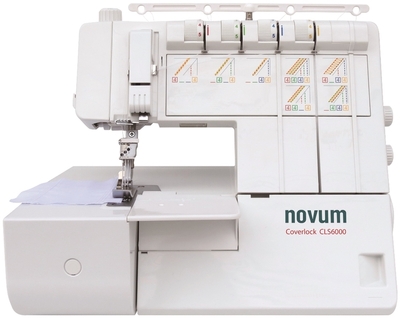
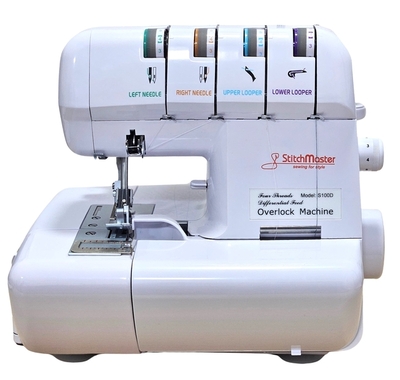
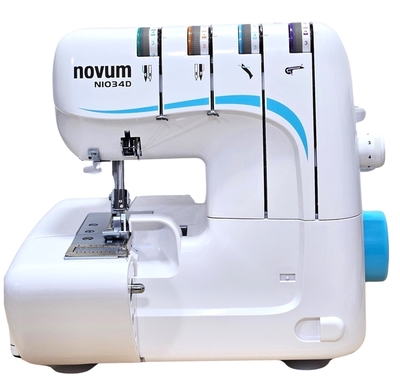
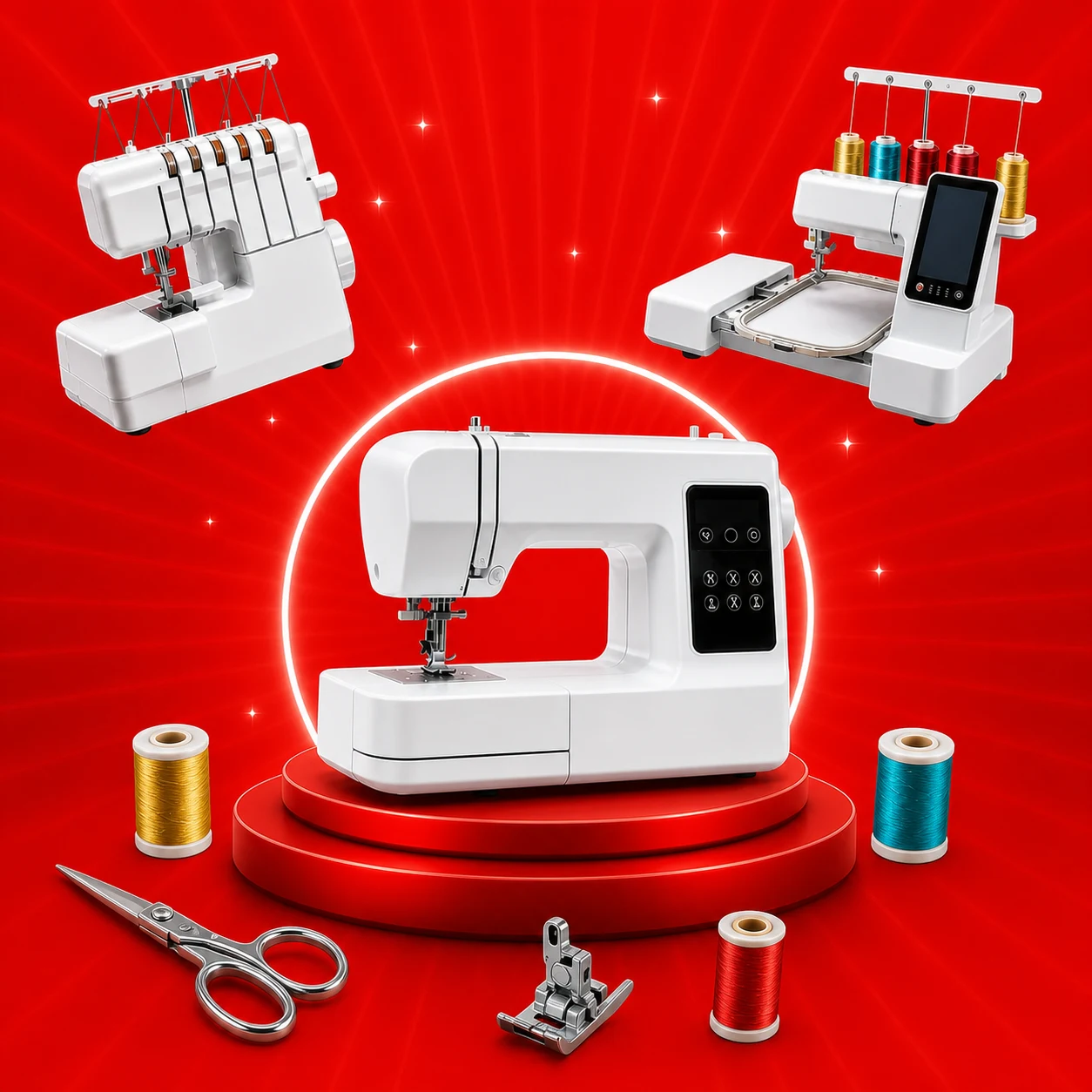
Add an overlocker and you can create professionally finished seams and work with stretch fabrics. Add an embroidery machine and you open up another world of possibilities for badges, monograms, motifs and detailed decorative work.
Could You Make Your Own Harry Potter-Inspired Costume?
That’s perhaps the most exciting part for anyone interested in sewing.
You don’t need a Hollywood costume department to start creating your own costumes.
Many of the same basic principles apply whether you’re making something for a major film production or at your kitchen table:
Choose the right fabric. Measure accurately. Cut carefully. Stabilise where necessary. Test your stitches. Press as you work. Fit the garment properly. And don’t be afraid to alter the pattern to get the result you want.
The equipment available to home sewers today is also considerably more sophisticated than many people realise.
Computerised sewing machines, overlockers and embroidery machines can give enthusiasts access to techniques that would once have required several specialist machines.
The Real Magic Is the Making
When we watch a Harry Potter film, it’s easy to concentrate on Hogwarts, the spells, creatures and visual effects.
But look a little closer and there is craftsmanship everywhere.
Someone designed every robe.
Someone selected the fabric.
Someone cut the pattern.
Someone fitted it to the actor.
And ultimately, someone had to sew it together.
With more than 25,000 unique clothing items reportedly created across the film series, the Costume Department’s contribution to the world of Harry Potter was enormous.
And for sewing enthusiasts visiting Warner Bros. Studio Tour London, that Brother industrial machine is a brilliant reminder that some of the most memorable movie magic starts with something surprisingly familiar:
fabric, thread and a sewing machine.
Inspired to Start Your Own Project?
Whether you’re interested in dressmaking, costume making, embroidery or simply learning to sew, choosing the right machine can make a huge difference.
At GUR Sewing Machines, we stock sewing machines, overlockers and embroidery machines for everyone from complete beginners to experienced sewists.
If you’re unsure which sewing machine would suit the projects you want to make, speak to the GUR team and we’ll be happy to help you find the right one.