





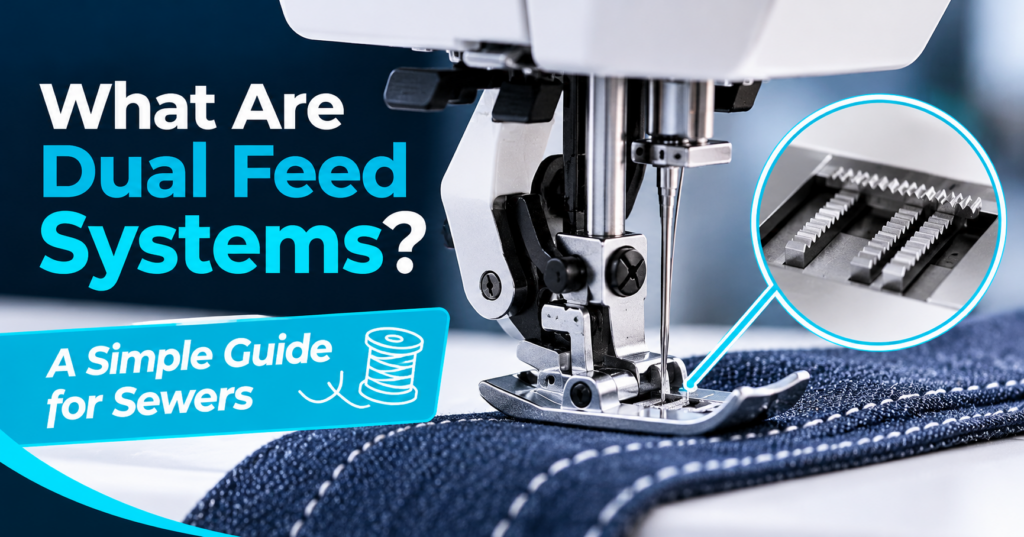
If you sew quilts, slippery fabrics or several layers at once, you may have seen machines advertised with a dual feed system. Pfaff calls theirs IDT, Husqvarna Viking calls theirs IDF and Janome calls theirs AcuFeed, while a walking foot is the attachment you can buy separately.
Both do the same basic job, which is to feed the top layer of fabric from above while the feed dogs feed the bottom layer from below. Here’s why that matters, how each system works, which other brands offer something similar and how they compare with a walking foot you buy separately.
Why Does Fabric Need Feeding From Above?
Standard feed dogs sit underneath the needle plate and grip only the bottom layer of fabric. The presser foot holds everything down from above, but it doesn’t move the top layer along.
On a single layer of cotton, that’s not a problem. Add several layers, a quilt sandwich, a slippery lining or a velvet, and the bottom layer can travel slightly faster than the top. Over a long seam, pieces that started perfectly matched can finish misaligned, and the top layer can pucker or stretch.
A dual feed system solves this by moving the top layer at the same pace as the bottom one.
What Sort of Sewing Is Dual Feed Essential For?
For everyday dressmaking on a single layer of fabric, you may never notice the difference. It earns its place when the layers need to stay exactly together.
Quilting is the biggest example, because dual feed keeps the quilt top, wadding and backing moving as one, so blocks and seams match at the end of a long row and the back doesn’t pucker. It’s equally useful for bulky seams, bags and soft furnishings, where the lower layers would otherwise creep ahead of the top.
It also makes a real difference with difficult fabrics. Silk, satin and linings slide against each other, stretch knits can wave as the top layer is pulled along, and velvet and heavy home furnishing fabrics tend to push forward under the foot. Finally, it’s a big help when you’re matching checks, plaids and stripes across a seam, or sewing long seams and topstitching, where small differences between the layers add up over distance.
What Is Pfaff IDT?
IDT stands for Integrated Dual Feed. It’s a built-in upper feed found on selected Pfaff machines, including models in the passport, select, ambition, expression and creative ranges. It moves the fabric from both the top and the bottom at the same time, so all the layers travel together.
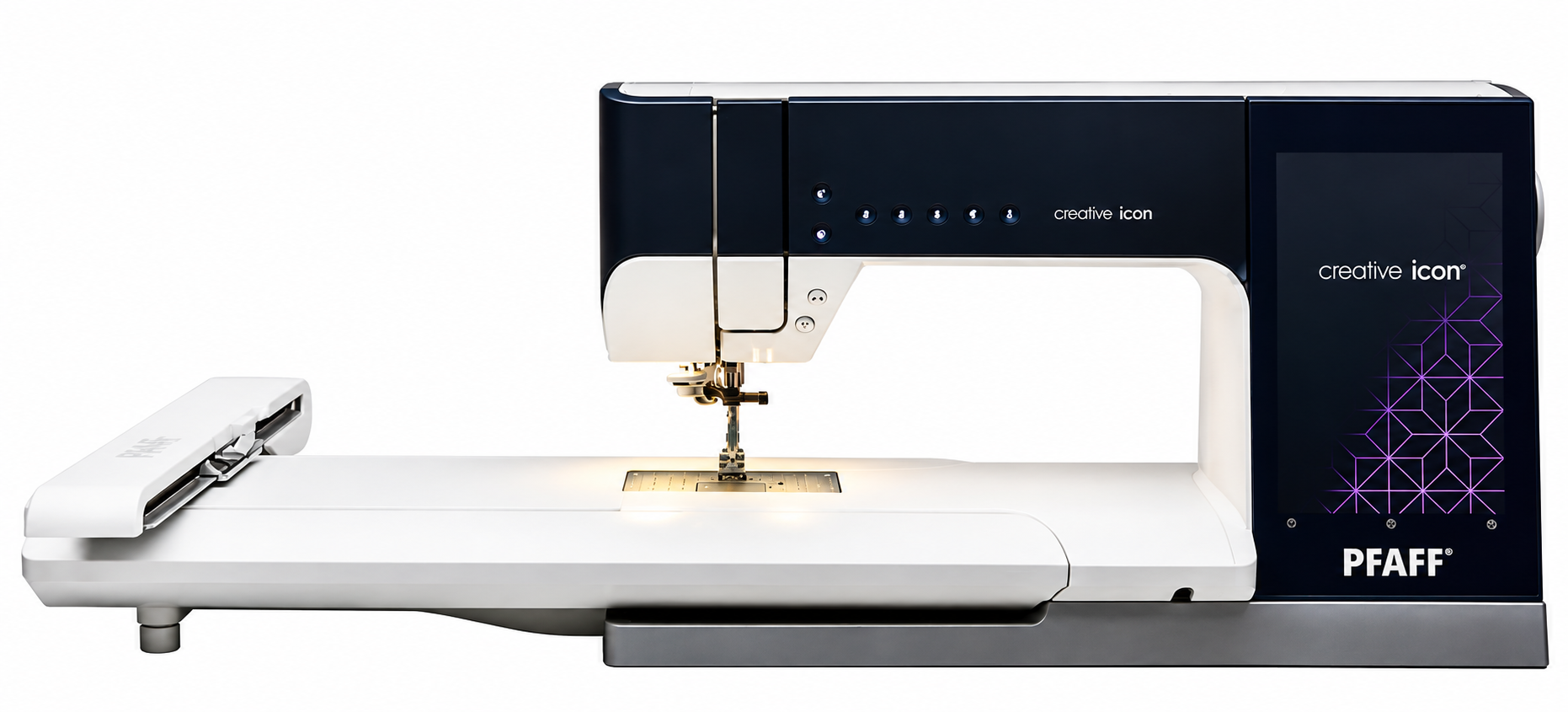
The Pfaff creative icon, which features IDT
For quilters, this helps keep the top, wadding and backing aligned so seams match. Because IDT is built in, most quilting and slippery-fabric projects don’t need a separate walking foot.
IDT is engaged with a slim lever that fits into a compatible presser foot. These feet have a small cut-out at the back, which the mechanism clicks into. Its compact design leaves a clearer view of the needle than a bulky walking foot, and you can switch it on or off in seconds without changing the foot.
What Is Janome AcuFeed?
AcuFeed is Janome‘s version of the same idea. It combines a built-in walking-foot action with a seven-point feed dog, so the top and bottom layers move together. It’s particularly good for velvet, heavy home furnishing fabrics and quilt layers with wadding, and it helps checks and plaids line up.
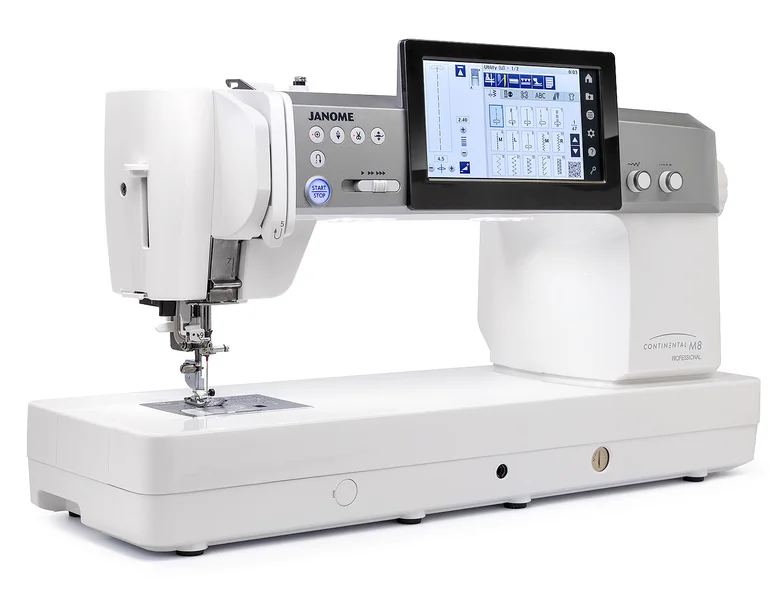
The Janome Continental M8, which features AcuFeed Flex Plus
On many Janome machines, AcuFeed Flex is a detachable feeding unit. You attach the foot you need, and remove the unit again when you don’t need it. There are single-type feet, which let you sew close to edges and into narrow areas, and twin-type feet for different jobs. The twin range includes a general-purpose foot for specialty fabrics and multiple layers, a quarter-inch seam foot for patchwork, a straight stitch foot, a ditch quilting foot with a centre guide and an open toe foot for appliqué and monogramming. There’s also an AcuFeed zip foot for difficult materials such as leather and plastic-coated fabric.
AcuFeed Flex Plus is the newer layered-fabric feeding system found on some higher-end machines. Janome machines listed with AcuFeed include the Atelier 9, Continental M8, Memory Craft 6700P, Memory Craft 8200QCP SE and Memory Craft 9480 QC.
Gritzner Varimatic 935 IDT
Dual feed isn’t only found on premium machines. The Gritzner IDT is a heavy-duty machine with an integrated dual feed system, which is designed to stop fabric slipping or puckering and give accurate stitching when you’re sewing several layers. It’s a good example of the same idea in a more straightforward home machine.
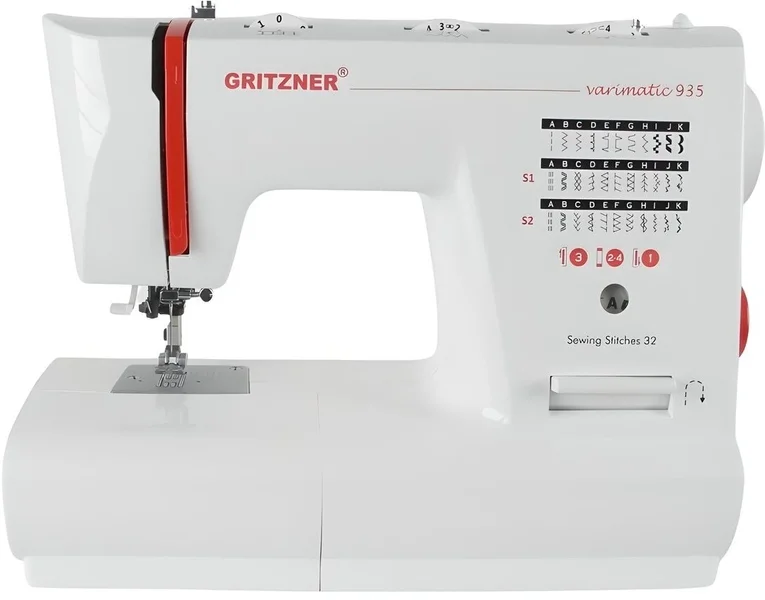
The Gritzner Varimatic 935 IDT
What Do the Other Brands Call Theirs?
Pfaff and Janome aren’t the only makers to build the idea into their machines, although each brand has its own name and design. The table shows what each one calls it.
| Brand | What they call it | How it’s built |
| Pfaff | IDT (Integrated Dual Feed) | Built in, engaged with a lever |
| Husqvarna Viking | IDF (Integrated Dual Feed) | Built in, no separate foot to attach |
| Janome | AcuFeed, AcuFeed Flex and AcuFeed Flex Plus | Built in or a detachable unit, depending on the model |
| Bernina | Dual Feed | Built in, pulled down into position |
| Brother and Baby Lock | Digital dual feed (the MuVit dual feed foot on Brother) | Built in on some top models |
| Gritzner | IDT (integrated dual feed) | Built in on the IDT |
| Any brand | Walking foot | Separate attachment |
Bernina’s Dual Feed is pulled down into the presser foot position to engage it, with no screws or lever, and it works with feet marked with a “D” after the number. Husqvarna Viking’s IDF is built into models such as the Epic Quilt 97, and like Pfaff’s IDT, it moves the fabric from above and below at once.
Brother and Baby Lock use a digital dual feed on some of their top models, which grips the top layer with a belt-style mechanism instead of metal teeth. Brother also offers dual feed feet for specific jobs, such as the F074 dual feed couching foot kit.
Built-in systems are generally found on higher-end machines. Check the specification of the exact model you’re considering, since names and designs vary between brands.
How Do They Compare With a Walking Foot You Buy Separately?
A walking foot is the traditional answer to the same problem. It’s a separate attachment that replaces your normal presser foot and has its own feed teeth that grip the top layer, so both layers move together. It prevents wavy seams, puckering and mismatched quilt blocks, and it’s often included in quilting packs or bought as an accessory for machines that have no built-in system.
The two approaches differ in how they’re driven. A basic clip-on walking foot has a lever that wraps around the needle bar and moves the foot’s teeth as the needle goes up and down. That makes it a reactive system, because the foot’s motion depends on the needle rather than on the machine’s feed mechanism, and it can be less precise for advanced quilting and precision work.
A built-in dual feed is linked to the machine’s own mechanism and moves in time with the motor and the feed dogs. Janome’s AcuFeed Flex, for example, also lets you adjust the feed ratio, which helps with fabrics that need the top layer fed slightly faster or slower than the bottom.
A walking foot still has its strengths. It lets you add this feature to a machine that doesn’t have it. Several brands sell one for their own machines, such as Bernina’s Walking Foot #50 for models without built-in Dual Feed and Brother’s dynamic walking foot, which has an interchangeable toe set for quilting and piecing. You do need to match the foot to your machine’s shank type and model, and attaching and removing it takes a moment each time.
| Built-in dual feed | Walking foot attachment | |
| What it is | Part of the machine, linked to its feed mechanism | Separate presser foot that replaces your normal foot |
| How it’s driven | Moves in time with the motor and feed dogs | Usually driven by a lever on the needle bar |
| Setting up | Engaged by a lever, by pulling the foot down or by attaching a unit, depending on the brand | Fitted in place of your normal presser foot |
| Compatibility | Only on machines that have it, with compatible feet | Needs the right foot for your machine and shank type |
| Best for | Frequent quilting, multi-layer and slippery fabrics where precision matters | Occasional use, or machines without a built-in system |
When Should You Switch It Off?
Dual feed isn’t for everything. Switch it off for free-motion quilting and darning, where you need to move the fabric yourself, and whenever you’re using a presser foot that isn’t designed for it. Never force the mechanism into a foot that doesn’t have the right opening.
It also won’t fix every feeding problem. Accurate cutting, the right needle and thread, and a test on scrap fabric still matter, and puckering or tension problems can have other causes.
Which Should You Choose?
IDT and AcuFeed are tied to their brands, so the choice usually comes down to the machine you’re buying. Check that the machine you’re considering has a dual feed system, which presser feet it works with and whether it’s built in or detachable. If you sew a lot of quilts, slippery fabrics or multi-layer projects, a machine with dual feed can make a noticeable difference to how evenly your seams finish.
If your machine doesn’t have one, a walking foot attachment is the next best thing, and it’s a good way to try the benefit before deciding whether you need a machine with dual feed built in.
Still need help? call the team at GUR Sewing Machines and we would be glad to help.