





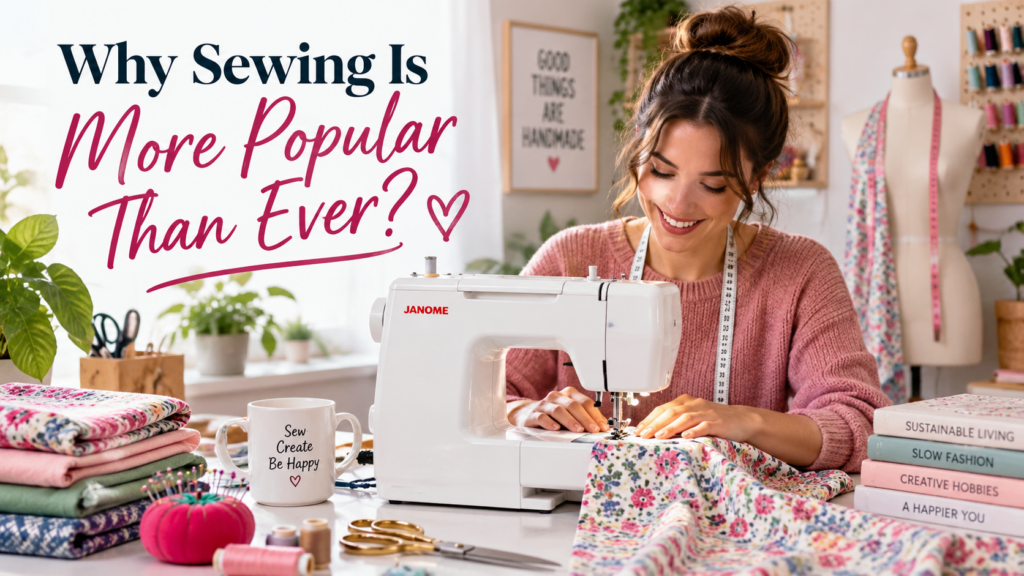
Sewing is a craft that predates almost everything else we do has become one of the most current things you can pick up. Not because it is nostalgic, but because it answers a set of very modern frustrations: clothes that do not fit, wardrobes that all look the same, and the feeling that nothing we own is really ours.
Something shifted in sewing over the last few years, and it did not happen quietly. Fabric shops that looked like they were winding down have queues at the cutting table again. Sewing classes book out. Pattern companies run by one designer and a laptop sell tens of thousands of downloads. Charity shops report that the racks are being picked over not only by people looking for something to wear, but by people looking for fabric they can cut into.
The official numbers are steadier than the mood suggests. Government participation figures put craft involvement at around a fifth of adults, having risen from about 15% earlier in the decade and held there since. What the statistics cannot capture is the change in who is sewing and why. The stereotype of sewing as something inherited from a grandmother, practised out of thrift, has largely collapsed. The people buying sewing machines now are often in their twenties and thirties, they found the craft through a screen rather than a family member, and they are not doing it to save money.
Here is what is actually driving it.
01. Fast fashion stopped feeling like a bargain
For two decades the deal was simple: clothing got cheaper, arrived faster and was replaced sooner. A £12 dress is not really a purchase, it is a rental with no return date. Most people have now had enough experience of that cycle to know how it ends — a wardrobe full of garments that lost their shape after four washes, and a vague sense of having spent a lot of money on very little.
Sewing offers a different relationship with clothing, and it does not require you to make everything you wear. The useful skills are smaller than that. Being able to close a split seam, replace a zip, take in a waistband or shorten a sleeve changes what you do when something goes wrong. Instead of the garment leaving the house in a bin bag, it goes on the table for twenty minutes.
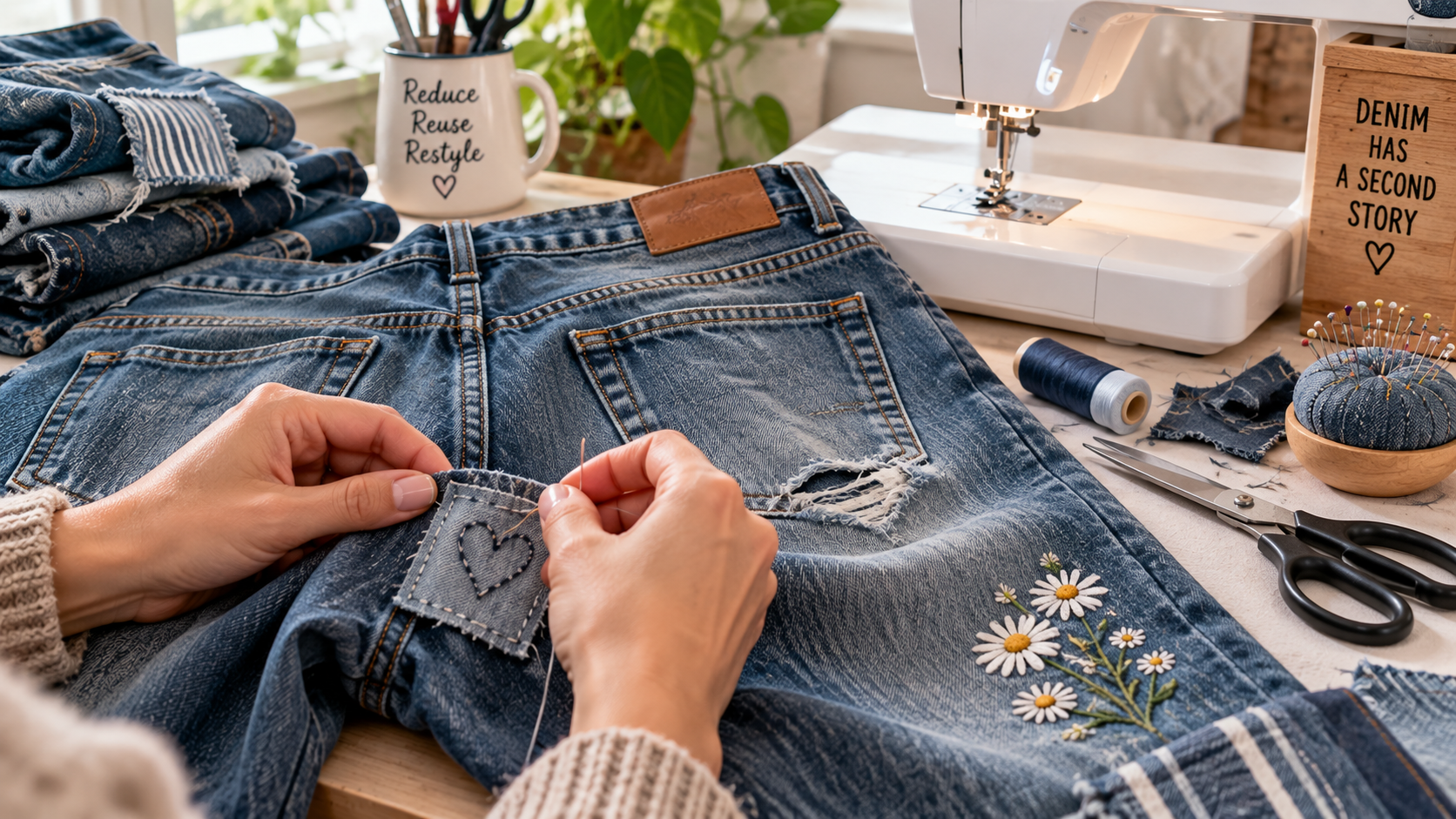
Repair has also lost its embarrassment. Visible mending — patches and darns worked in contrasting thread so the repair is part of the design — turned an admission of wear into a decision. That change in attitude matters more than any single technique, because it removes the reason people used to throw clothes away: not that they could not fix them, but that a fixed garment looked like a compromise.
The environmental argument follows on, though it deserves honesty. Sewing is not automatically a low-impact hobby. Fabric has a footprint, and it is entirely possible to accumulate more of it than you will ever cut. What genuinely reduces impact is keeping garments in use longer and using what already exists — mending, altering, remaking, buying secondhand fabric and finishing the projects you start.
02. Television made the craft visible again
You cannot explain the British sewing revival without The Great British Sewing Bee. Twelve series in, it still pulls audiences of around two and a half million an episode, and during the 2020 lockdowns it reached five or six million — remarkable numbers for a programme about seam allowances.
What the show did was less about instruction than framing. Sewing on television is fast, competitive and visibly creative: a contestant is handed a bolt of jersey and three hours later there is a jacket. The camera lingers on decisions rather than drudgery — which fabric, which neckline, whether to gamble on a bias cut. Viewers who had assumed sewing meant hemming curtains saw people designing, and the distance between watching and trying got a lot shorter.
The programme also broadened who gets to be seen sewing. Recent series have featured men, students, retirees and makers working in adaptive design for disabled bodies, and the transformation and reuse challenges put upcycling in front of a mainstream audience. Retailers noticed: machine promotions and workshop programmes now run alongside each series, because the correlation between broadcast and beginners walking into shops is well established.
Television alone does not sustain a craft. It creates a wave of curiosity, and what happens next depends on whether a beginner can find help. Which brings us to the part that changed even more dramatically.
Thirty years ago, a confusing line in a pattern envelope could end a project. Now it is a search away from four people explaining it, one of them with three camera angles.
03. The internet removed the last real barrier
Sewing used to be transmitted in person. You learnt from a relative, a class or a book, and if none of those was available to you, the craft was effectively closed. That is the single biggest thing that has changed. Every technique that once required a teacher now exists as video, and the awkward specifics — this fabric, this foot, this machine, this mistake — are the internet’s speciality.
The effect on ambition is striking. Beginners routinely attempt projects that used to be intermediate work, because they are never more than a pause away from a demonstration. An invisible zip, a welt pocket, a lined bodice: all of these look impossible in written instructions and obvious on film. Failure also became less isolating. When a seam puckers, someone has posted the same puckered seam and the three things that cause it.
Alongside the teaching came a genuine shift in the pattern industry. Independent designers can now sell PDF patterns directly, printing and distribution having been the expensive part of the old model. That has produced an enormous range of designs from small studios: patterns drafted for particular body shapes, sizes far beyond the traditional range, styles too specific for a mass-market envelope. Buy, download, print, start — and the graded sizing and photographed instructions in good indie patterns are often better than anything that came before.
A smaller group has taken the digital pattern one step further and projects it straight onto the fabric from a ceiling-mounted projector, cutting out printing and taping altogether. It requires calibration and a tolerant household, and it is not where anyone should begin. But it is a neat illustration of the direction: the tools around the machine keep modernising while the machine itself does much the same job it always did.
04. Sewing Machines are far less intimidating than they were
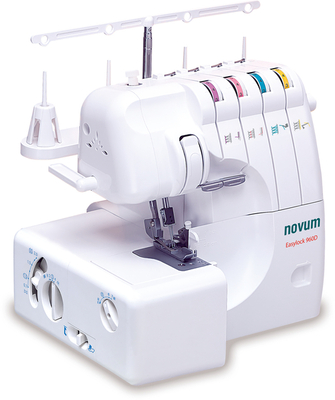
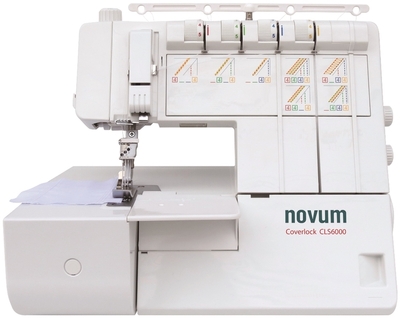
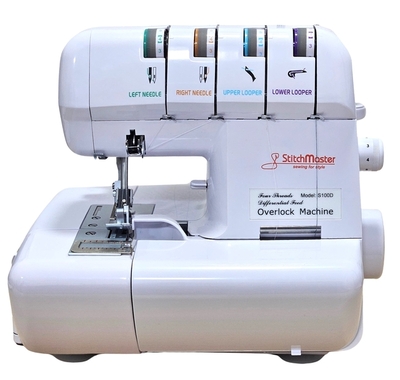
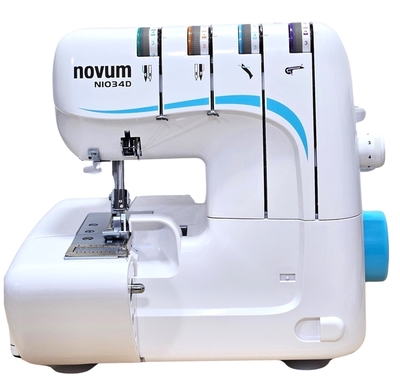
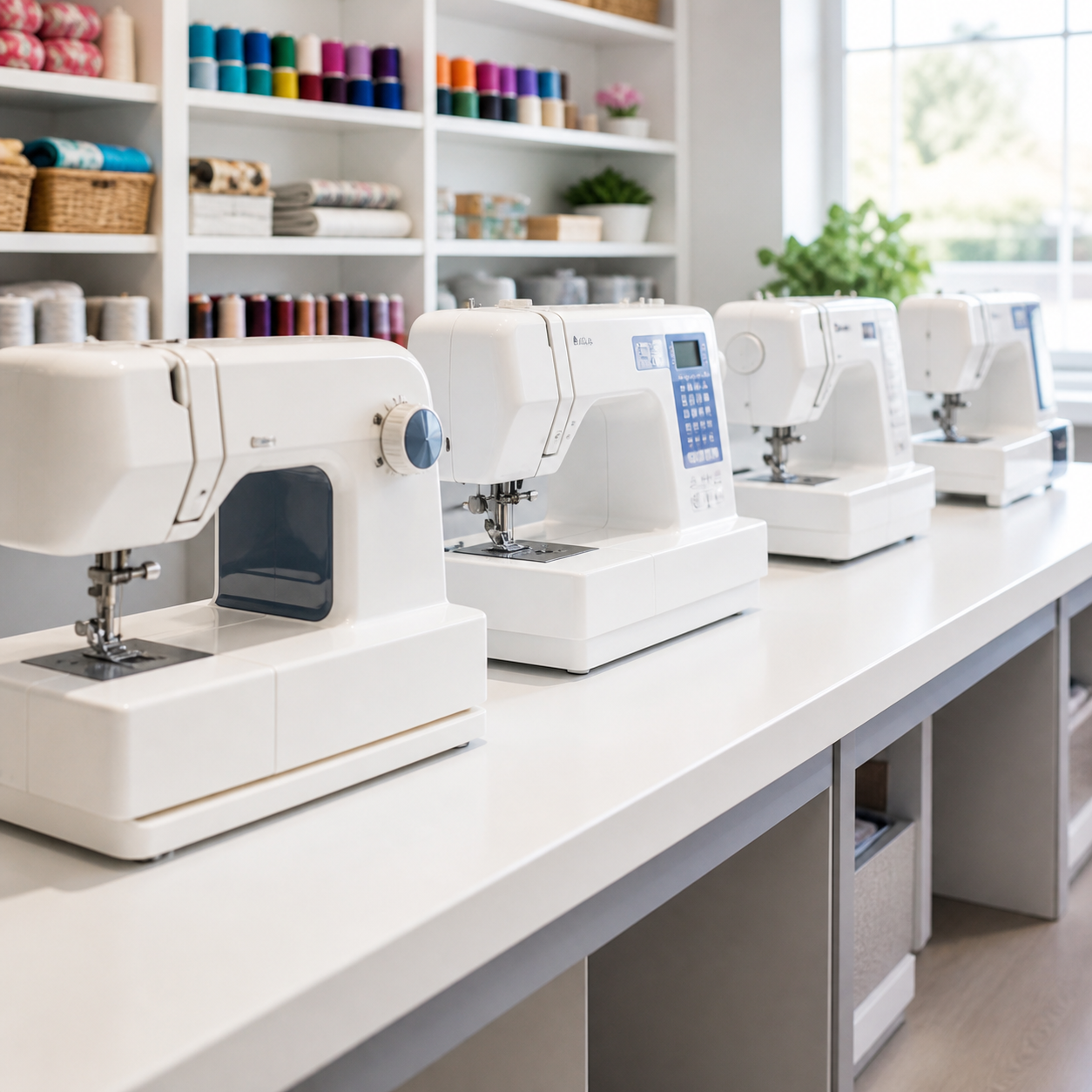
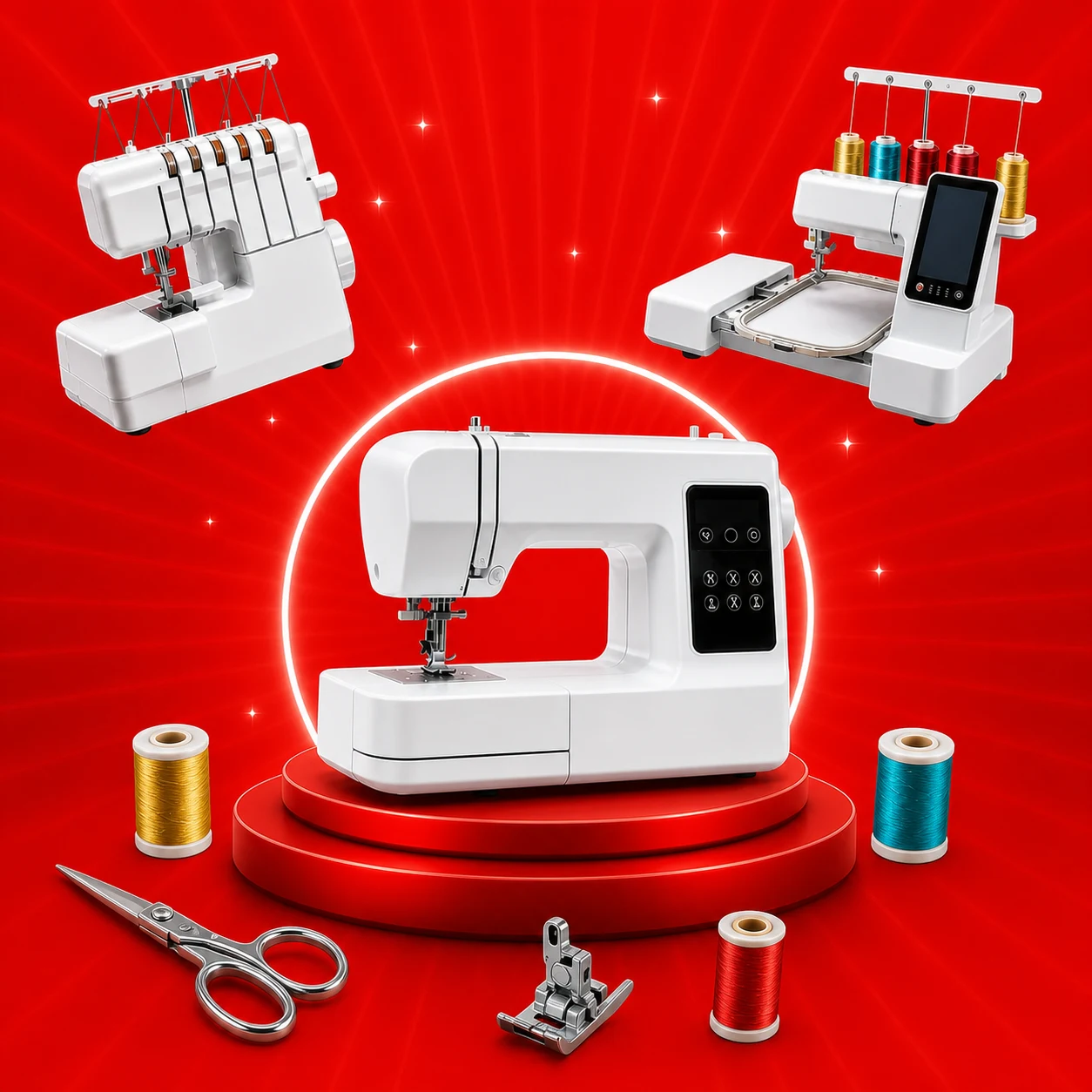
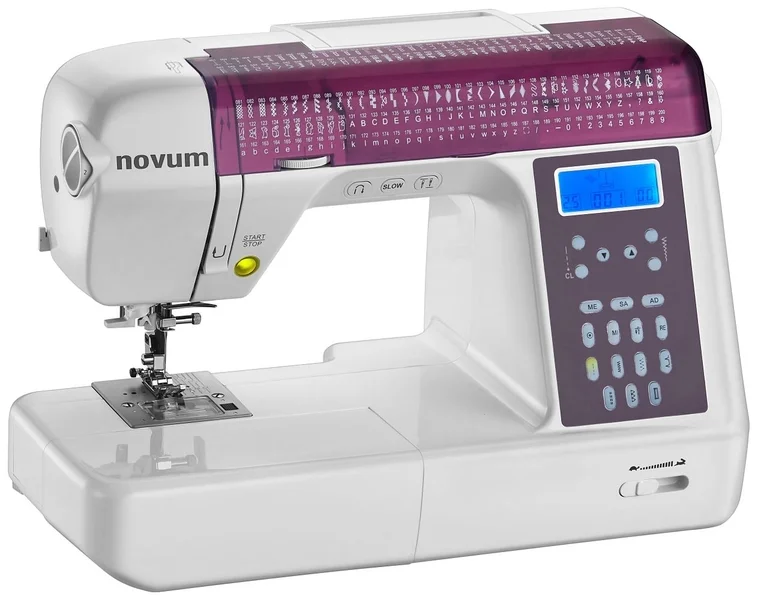
If your mental image of a sewing machine is a cast-iron object that weighed as much as a small car and had two speeds, both alarming, a modern one will surprise you. What has changed is the friction:
• Automatic needle threading — the fiddliest job in the process, gone
• Speed control — slow the machine to a crawl while you learn
• Needle up-down and one-step buttonholes — no guesswork at the awkward moments
• Automatic thread cutting — and a screen that tells you which foot to fit
None of this does the sewing for you. Straight seams, accurate cutting and pressing remain entirely manual, and no amount of stitch memory will save a badly measured hem. What the features do is shorten the gap between buying a sewing machine and finishing something, and that gap is where most beginners give up.
Running in parallel is a strong appetite for old sewing machines. Mechanical models from the mid-twentieth century are heavy, largely metal, repairable with hand tools and often available for very little. For someone who likes objects that can be understood and maintained, a vintage sewing machine has an appeal that a touchscreen cannot match. Both routes work. The mistake is buying the most expensive machine in the shop before you know which stitches you will actually use.
Embroidery has moved even further. Home embroidery machines will now stitch detailed designs and lettering from a digital file, which is why so much of the handmade market has tipped towards personalisation — a name, a date, a small logo turning an ordinary item into something made for one person.
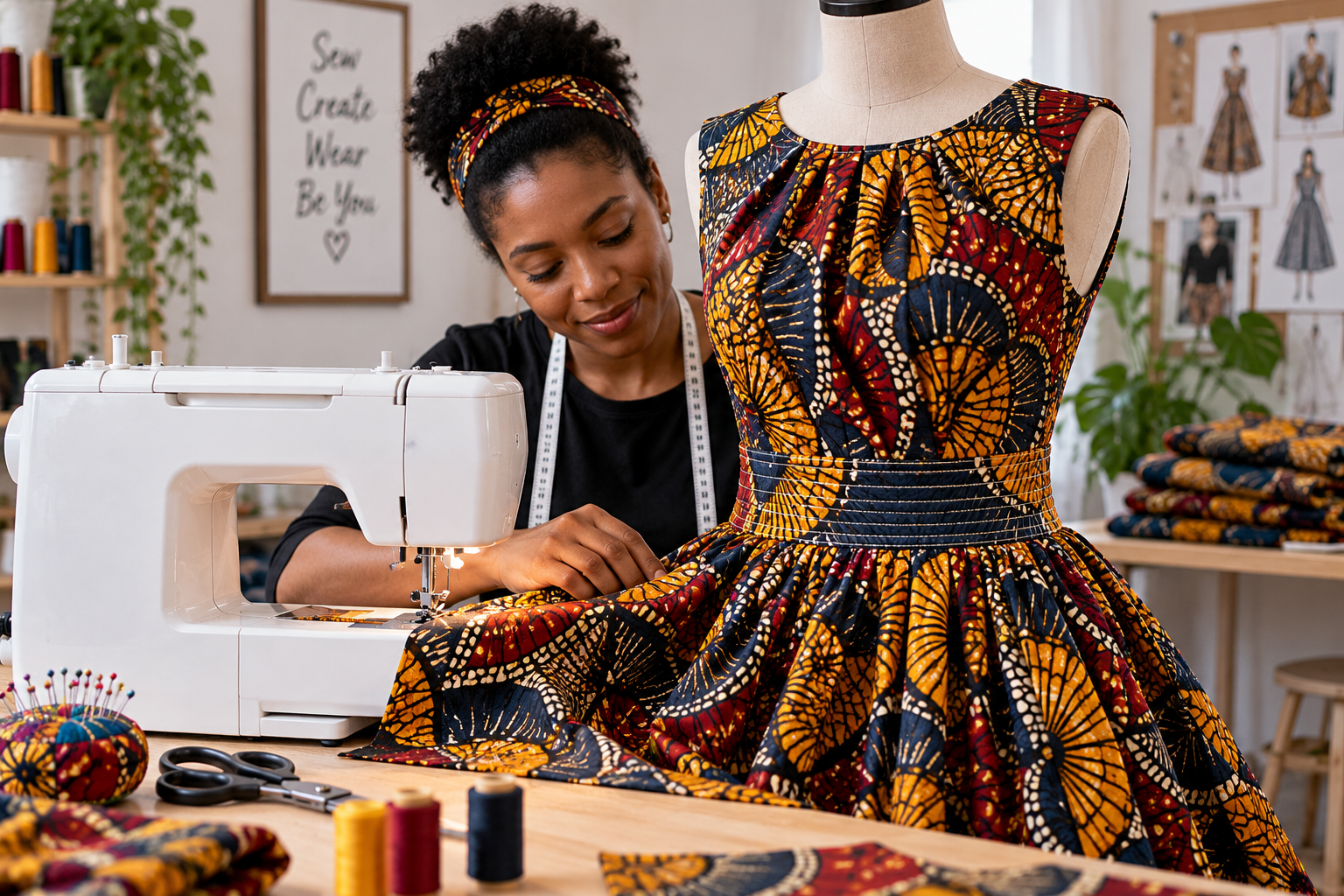
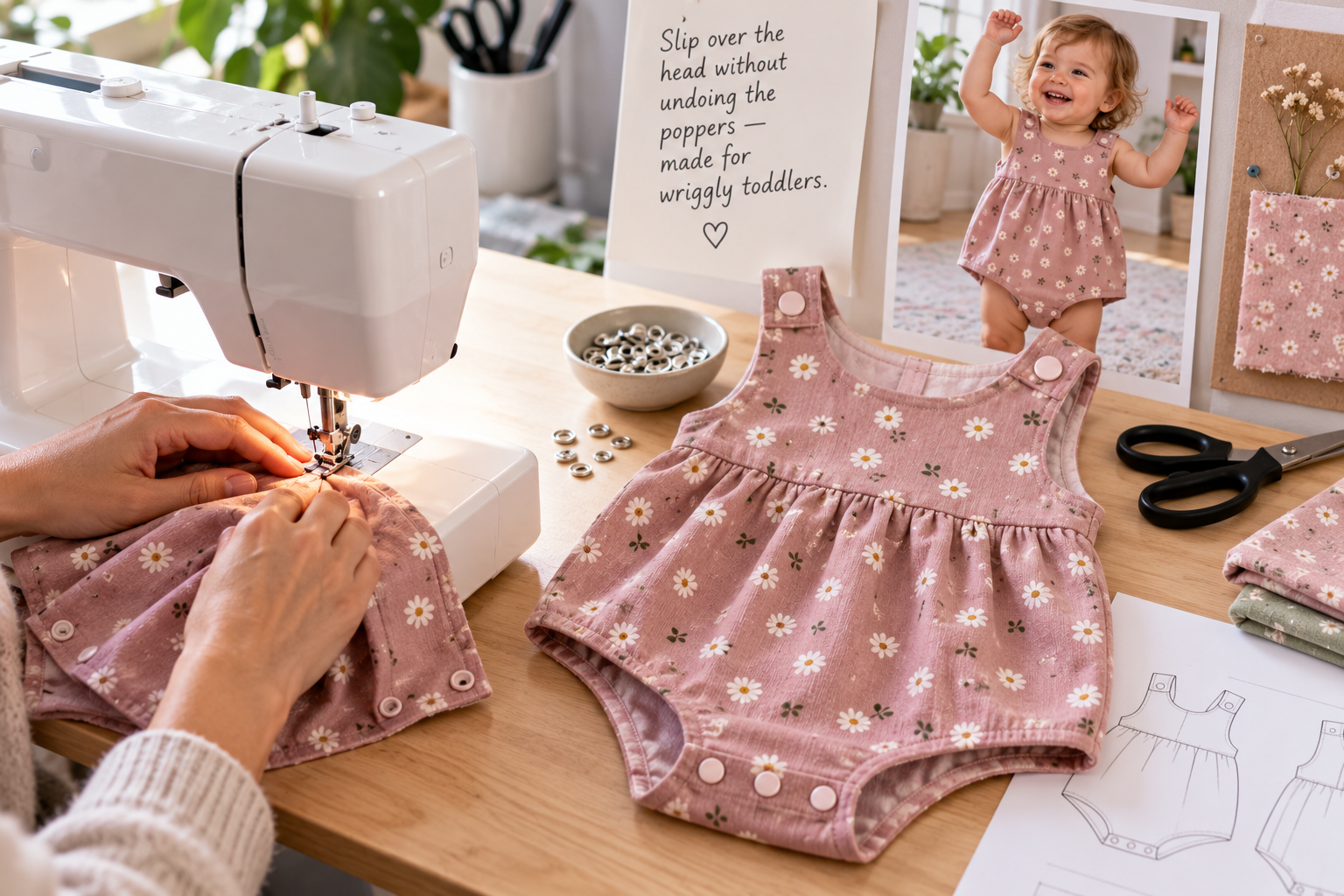
Ready-to-wear is drafted around an average, and almost nobody is average.
05. Clothes that fit the body you actually have
Ready-to-wear clothing is drafted around an average, and almost nobody is average. A size twelve waist with size fourteen hips, longer arms, a shorter torso, broad shoulders, a full bust, a high hip — any one of these turns shopping into a series of near misses. Sewing does not solve fit instantly, but it does put the variables in your hands.
Fitting is a skill in itself, and it is worth saying plainly that it takes longer to learn than stitching does. The pay-off is cumulative. Once you have worked out the adjustments your body needs on a particular pattern — lengthen here, add width there, drop the bust point — those changes carry over to everything else you make. Sewists talk about their tried-and-tested patterns the way cooks talk about a house recipe.
This is also where sewing becomes genuinely important rather than merely enjoyable. For anyone whose body is not served by standard sizing — very tall, very short, plus size, post-surgery, a wheelchair user, someone who needs openings in different places — the ability to alter a pattern is the difference between wearing what is available and wearing what you want. Adaptive design has moved from the margins to the mainstream of sewing conversation for exactly that reason.
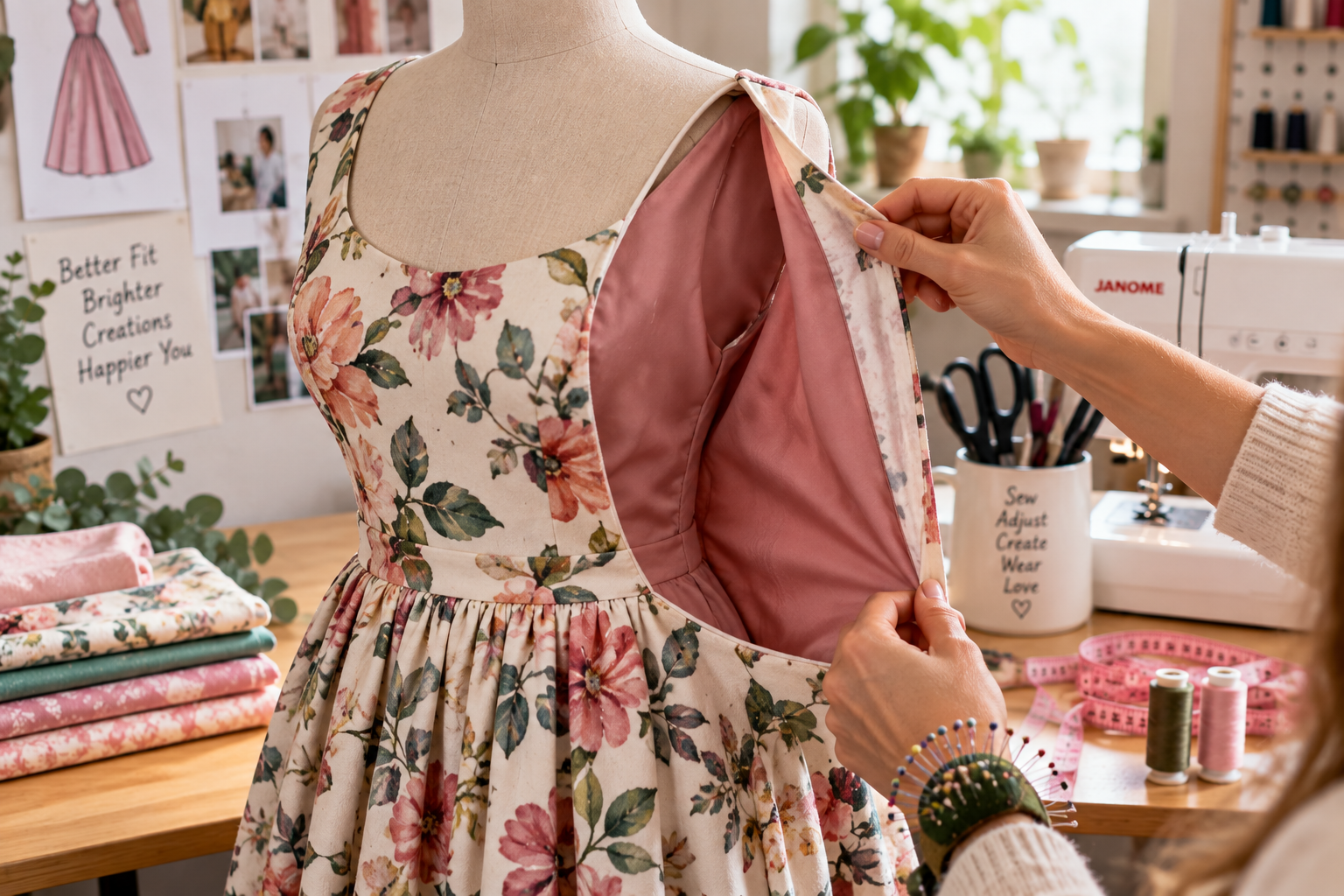
06. Nobody else will be wearing it
Making your own clothes used to signal that you could not buy them. The signal has reversed. When the same twelve garments circulate through every feed and every high street, a handmade coat in an unlikely fabric reads as a decision rather than a constraint.
Every element is yours to set: fabric, weight, colour, print, length, neckline, sleeve, pockets or no pockets, buttons that cost more than the cloth. Want the dress ten centimetres longer, in bright orange linen, with pockets deep enough for a phone? That is not a special order, it is Saturday afternoon. The constraint is your skill and your patience, not what a buyer chose for this season.
Choosing the cloth is half of it, and it is the part that surprises people. A pattern is only a shape; the same shirt pattern in stiff cotton poplin, drapey viscose or heavy linen produces three garments that behave nothing like each other. Learning what a fabric wants to do — where it falls, where it holds a fold, how it takes a press — is the point at which sewing stops being assembly and starts being design. It is also why sewists develop strong opinions about fabric shops and spend a suspicious amount of time touching things.Then there are the details nobody sees. Lining a jacket in something loud, using a contrast facing, choosing buttons that cost more than the cloth, topstitching in a colour that shouldn’t work. None of it is visible from across a room, and all of it is why the garment feels like yours.
Personalisation extends beyond clothing and is one reason embroidery has grown so fast. A bag with a name on it, a blanket with a birth date, a jacket with something stitched inside the lining — small acts of specificity that turn an object into a keepsake. It is the opposite of mass production, and it is being done on machines that sit on a kitchen table — see cutting machines and personalisation for how that actually works.
07. Upcycling became design, not thrift
Upcycling used to mean “I did not want to throw this away”. Now it means “look what I turned this into”, and the difference is entirely one of intent. Old jeans become bags. Oversized men’s shirts become dresses. Curtains become jackets, tablecloths become skirts, and a bag of scraps becomes patchwork that looks nothing like a compromise.
It is also a very good way to learn. Secondhand garments are cheap enough that cutting into them carries no fear, and they arrive with construction already done — a finished cuff, a working zip, a set-in sleeve you can study. Unpicking a jacket to see how it was assembled teaches more about garment construction than most books manage.
The projects are worth being specific about, because each one teaches something. A pair of jeans turned into a tote bag teaches you how to work with thick seams and where a machine will struggle. An oversized shirt reshaped into a fitted dress teaches you to take width out of a garment that is already finished, which is the core skill in all alteration work. Cutting a jacket down from a curtain teaches you about grain and pattern matching. A patchwork cushion from a scrap bag teaches accurate cutting and consistent seam allowances better than any exercise, because the errors compound visibly.Remaking also solves the beginner’s supply problem. New fabric is expensive enough that people hoard it and are then afraid to cut it, which is a strange place to be stuck. A £4 shirt from a charity shop carries no such weight. If it goes wrong, you have lost the price of a coffee and learnt something specific about why.
And it lands squarely on three things people increasingly care about at once: creativity, individuality and using what already exists. The sharpest version of it right now is repair worked in contrast thread — sashiko and visible mending have their own piece. That combination is why remaking has moved from the back of the craft world to the front of it, complete with its own aesthetic and its own audience.
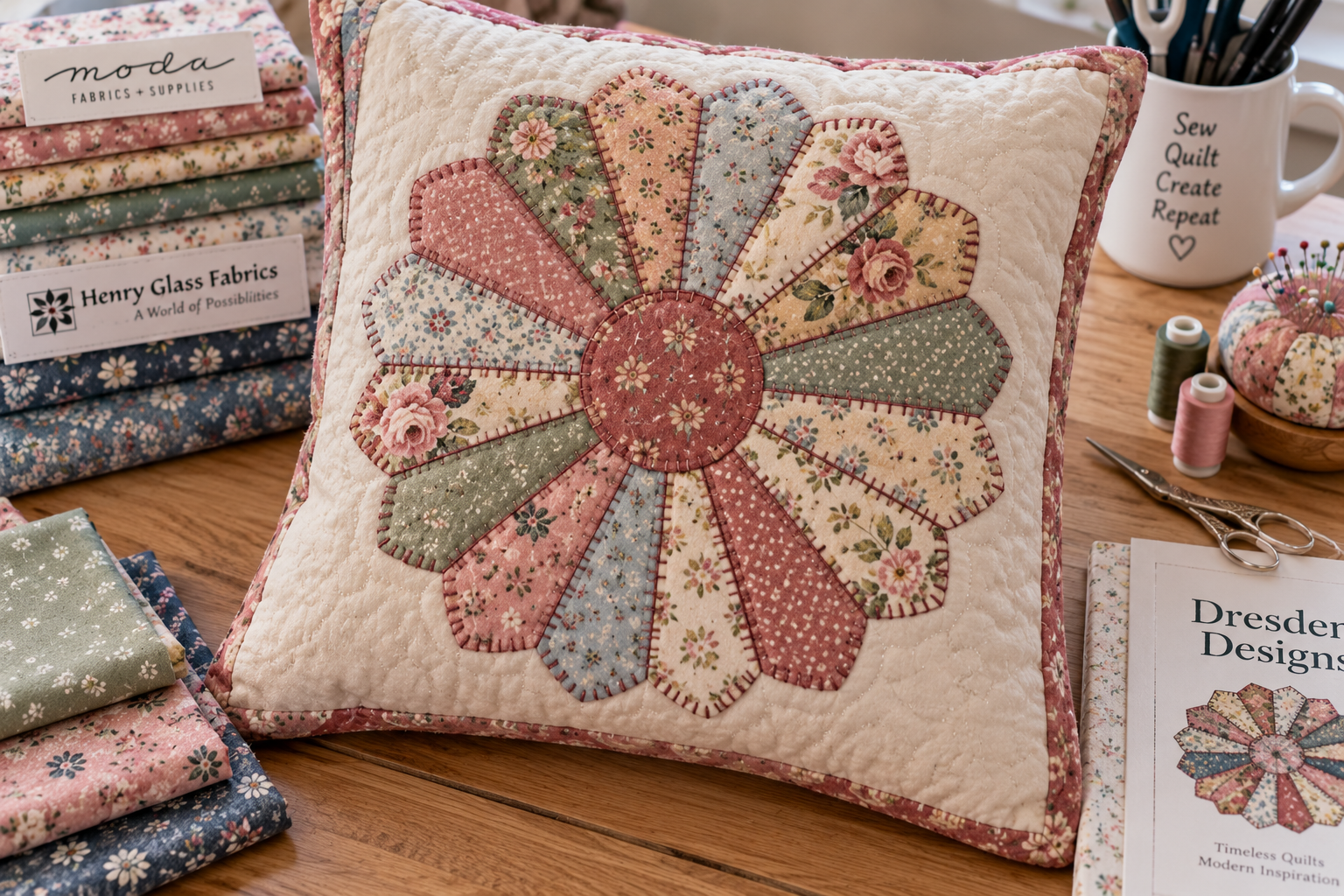
Patchwork has left the quilt. It is on jackets and trousers now, and it is meant to be noticed.
08. Patchwork, quilting and bags are the new way in
For years, garment sewing and quilting were treated as separate worlds with separate shops. That line has broken down, and the reason is patchwork. It has graduated from quilts onto clothing — jackets, trousers, skirts pieced from mismatched fabrics — and in its current form it is bold, asymmetrical and meant to be noticed. Etsy’s 2026 trend reporting puts this squarely with younger buyers rejecting fast-fashion sameness in favour of pieces with worn fabrics, visible mending and details that look deliberate. A patchwork jacket says handmade from across a room, which is precisely the point.
Quilting itself has become far more approachable at the same time. The trend has moved away from chopping fabric into hundreds of tiny pieces and towards large blocks, bigger prints and simpler layouts, with stark white backgrounds giving way to creams, oatmeals and warm neutrals. For a beginner that shift matters more than it sounds: fewer seams means fewer chances to be a millimetre out, and a quilt made of big shapes in good colours looks confident rather than unfinished. Add a walking foot and a machine with a bit of space to the right of the needle and a first quilt is genuinely within reach.
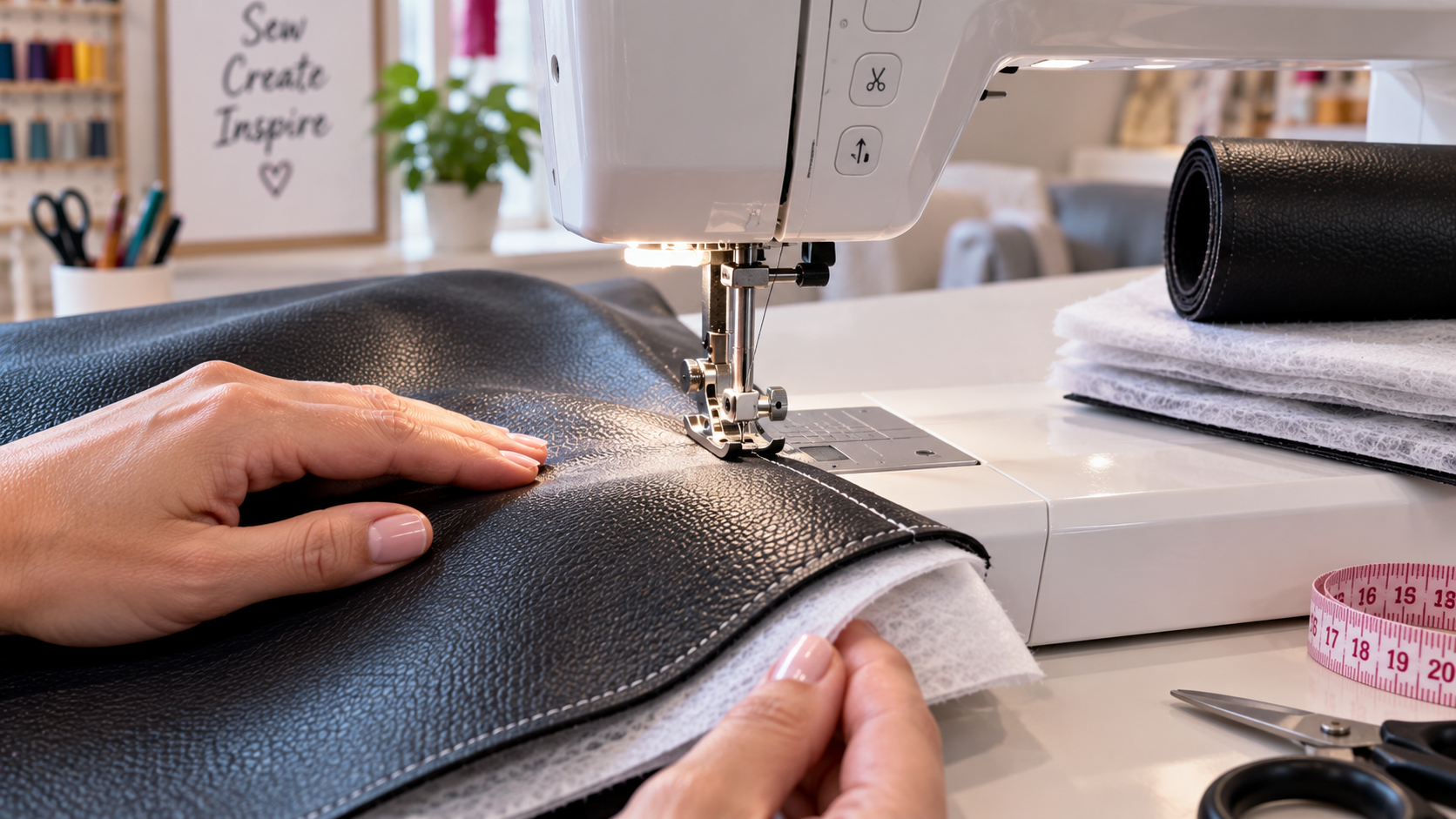
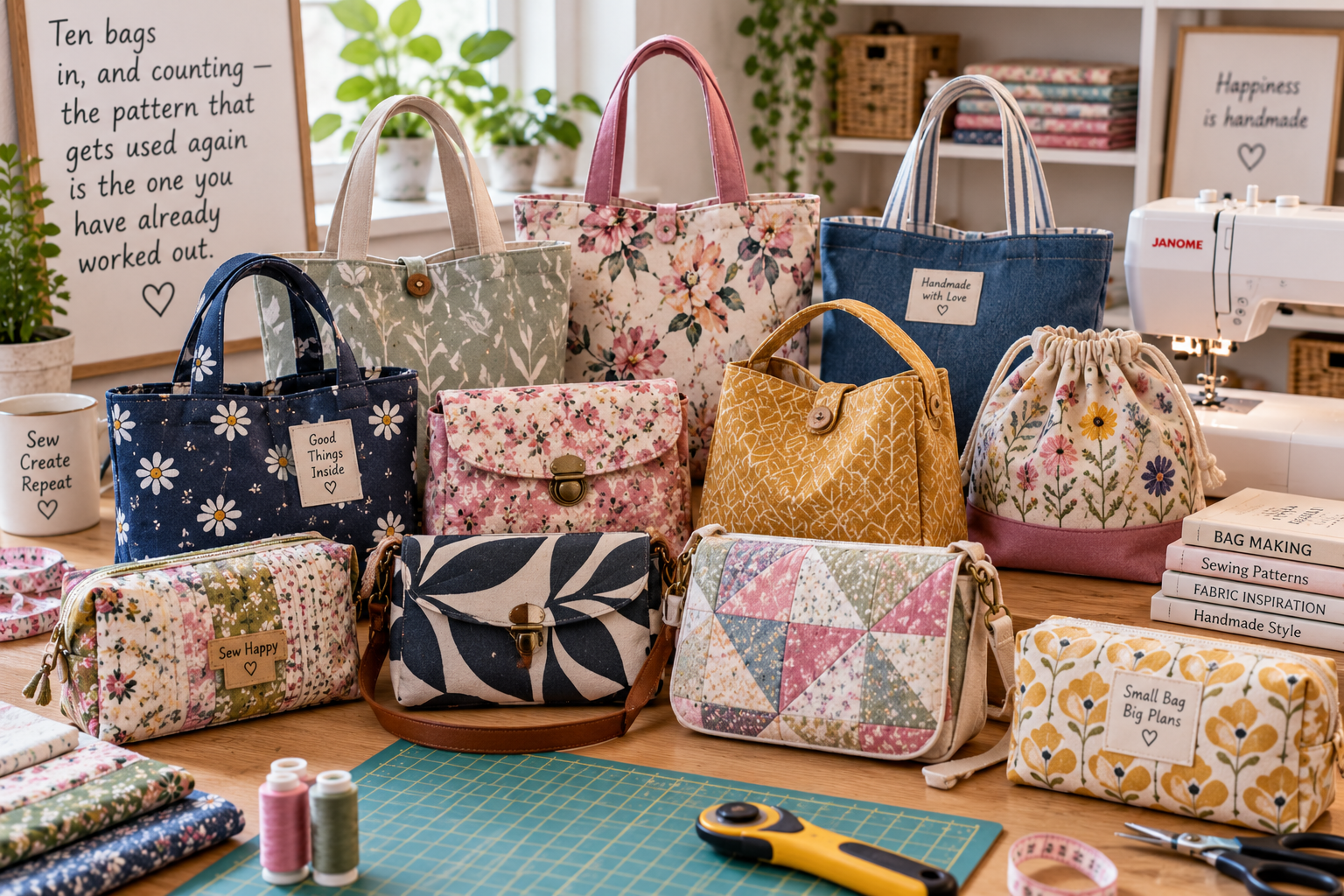
Bags are the other route in, and arguably the best one. There is no fitting, no sizing and no body to please — a bag either works or it does not, and you find out the same afternoon. What it teaches, though, is the exact set of skills garment sewing asks for next: interfacing and structure, inserting a zip, boxing a corner, topstitching that has to look neat because it is on show, and sewing through several layers without the machine complaining. Bag patterns from independent designers are also unusually well written, because their customers are frequently beginners.
Industry forecasters expect quilting to remain the backbone of the sewing world while garment and bag making keep climbing, and that combination is a healthy sign. It means people are arriving from several directions at once — from fashion, from patchwork, from wanting a specific bag that nobody sells — and finding they need the same machine.
people in Britain use arts and crafts to look after their mental health, according to Mind and Hobbycraft — more than a quarter of them every week or month.
09. It is time spent away from a screen
Work, shopping, banking, television, conversation, reading — most of modern life now happens through glass. Sewing is stubbornly physical. You handle cloth, cut it, feed it through a machine, press it flat, hold it up to check. Even with a tutorial playing in the corner and a digital pattern on the screen, the work itself happens in your hands.
There is a well-documented wellbeing effect in that. A recent report from Mind and Hobbycraft found around 8.8 million people in Britain use arts and crafts specifically to look after their mental health, more than a quarter of them every week or month. The mechanism is not mysterious. Sewing demands enough attention to crowd out everything else — while you are concentrating on keeping a seam allowance even, you are not thinking about the forty-seven unanswered emails.
It is not necessarily solitary either, which surprises people who imagine sewing as something done alone in a spare room. Beginner classes, evening workshops, repair cafés, quilting groups and sewing meet-ups exist in most towns, and they tend to be unusually welcoming — partly because everyone in the room has recently ruined something. For younger makers who found the craft online, an in-person group is often the thing that turns a few tutorials into a habit.
The pace helps too. Cutting cannot be rushed, pressing cannot be skipped, and a garment appears gradually out of flat pieces that looked like nothing an hour earlier. In a week measured out in notifications, a few hours where progress is visible and entirely your own is worth more than it sounds.
10. The hobby can pay for itself
Online marketplaces mean someone sewing in a spare room can reach customers nationally, or further. Handmade children’s clothes, bags, cushions, quilts, embroidered gifts, pet accessories, wedding pieces, stall-ready runs of small items: plenty of sewing businesses started as a sewing machine bought for a hobby and grew because the orders kept coming.
Alterations and repair are the quieter version of the same thing, and often the more reliable one. There is steady local demand for taking up trousers, replacing zips and refitting garments, and comparatively few people offering it. Teaching is a third route — beginner classes fill quickly wherever someone is willing to run them.
It helps to know what the work actually looks like. A first sale is usually unglamorous: a friend of a friend wants a zip replaced, or six bridesmaids’ hems taken up a fortnight before the wedding. You quote, you deliver on time, and you get asked again. The money in alterations is in speed and reliability rather than artistry, and the skills involved are the ordinary ones — measuring, unpicking, matching thread, pressing properly.Selling things you have made is a different discipline, and the hard part is pricing. Beginners routinely charge for materials and forget the four hours, then wonder why the orders feel like a punishment. The makers who last are the ones who work out early how long a piece takes them, price accordingly, and narrow their range to a handful of items they can make well and repeatedly rather than one of everything.
Most people will never want to sell anything they make, and that is fine. But the possibility changes how the initial purchase feels. A sewing machine is not only an expense against leisure time; it is a tool that can earn, and that makes it easier to justify buying a decent one.
11. You never actually finish learning it
Sewing is unusually generous at the beginning and effectively bottomless afterwards. A cushion cover takes an afternoon and teaches straight seams. A tote bag adds corners and handles. Then a simple skirt, then a dress, then something lined. After that there is quilting, overlocking, free-motion work, tailoring, pattern drafting, couture hand finishing — decades of it, if you want.
That progression is also why the milestones stay memorable: the first zip that went in cleanly, the first buttonhole that did not chew the fabric, the first pair of trousers, the first time somebody asked where a garment was from and the answer was “I made it”.
The route in matters less than people think. Some start with a class, which front-loads the awkward parts — threading, tension, what the dials do — into two hours with someone watching. Some start with an inherited machine and a YouTube search. Some buy a cheap mechanical model to find out whether they like it, and either give it away within a year or replace it with something better. All three work, and none of them requires you to decide in advance how serious you are.The one piece of advice worth taking is to pick a first pattern designed for beginners rather than a pretty one. Elastic-waist trousers, a boxy top, a simple wrap skirt, a tote bag with a lining: patterns that avoid buttonholes, zips, set-in sleeves and fitting entirely. Nothing kills a new hobby faster than a project that needed skills three steps ahead of you.
And it connects backwards as well as forwards. Machines get inherited, along with pattern tins, button jars and boxes of fabric somebody was saving for the right project. People who learnt from a grandparent are now teaching their own children; people who learnt from the internet are teaching their parents. The technology has changed almost beyond recognition, but somebody running a seam on a computerised machine is doing what their great-grandmother did: joining two pieces of cloth so they hold.
The tools evolve. The satisfaction does not.
If you are thinking about starting
Start smaller than you want to. A sewing machine, fabric, thread, scissors, pins, needles and one simple project is enough. Good first projects:
Expect to make mistakes, because everyone does. You will sew pieces together the wrong way round, cut something short, forget to change a blunt needle and unpick more seams than you stitch. None of that means you are bad at sewing; it is what learning looks like in a craft where the evidence is physical.
The only rule worth insisting on is that the first project gets finished. It does not need to be impressive. It needs to exist, because the moment you hold up something you made is the moment you start planning the second one — and that is the whole thing, really. However sophisticated the sewing machines become, the best part has not changed: you start with fabric and end up with something that did not exist before you sat