





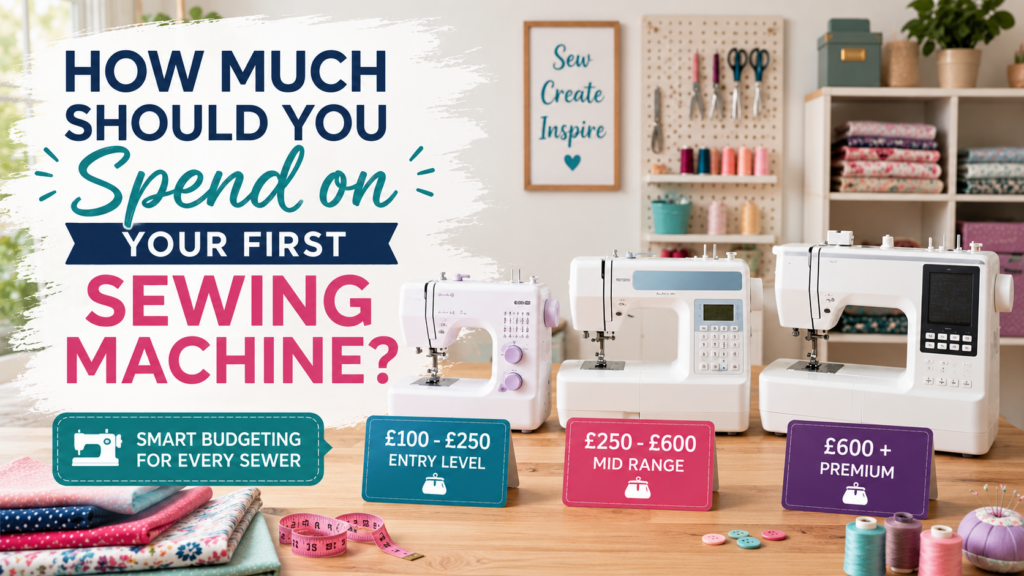
Buying your first sewing machine is an exciting step, whether you’re planning to alter clothes, create home décor, make gifts, or start a new creative hobby. One of the biggest questions beginners ask is: how much should I spend?
The truth is there isn’t a single answer that suits everyone — your budget should reflect what you want to achieve, how often you’ll use the sewing machine, and the types of projects you plan to make.
Is It Worth Buying a Cheap Sewing Machine?
Many first-time buyers are tempted by the lowest-priced sewing machines available, but these aren’t always the best value. Very inexpensive machines often have limited stitch options, lower-powered motors, plastic internal components, reduced durability and fewer adjustment features.
If you only intend to repair the occasional hem or sew on a button, a basic machine may be perfectly adequate. If you think you’ll sew regularly, spending a little more upfront can save frustration later. Worth knowing: 2026 buyer’s guides note that the budget end of the market has genuinely improved recently — there are now a couple of solid mechanical machines available for well under £150, which wasn’t really the case even two years ago.
Entry-Level Sewing Machines (£100–£250)
For many beginners, this is the ideal starting point. Machines in this range usually include:
- Around 15–30 built-in stitches
- Adjustable stitch length and width
- Automatic buttonhole function
- Free arm for sleeves and cuffs
- Reverse stitching
- LED lighting
Suitable for clothing alterations, cushion covers, tote bags, children’s clothing, basic quilting and general hobby projects. Well-reviewed mechanical models in this bracket tend to be praised for having a simple, beginner-friendly threading path and less to go wrong — a real advantage if you’re still learning.
Best Value Sewing Machines Under £250
Silver 301 Sewing Machine – £139.00 Including Free Sewing Machine Starter Pack Worth £40
Click here to view all sewing machines
Mid-Range Sewing Machines (£250–£600)
If you’re confident you’ll enjoy sewing, the mid-range often provides the best long-term value. Benefits typically include computerised controls, a larger selection of decorative stitches, automatic thread cutting, a needle up/down function, speed control sliders, better feeding systems, quieter operation and improved stitch quality.
Ideal for dressmaking, quilting, patchwork, home furnishings and regular weekly use. Several current guides now recommend computerised sewing machines around the £300–£350 mark as the strongest all-rounder for beginners who want one machine to last five-plus years — look for features like a one-step buttonhole, an automatic needle threader and a drop-in bobbin, and check it handles denim and stretch jersey cleanly (with a ballpoint needle) before you commit.
Best Value Sewing Machines Under From £250 – £600
Silver 1040 Sewing Machine – £251.00 Including Free Sewing Machine Starter Pack Worth £40
Silver 1045 Sewing Machine – £253.00 Was £293.00 Including Free Sewing Machine Starter Pack Worth £40
Brother HF37 Sewing & Quilting Machine – £269.00
Silver 197 Sewing Machine – £308.00 Was £368.00 Including Free Sewing Machine Pack Worth £40
Janome 5060 QDC Sewing & Quilting Machine – £559.00
Click here to view all sewing machines
Premium Sewing Machines (£600+)
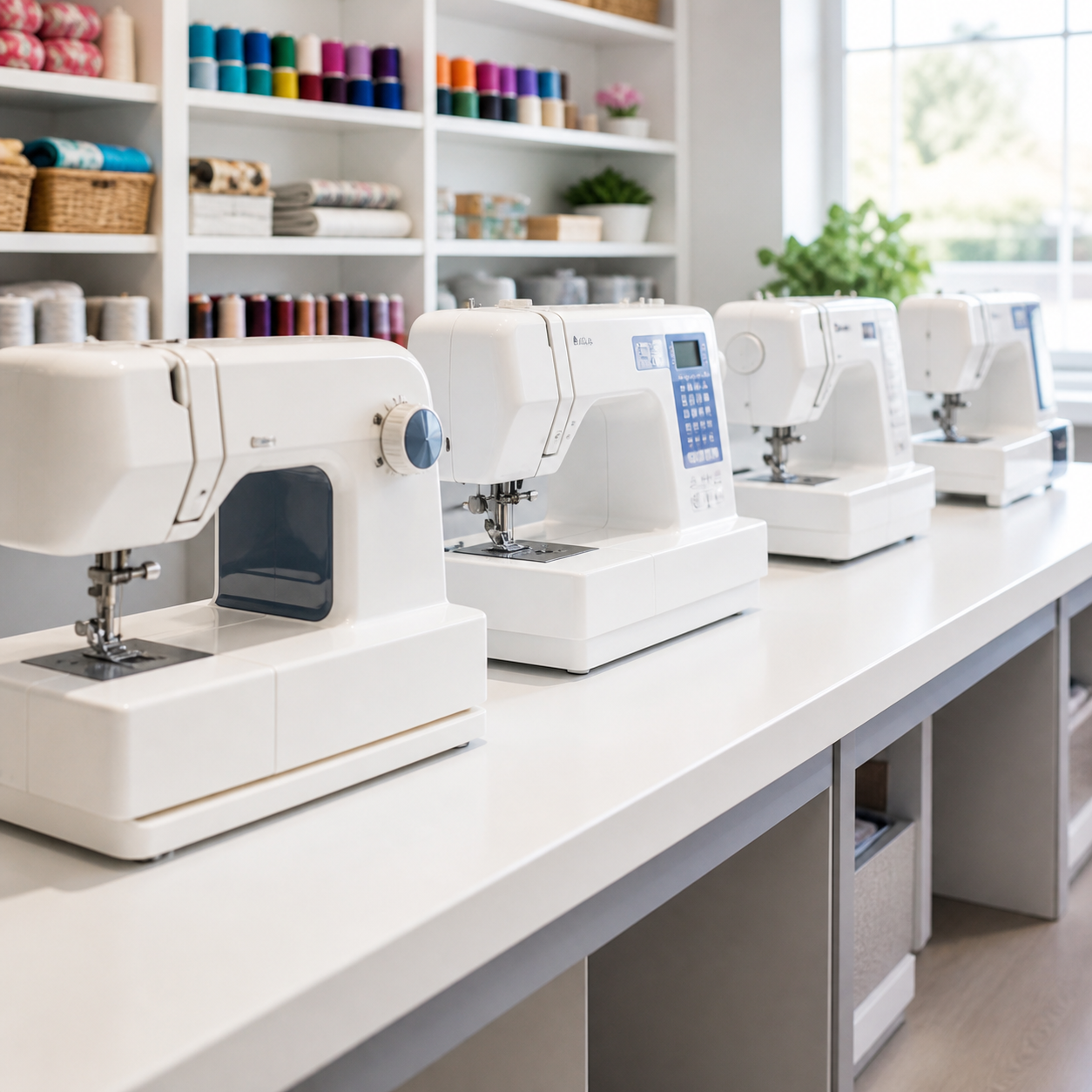
Higher-end sewing machines are designed for enthusiasts, advanced hobbyists and professionals, with hundreds of decorative stitches, large colour touchscreens, automatic thread tension, precision stitch regulation, a larger sewing space and embroidery compatibility. Unless you’re already committed to sewing as a serious hobby or business, these are generally more than a beginner needs.
Best Value Sewing Machines Over £600
Brother Innov-Is Sewing & Quilting Machine – £699.00
Novum Pro Q100 Long Arm Computerised Sewing Machine – £799.00 Was £999.00 Includes Free Extension Table
Novum Pro Q400 Long Arm Computerised Sewing Machine – £949.00 Was £1199.00 Includes Free Extension Table
Brother Inventio NV1350 Computerised Sewing Machine – £1099.00
Janome HD9 Professional Sewing & Quilting Machine – £1329.00
Click here to view all sewing machines
Mechanical or Computerised?
Mechanical sewing machines are simpler to operate, easy to maintain, very reliable and excellent for learning the basics — ideal for beginners who want a straightforward experience without much technology.
Computerised sewing machines offer greater precision, easier stitch selection, more built-in features and better consistency. Many beginners quickly become comfortable with them and appreciate the convenience.
Don’t Forget the Extra Costs
Beyond the machine itself, budget for: quality thread, fabric scissors, a rotary cutter and mat, pins and clips, needles for different fabrics, bobbins, a seam ripper, measuring tape, an iron and ironing board, and fabric. Setting aside roughly £50–£150 for accessories makes your first sewing experience much more enjoyable.
Think About Future Projects
One mistake many beginners make is buying only for today’s needs. Ask yourself:
- Do you want to make clothes?
- Will you quilt?
- Are you interested in upholstery?
- Will you sew thicker fabrics like denim?
- Could sewing become a regular hobby?
Choosing a sewing machine with room to grow often proves the more economical choice over time.
Our Recommendation
For most beginners, a budget between £200 and £400 offers the best balance of affordability, reliability and features — enough versatility for a wide range of projects, and a machine that can grow with your skills.
Rather than buying the cheapest machine available, think of your sewing machine as a long-term investment. If you’re unsure which model suits your needs, speak to a specialist sewing machine retailer who can compare features, demonstrate machines and recommend the best option for your budget and ambitions.
Frequently Asked Questions
What is a good budget for a first sewing machine? For most beginners, between £200 and £400 provides the best combination of quality, features and reliability.
Is a £100 sewing machine good enough? It can suit occasional repairs and simple projects, but regular sewers often benefit from spending a little more for improved durability and performance — though the budget end of the market has improved, with a couple of genuinely capable machines now available under £150.
Should beginners buy a computerised sewing machine? Yes, generally. Modern computerised machines are user-friendly and can make learning easier thanks to features such as automatic buttonholes, speed control and simple stitch selection.
How long should a sewing machine last? A well-maintained quality sewing machine can easily last 10–20 years or more, making it a worthwhile investment.
With the right tools, good habits and a willingness to learn, you’ll soon be creating projects you can be proud of. Happy sewing!